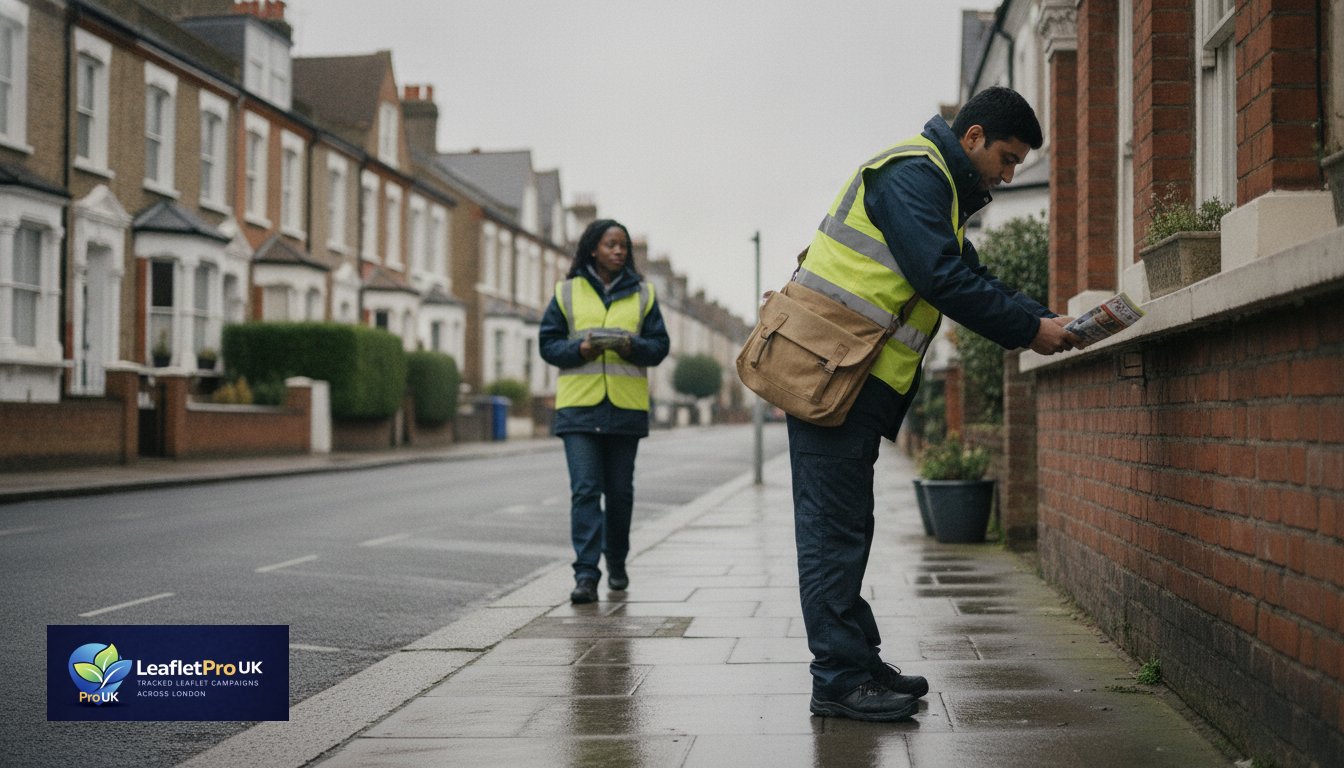
Did you know that 80% to 90% of direct mail is opened, whilst the average piece of physical marketing remains in a London household for seven days? In a city where digital saturation leads to instant ad-fatigue, the most effective way to reach your neighbours might be through their letterboxes rather than their screens. You likely already feel the frustration of seeing your digital budget wasted on impressions that occur miles outside your actual service area. It’s a common anxiety for business owners who need tangible proof that their message has landed where it matters most.
This article provides a detailed comparison of London’s hyperlocal advertising channels to help you decide between digital reach and the accountability of direct mail advertising London. We’ll establish a clear framework for comparing costs and explain how GPS-verified delivery provides the same level of scrutiny you expect from online analytics. By the end of this guide, you’ll understand how to secure higher conversion rates from local residents through systematic, professional distribution that prioritises visibility and results.
Key Takeaways
- Compare the extended shelf-life of physical leaflets against the fleeting nature of digital ads to maximise your brand’s presence in London households.
- Learn to target specific London postcodes with precision, ensuring your marketing budget is spent only on the residents within your actual service area.
- Discover how GPS-tracked distribution provides the verified accountability needed to make direct mail advertising London as transparent and measurable as digital campaigns.
- Understand the framework for creating hyperlocal hooks and using QR codes to bridge the gap between physical mail and digital conversions.
- Explore how an end-to-end service, from professional design to audited delivery, simplifies local logistics and ensures the integrity of your campaign.
The Evolution of Hyperlocal Advertising in London
Hyperlocal advertising defines the practice of targeting a specific street, postcode, or community within a very tight radius. For businesses operating in the capital, this level of precision is essential because London represents the most competitive market in the UK. High population density creates a unique environment where a broad city-wide approach often fails to deliver a return on investment. By contrasting broad marketing with street-level precision, brands can ensure their message reaches the right door at the right time. Traditional Direct Mail Advertising remains a cornerstone of this strategy, providing a physical anchor in a crowded marketplace. This evolution has made direct mail advertising London a sophisticated alternative to expensive digital bidding wars. This approach relies on two main pillars: digital hyperlocal strategies, such as location-based social media ads, and physical hyperlocal strategies, specifically door-to-door distribution.
To better understand how physical formats can stand out in a local market, watch this helpful video:
Why Local is No Longer Enough for London Brands
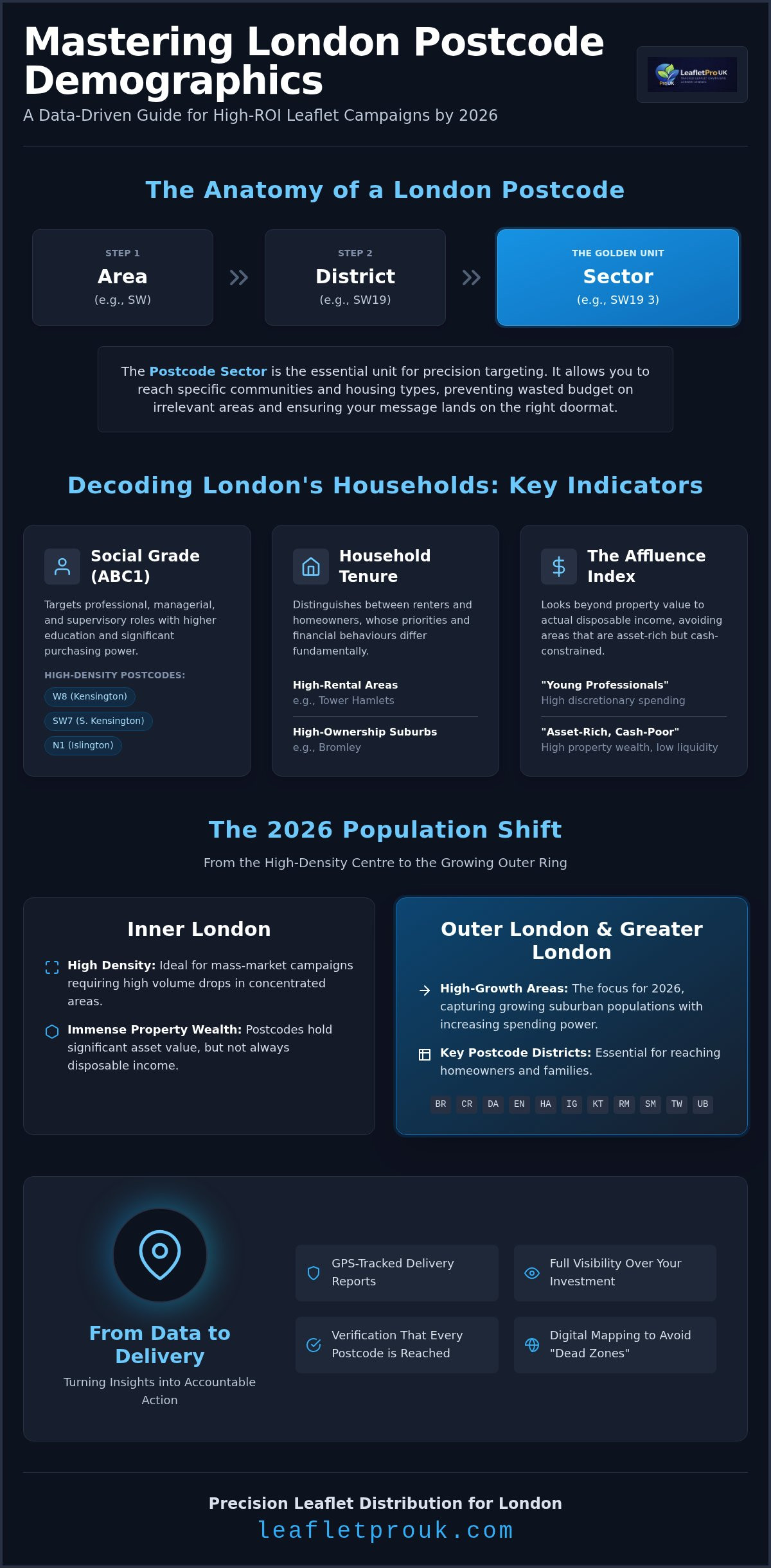
London is not a monolith; it’s a collection of distinct villages and boroughs. Targeting “South London” is far too broad when the consumer profile in SE1 differs significantly from SE11. Broad targeting leads to budget bleed, especially in high-cost areas like the West End where competition for attention is fierce. Modern strategies focus on postcode-level precision, such as distinguishing between SW19 and SW20. This allows for a more efficient allocation of resources, ensuring that marketing materials are only delivered to households that fall within a specific catchment area. When planning direct mail advertising London campaigns, understanding these local nuances is the first step toward achieving a reliable outcome.
The Rise of the Distracted Consumer in the Capital
A typical Londoner encounters a staggering volume of digital ads daily whilst commuting on the Tube or browsing at home. This digital saturation has led to a rise in distracted consumers who reflexively ignore online banners and skip through social media stories. Physical touchpoints are regaining value because they offer a tangible presence that digital spaces can’t replicate. A well-designed flyer on a kitchen counter commands attention in a way a fleeting social media post cannot. It’s a physical object that requires an action, making it inherently more engaging. However, execution is key. It’s helpful to review Common Leaflet Marketing Mistakes in London: A 2026 Strategy Guide to ensure your physical campaign doesn’t fall into generic traps. By combining digital hyperlocal tactics with physical distribution, brands create a comprehensive presence that cuts through the noise and establishes credible local authority.
Digital vs Physical: Comparing Hyperlocal Channels for London Brands
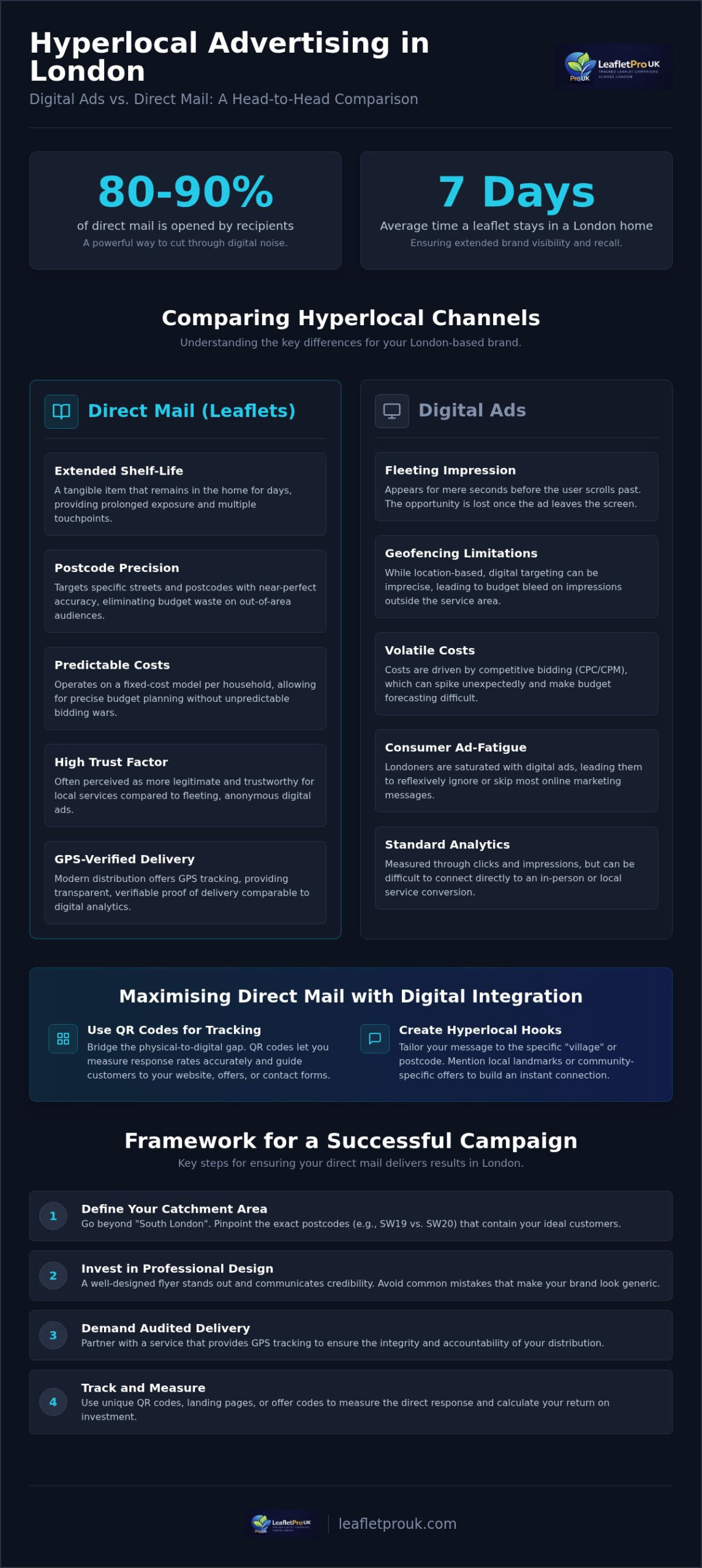
Choosing the right channel requires an understanding of how attention is captured and held. A social media ad typically flashes before a user’s eyes for mere seconds. Once the scroll continues, that impression is gone. Physical leaflets offer a different dynamic. They often occupy space on a kitchen counter or hallway table for several days. This extended shelf-life ensures your brand remains visible during the household’s natural decision-making process. For businesses investing in direct mail advertising London, this persistence provides a significant edge over fleeting digital notifications.
Cost structures also differ vastly between these mediums. Digital advertising in the capital is often dictated by bidding wars, where cost-per-click rates can spike unexpectedly due to high competition. Physical distribution relies on fixed costs, allowing for more precise financial planning. Beyond the budget, the trust factor plays a vital role. Consumers frequently perceive physical mail as more legitimate for local services. This sentiment is backed by the revival of direct mail, as residents appreciate the tangible nature of a professional flyer. To match the reporting standards of digital platforms, modern physical campaigns now utilise ‘Verified Flyer Distribution London’ through GPS tracking to ensure every drop is accounted for.
Digital Hyperlocal: SEO, Social, and Mobile
Digital channels are excellent for reaching people who need a solution immediately. Their primary strengths include:
- Pros: Deployment is instant, A/B testing is straightforward, and demographic filters allow for granular targeting.
- Cons: London sees some of the UK’s highest CPCs; additionally, ad-blockers and “banner blindness” can reduce your actual reach.
- Best for: Emergency services like locksmiths or plumbers, and short-term flash sales that require an immediate response.
Physical Hyperlocal: GPS-Tracked Leaflet Distribution
Physical marketing excels at building a presence within a specific community. It offers a direct line into the home that digital ads cannot bypass.
- Pros: You achieve 100% household penetration in a postcode without worrying about ad-blockers. The tactile nature of the paper creates a stronger sensory connection with the brand.
- Cons: Lead times are longer than digital posts because they require design, printing, and logistical co-ordination.
- Best for: Establishing long-term local authority for estate agents, gyms, and home renovation specialists.
If you’re looking to build a dependable presence in your local postcode, considering a leaflet distribution service London can provide the verified precision your brand needs to stand out.
The Power of Postcode Precision: Why GPS-Tracked Distribution Wins
London postcodes such as N1, E8, and W1 represent the gold standard for hyperlocal targeting. These identifiers allow businesses to segment the capital into manageable, high-value zones that reflect specific consumer behaviours. Unlike digital movement data, which merely tracks where people walk, postcode-level distribution ensures you reach residents exactly where they live. To maintain the highest standards of professional integrity, all campaigns should be conducted in alignment with UK direct marketing laws. This ensures that your physical outreach remains both compliant and welcomed by the local community. By focusing on these micro-markets, direct mail advertising London becomes a surgical tool for local growth.
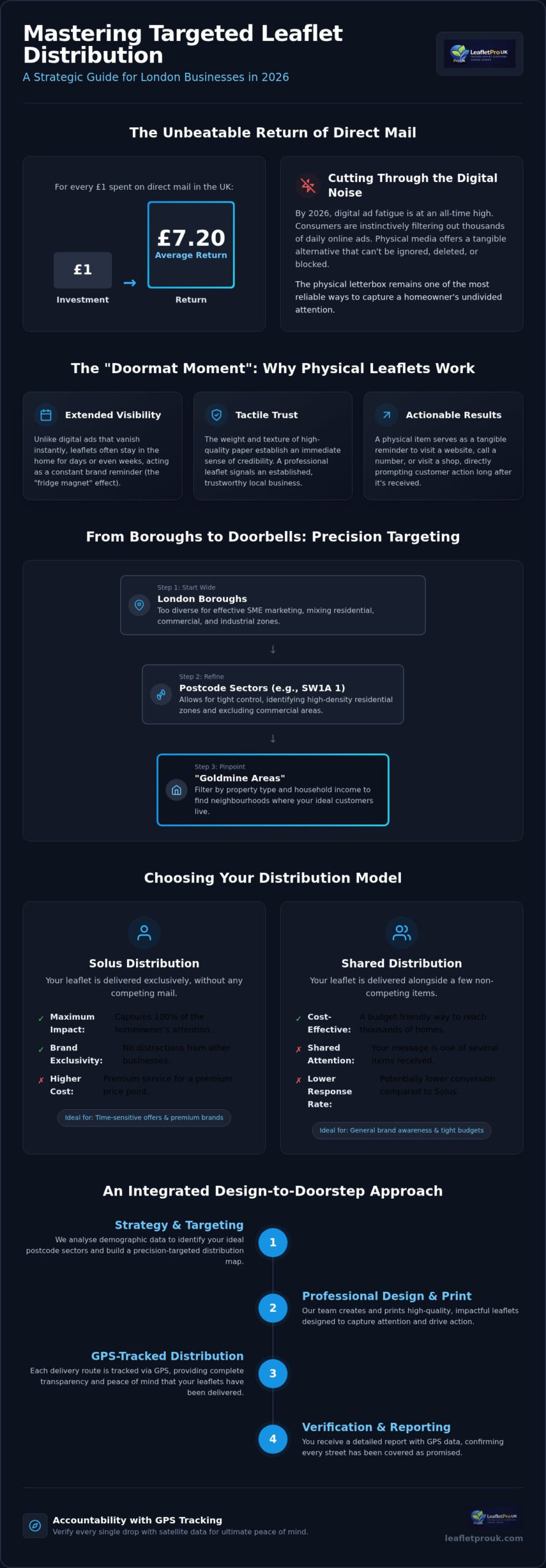
When planning your campaign, you must choose between Shared and Solus distribution. Solus distribution involves your leaflet being delivered alone, granting your brand 100% of the recipient’s attention at the doormat. Shared distribution, whilst more cost-effective, involves your material being delivered alongside a maximum of two other non-competing flyers. Both methods provide a physical presence that digital ads cannot match, but the choice depends on whether you prioritise maximum impact or broader reach within your budget.
The GPS Proof Standard in 2026
Satellite technology has transformed physical marketing into a measurable science, providing the same level of accountability as a digital dashboard. GPS-tracked distribution is the process of using satellite data to verify 100% household coverage in a targeted London postcode. These reports provide a granular view of the distributor’s path, showing the exact route taken down to the individual doormat. This level of visibility effectively removes the ‘missing leaflet’ anxiety that has historically plagued the industry. It provides the peace of mind that your investment has been handled with total precision. For a deeper look at this technology, consult our guide on GPS Tracked Leaflet Distribution: The Complete Guide to London Campaigns.
Postcode Targeting: Navigating Londons Micro-Markets
Success in direct mail advertising London depends on a sophisticated understanding of local demographics. The consumer profile in Richmond is vastly different from that in Hackney; consequently, your targeting must reflect these distinctions. Effective campaigns rely on street-level knowledge to avoid industrial estates, uninhabited areas, or commercial zones where residential engagement is low. This systematic approach ensures every flyer is placed in the hands of a potential customer. By refining your strategy to focus on specific residential clusters, you increase the likelihood of a higher response rate. You can find more specific postcode strategies in our Household Targeted Leaflet Distribution in London: The 2026 Strategic Guide.
Designing a Hyperlocal Campaign: A Framework for London Success
Building on the postcode precision discussed in previous sections, the design phase must address the unique architectural landscape of the capital. Navigating high-density apartment blocks in areas like Canary Wharf requires a different creative strategy than targeting the terraced streets of Fulham or Richmond. The “Hyperlocal Hook” serves as your most effective tool for engagement. An offer such as “Free coffee for SE10 residents” creates instant relevance and builds immediate trust with the recipient. This level of personalisation ensures that direct mail advertising London remains a high-performing channel for local businesses seeking to establish a presence in their immediate community.
A strategic bridge between physical and digital worlds is essential for modern campaigns. By integrating QR codes, you can direct residents to specific landing pages, allowing for precise tracking of offline-to-online conversions. However, the success of these conversions often relies on frequency rather than raw reach. In the competitive London market, hitting the same 5,000 doors three times is significantly more effective than reaching 15,000 households once. Repetition builds the familiarity required for a resident to act. For detailed creative guidance on engineering your flyers for maximum impact, review Direct Response Leaflet Design Tips: Engineering Your London Campaign for ROI in 2026.
Creative Elements That Convert Londoners
Londoners are naturally discerning and often time-poor. To stand out from generic junk mail, your campaign must prioritise high-quality printing and professional finishes that convey credibility. Using recognisable local landmarks or neighbourhood names in your headline builds instant rapport. You must design for the “three-second rule” at the doormat. This means your primary offer and brand identity must be legible the moment the flyer is picked up. A clean, systematic layout suggests a professional business, which is vital for establishing long-term local authority and peace of mind for the customer.
Measuring ROI in a Hyperlocal Context
Transparency in results is just as critical as transparency in delivery. You can measure the success of your campaign by using unique discount codes or dedicated phone lines for different postcodes. Analysing footfall lift in your physical store during and after a distribution period also provides tangible proof of impact. This systematic approach to direct mail advertising London allows for a clear connection between the creative hook and the final conversion. For businesses seeking a more structured approach, Tracking Leaflet Distribution Response Rates in London: The 2026 ROI Framework offers specific templates for measurement. This evaluation ensures every pound of your budget is working toward a clear, verifiable outcome.
Navigating London Logistics with LeafletPro UK
LeafletPro UK acts as a diligent partner for businesses navigating the capital’s unique marketing landscape. By specialising exclusively in London, we ensure every campaign benefits from deep-rooted local expertise and a sophisticated understanding of neighbourhood dynamics. Our end-to-end service integrates professional design support with high-quality printing, followed by GPS-tracked delivery. This systematic approach simplifies complex local logistics, allowing business owners to focus on their core operations whilst we manage the intricacies of direct mail advertising London. Every stage of the journey is handled with a high level of scrutiny to ensure the final outcome meets established professional standards.
Our postcode-targeted method ensures zero budget waste for London SMEs by restricting distribution to specific residential clusters. Instead of broad, unverified drops, we prioritise precision and accountability in every direct mail advertising London campaign. The peace of mind guarantee is central to our model, provided through transparent GPS reporting that serves as the physical equivalent of a digital impression. Every doormat reached is a verified data point in your campaign’s success, ensuring your investment is handled with the integrity it deserves. This level of visibility provides a grounded confidence that your message is being delivered exactly where it’s needed most.
Why a London-Exclusive Partner Matters
Navigating the complexities of London housing requires more than just a map; it demands an intimate knowledge of the city’s physical barriers. Our team understands the nuances of gated communities, concierge desks, and high-density apartment blocks that often pose challenges for national providers who lack boots-on-the-ground experience. Local knowledge proves invaluable when timing drops for maximum impact, ensuring materials are delivered when residents are most likely to engage with their mail. By acting as a transparent expert, LeafletPro UK manages the entire process with the professional boundary and systematic reliability required to maintain your brand’s credibility in a crowded marketplace. We don’t just deliver flyers; we ensure your business gains a foothold in the capital’s most competitive streets.
Getting Started: Your First London Postcode Drop
Initiating a campaign is a straightforward, three-step process designed to reduce friction and provide immediate clarity. First, we consult with you to identify the most lucrative postcodes for your specific goals, using local data to guide our recommendations. Second, we provide the necessary design and printing support to ensure your message stands out at the doormat with a professional finish. Finally, we execute the distribution with full GPS oversight, providing you with the evidence-based results you need to measure success. This logical sequence ensures you’re fully informed at each stage of the integrated customer journey. You can request a custom quote based on your specific London target area to begin your journey toward higher local conversion rates.
Securing Your Hyperlocal Advantage in the Capital
The choice between digital reach and physical precision isn’t about choosing one over the other; it’s about identifying where your message will have the most significant impact. Whilst digital ads offer speed, the tactile presence and extended shelf-life of physical mail provide a level of household penetration that screens cannot match. By utilising GPS-tracked delivery reports as standard, you can now approach direct mail advertising London with the same data-driven confidence as any online campaign.
Choosing a partner specialised exclusively in the London market ensures that your logistics are handled with the scrutiny required for high-density urban environments. From initial design and high-quality print support to the final audited drop, an integrated approach removes the anxieties of wasted spend and unverified delivery. You now have a clear framework to choose between fleeting impressions and verified physical precision, ensuring your investment is handled with the integrity it deserves.
We look forward to helping you build a dependable presence in your local community through systematic and transparent distribution.
Frequently Asked Questions
What is considered a hyperlocal area in London?
A hyperlocal area refers to a specific street, postcode sector, or a tightly defined community radius within a larger borough. In the context of direct mail advertising London, this often means targeting specific sectors like N1 1 or E8 2. This precision allows businesses to focus on the exact catchment area of their physical store or service zone, avoiding the budget bleed associated with broad, city-wide marketing efforts.
How does GPS tracking prove my leaflets were delivered to London homes?
GPS tracking provides a digital audit of the physical distribution process by recording the distributor’s exact path in real-time. Every few seconds, a satellite data point is logged, creating a comprehensive route map that shows every street and doormat visited. After the campaign, you receive a detailed report that serves as systematic proof of delivery. This level of visibility ensures your investment is handled with total accountability and professional integrity.
Is physical leaflet distribution more expensive than London Facebook ads?
Costs vary based on the scale and targeting, but physical distribution often proves more cost-effective when considering engagement and shelf-life. Whilst digital ads have a lower entry cost, they face high competition and “banner blindness” in London. Physical leaflets remain in the home for an average of seven days, providing multiple impressions for a single fixed cost. This avoids the unpredictable bidding wars often associated with digital hyperlocal platforms in the capital.
Can I target specific demographics within a London postcode?
Yes, postcode-targeted distribution allows you to select specific residential clusters based on demographic profiles like housing type or affluence. For example, you might target the terraced streets of SW19 whilst avoiding nearby industrial zones or commercial centres. This surgical approach ensures your direct mail advertising London reaches the households most likely to convert, making it a highly efficient alternative to broad-reach digital filters that often capture non-residents.
How long does a typical hyperlocal leaflet campaign take to organise?
A typical campaign takes approximately 7 to 10 working days to organise from the initial consultation to the first drop. This timeframe allows for professional design support, high-quality printing, and the logistical planning of the GPS-tracked routes. Whilst digital ads can be launched faster, the preparation involved in a physical campaign ensures a higher level of quality and credibility, which is vital for establishing long-term local authority in your area.
What is the average response rate for a London hyperlocal flyer drop?
Response rates vary by industry, but direct mail sent to cold lists in the UK typically sees an average response rate of 0.9% as of August 2026. Warm lists, such as existing customers, can reach up to 7.2%. In a hyperlocal context, these rates are often bolstered by the high relevance of the offer to the specific neighbourhood. Using a “Hyperlocal Hook” ensures your message resonates with residents’ immediate needs and local identity.
Do I need to provide my own design for the leaflets?
You don’t need to provide your own design, as we offer full design support as part of our end-to-end service. Our team understands the “three-second rule” at the doormat and can engineer your layout for maximum local impact. We focus on creating a professional, clean aesthetic that prioritises your call-to-action. If you already have artwork, we can review it to ensure it meets high-quality printing standards before the distribution begins.
What happens if a London building has a No Junk Mail sign?
Professional distributors respect “No Junk Mail” or “No Unsolicited Mail” signs to maintain the integrity of your brand and comply with best practices. Delivering to these households can cause friction and damage your local reputation. Our team is trained to identify and bypass these properties whilst ensuring 100% coverage of the remaining accessible households in your targeted postcode. This ethical approach ensures your marketing is only seen by those open to receiving it.