Author: samuelkidane1000@gmail.com

  • Tracking Leaflet Distribution Response Rates in London: The 2026 ROI Framework

    Tracking Leaflet Distribution Response Rates in London: The 2026 ROI Framework

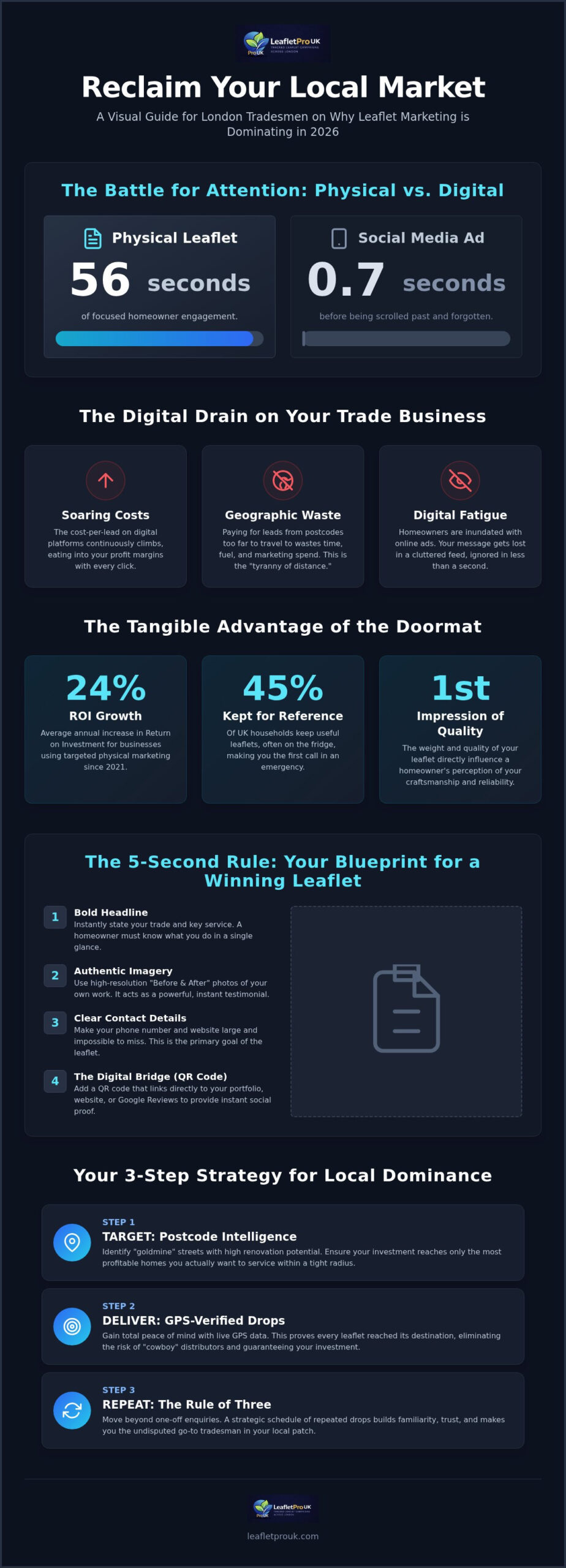
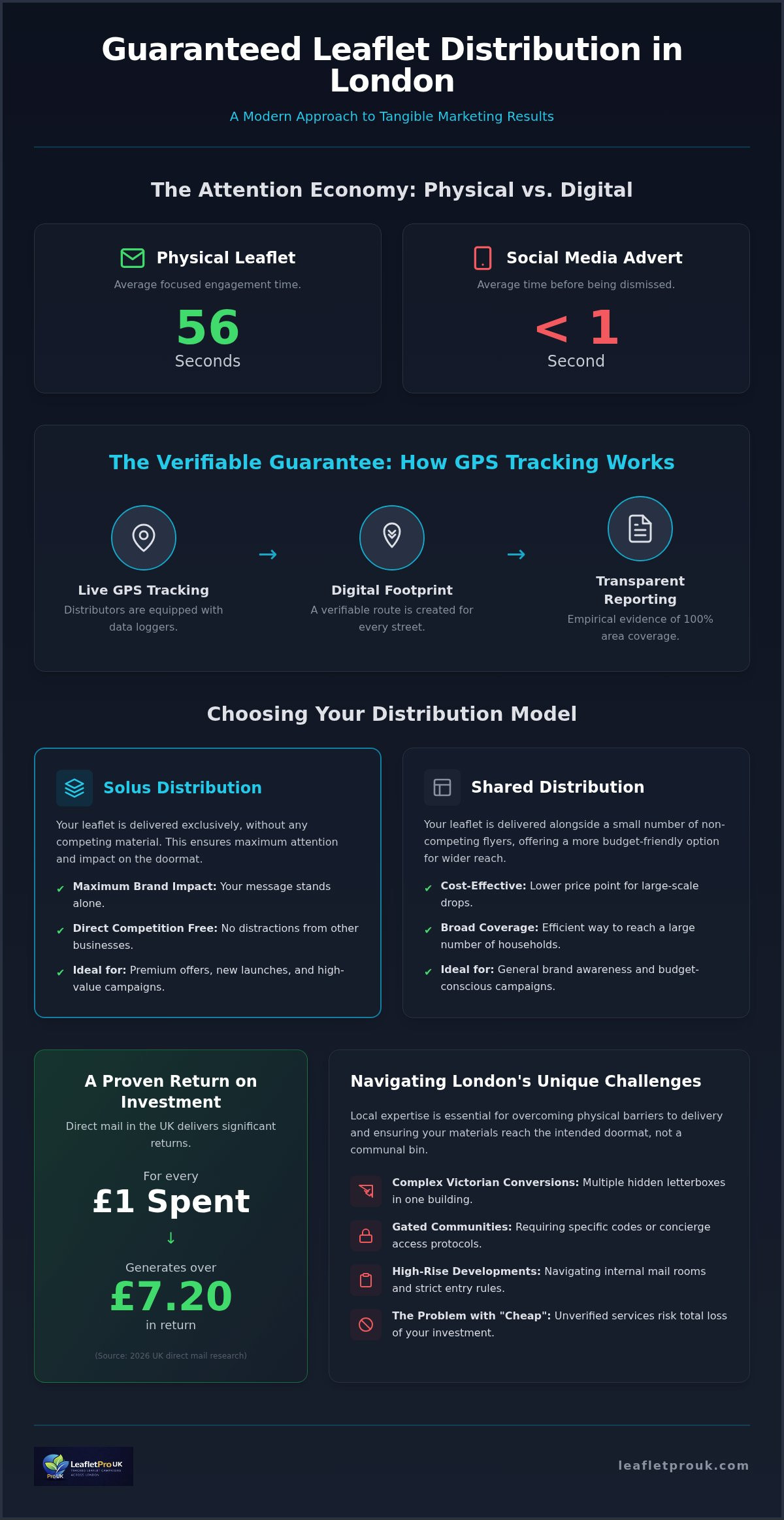
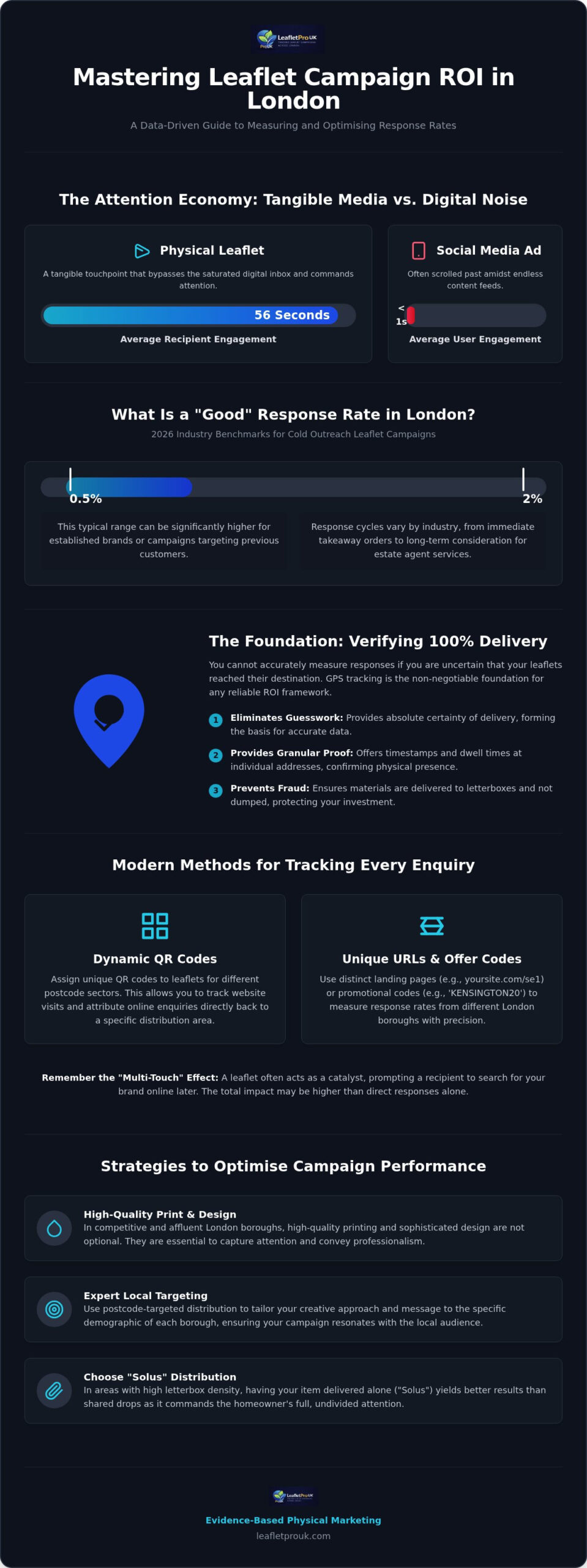
    Did you know that a physical leaflet receives an average of 56 seconds of engagement, whilst a social media ad often gets less than a single second? Despite this high level of attention, many businesses still struggle with tracking leaflet distribution response rates London, often fearing their investment has ended up in a recycling bin rather than on a doormat. It’s understandable to feel hesitant when you can’t see the physical path your marketing takes or clearly attribute a new sale to a specific flyer amongst your digital campaigns.

    We believe that transparency should be the standard, not a luxury. In this guide, you’ll learn how to master the art of measuring and optimising your London leaflet campaign response rates using GPS data and modern attribution methods. We provide a clear framework to verify 100% delivery and a template to calculate ROI by specific London postcode. You’ll also discover proven strategies to increase response rates in even the most competitive boroughs, ensuring your marketing spend is both visible and accountable. By the end of this article, you’ll have a systematic approach to physical marketing that prioritises evidence over guesswork.

    Key Takeaways

    • Establish a foundation of transparency by using GPS-tracked delivery data to verify that 100% of your leaflets reach their intended London doorsteps.
    • Understand the 2026 industry benchmarks to set realistic expectations, with a 0.5% to 2% response rate being the standard for cold outreach in London.
    • Master the modern methods for tracking leaflet distribution response rates London by using dynamic QR codes that attribute enquiries to specific postcode sectors.
    • Utilise a professional ROI framework that balances design, print, and distribution costs against the long-term lifetime value of your London clients.
    • Optimise your campaign performance by combining high-quality printing with expert local targeting to ensure your message stands out in competitive boroughs.

    What is a “Good” Response Rate for London Leaflet Drops?

    A response rate represents the percentage of recipients who take a specific action, such as a website visit or a phone call, amongst the total volume of items distributed. For businesses tracking leaflet distribution response rates London, a realistic benchmark in 2026 typically sits between 0.5% and 2% for cold outreach. This figure can rise significantly for established brands or those targeting previous customers. Direct mail marketing statistics suggest that physical marketing remains a resilient channel because it bypasses the saturated digital inbox, providing a tangible touchpoint that consumers can’t simply scroll past.

    To better understand how these figures are calculated and what influences them, watch this helpful video:

    Modern London campaigns rarely exist in isolation. A physical flyer often acts as a catalyst, prompting a resident to search for a brand online later that evening. This “multi-touch” effect means that while your direct response might be 1%, the overall impact on your digital enquiries could be much higher. Research shows that a physical leaflet receives an average of 56 seconds of engagement, which is significantly higher than most digital alternatives.

    London Sector Benchmarks: From Estate Agents to Restaurants

    The nature of your business dictates the response cycle. Estate agents in high-value areas like Kensington or Fulham often operate on longer conversion windows, as homeowners may keep a professional flyer for months before deciding to sell. Conversely, a local takeaway in a dense borough might see an immediate spike in orders within 48 hours. Direct Response is defined as any measurable action taken by a recipient that can be immediately attributed to the physical mail piece.

    The Impact of London Postcode Density on Visibility

    Letterbox density varies wildly across the capital. In postcodes like E1 or SE1, the high volume of apartment blocks and commercial units creates a “clutter” factor that can drown out poorly designed flyers. Choosing a “Solus” distribution, where your item is delivered alone, often yields better results than shared drops because it commands the homeowner’s full attention. There is also a clear correlation between property value and aesthetic requirements; affluent London households expect high-quality printing and sophisticated design. Using postcode-targeted flyer distribution allows you to tailor your creative approach to the specific demographic of each borough, ensuring your message resonates with the local audience.

    GPS Tracking: Ensuring Data Integrity Before Measuring Responses

    You cannot accurately begin tracking leaflet distribution response rates London if you lack absolute certainty that your marketing materials reached their destination. GPS tracking serves as the non-negotiable foundation for any ROI framework because it eliminates the guesswork associated with physical delivery. Whilst digital ads offer click-through data, direct mail response rates are often cited as being 10 to 30 times higher than digital equivalents. However, these superior returns only materialise if the physical item actually crosses the threshold of a London home.

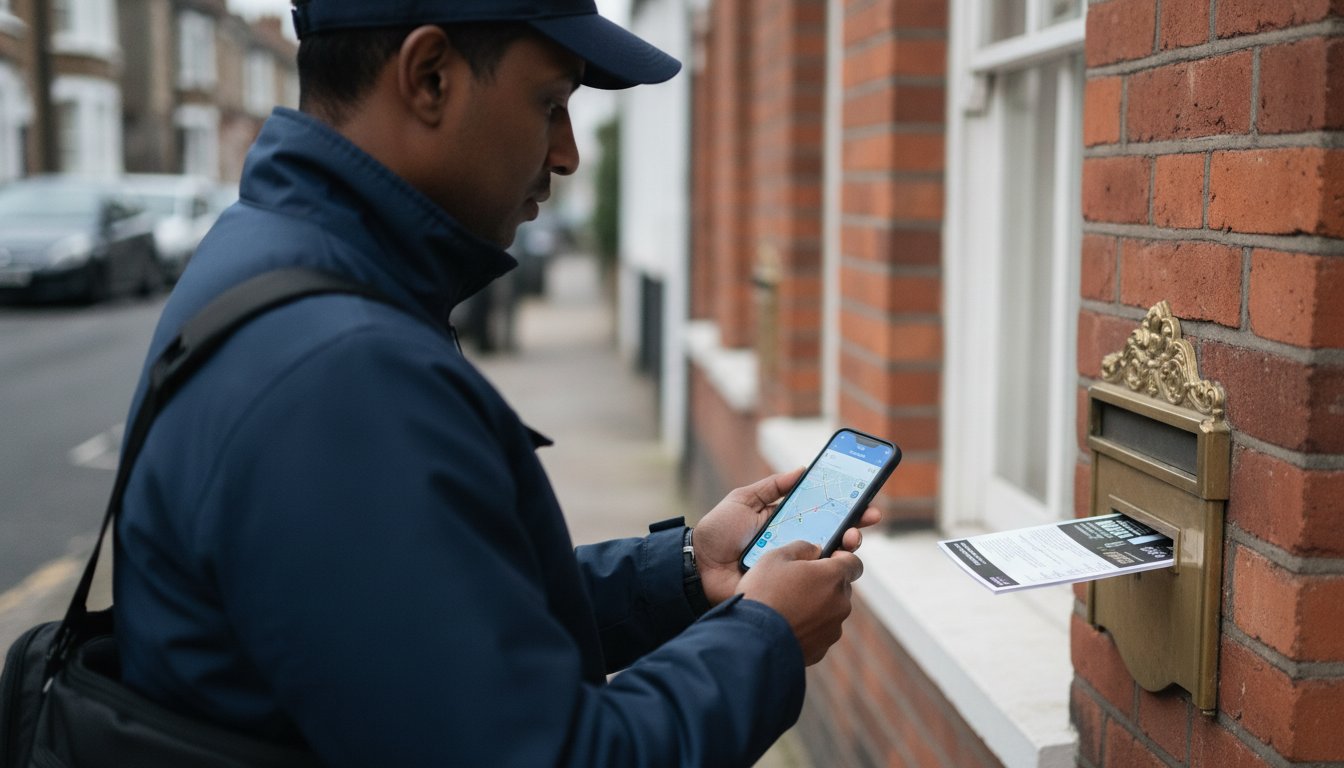
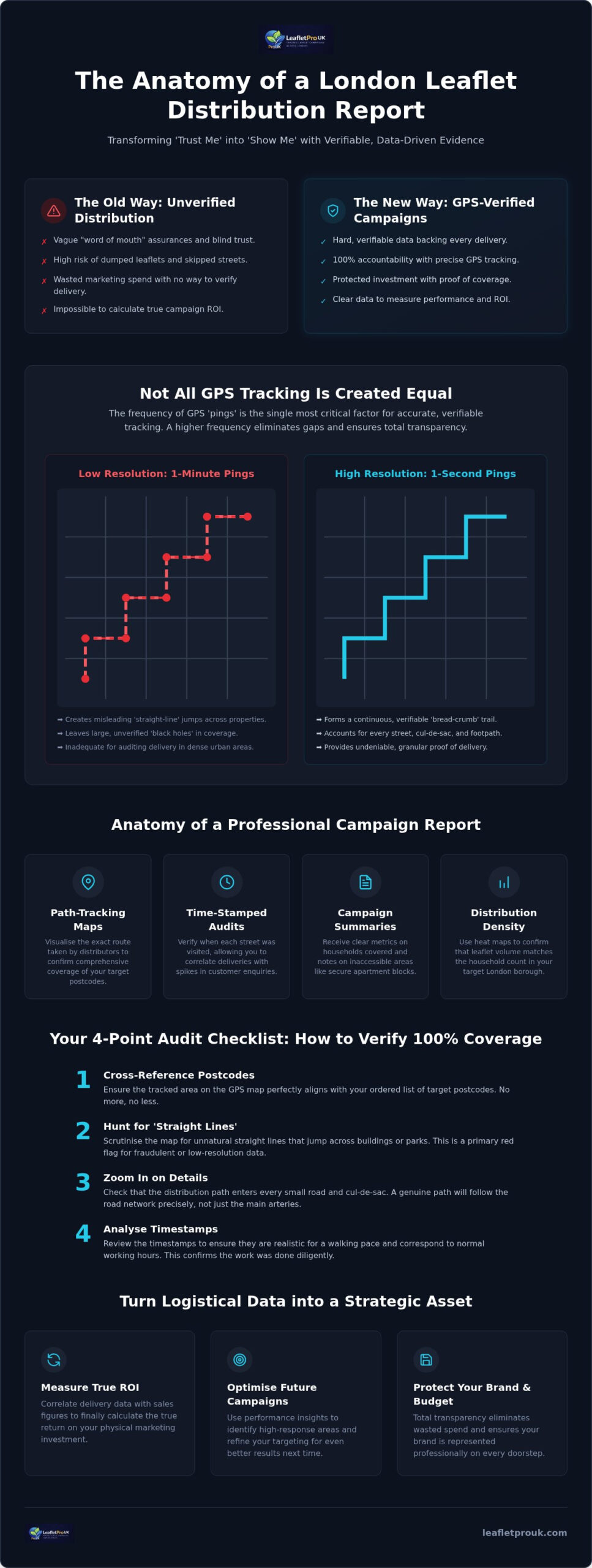
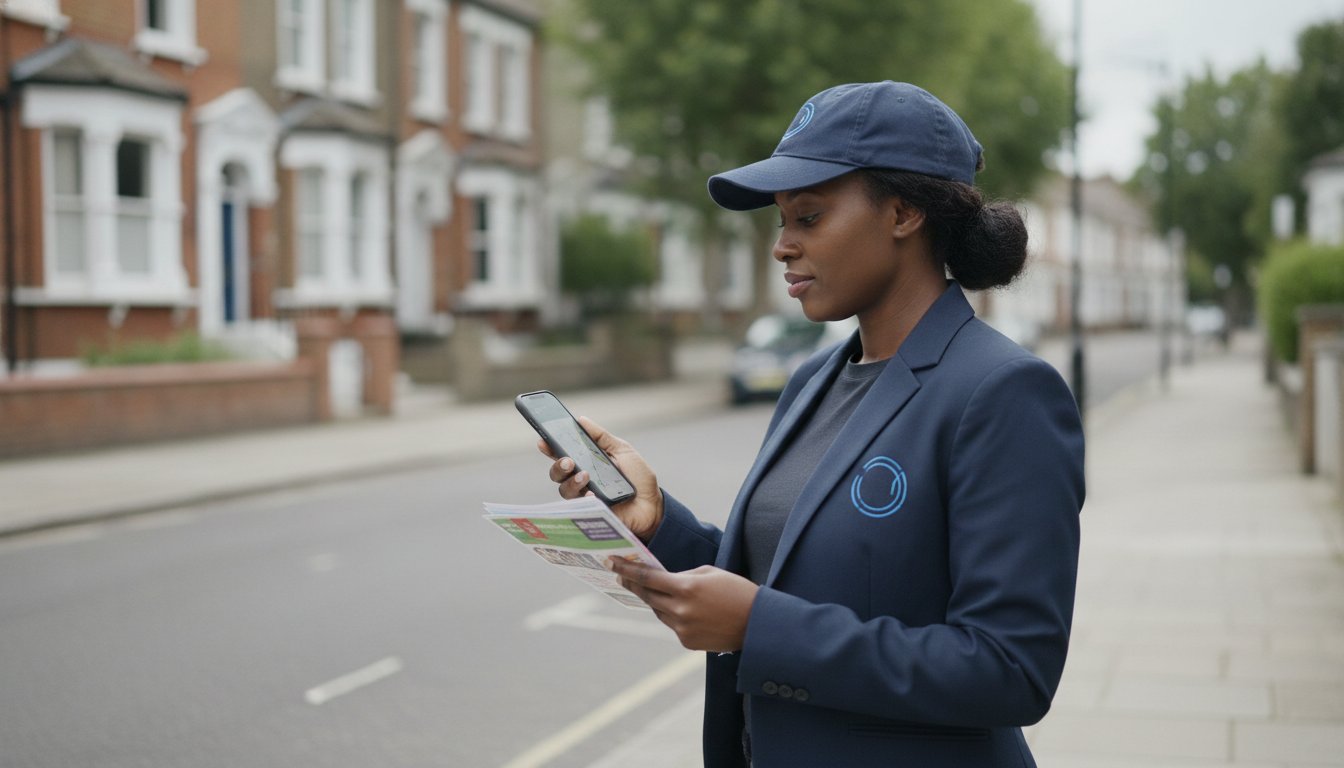
    Professional GPS reports provide more than just a line on a map. They offer a granular view of the distribution process, including specific timestamps and dwell times at individual addresses. This level of detail confirms that a distributor was physically present at the letterbox rather than simply walking past. In a complex urban environment, identifying “blind spots” is equally vital. Expert London distributors use this data to navigate the logistical hurdles of high-rise apartment blocks and gated communities, ensuring that every postcode in your campaign is fully serviced and accounted for.

    How GPS Proof Prevents “Dumped” Leaflet Fraud

    The logistical reality of London distribution in 2026 means that manual spot-checks are no longer a sufficient method of quality control. The sheer density of the capital makes it tempting for less reputable operators to “dump” leaflets in communal bins or skip difficult streets. GPS data provides the peace of mind required for high-volume campaigns by creating a digital paper trail of every movement. For a deeper look at the technology involved, see our guide on GPS Tracked Leaflet Distribution. This accountability acts as a growth driver, allowing you to validate whether a low response in a specific area was due to poor delivery or a lack of market fit.

    Integrating GPS Data into Your Marketing Dashboard

    Modern marketing requires the integration of offline and online data. By comparing delivery heatmaps with your enquiry heatmaps, you can quickly identify “Goldmine” postcodes where your message is resonating most effectively. Correlating GPS timestamps with spikes in website traffic or phone enquiries allows for a more sophisticated level of attribution. By providing verifiable proof of coverage, GPS data transforms distribution from an opaque operational cost into a measurable business asset. When you choose a leaflet distribution company that prioritises audited data, you remove the uncertainty from your marketing budget and focus entirely on scaling what works.

    Modern Attribution: How to Track Every Enquiry Whilst Maintaining Privacy

    Consumer behaviour in London has undergone a significant transformation. By 2026, residents expect a frictionless transition from a physical flyer to a digital platform. Relying on traditional methods, such as asking a customer to “mention this leaflet” during a call, is often imprecise in a city where time is at a premium. To succeed, brands must build a digital bridge that connects the doormat to the screen. This shift makes tracking leaflet distribution response rates London a data-driven exercise rather than a series of educated guesses.

    Dynamic QR codes represent the next generation of this bridge. By using unique URLs for different postcode sectors or even specific streets, you can see exactly where your leads are coming from in real-time. This granular data allows you to see which areas of a borough like Wandsworth or Islington are providing the highest engagement. When combined with unique discount codes, you create a powerful incentive for the recipient whilst gaining a precise method for campaign attribution. Dedicated landing pages further enhance this by providing a bespoke experience that matches the local context of the London neighbourhood you’re targeting.

    Comparison of Tracking Methods for London Brands

    While dedicated phone numbers still have a place, QR codes are often superior for the fast-paced London lifestyle. A resident scanning a code on their commute is more likely to convert than one who has to remember a number to call later. However, you should also monitor “Brand Lift”. This is the measurable surge in organic searches for your business that occurs during and after a drop. To capture the full picture, use post-purchase surveys to identify customers who may have seen your leaflet but navigated to your site through a different channel.

    Privacy-First Tracking in the Post-GDPR Era

    Organising your data collection with a privacy-first mindset is essential for maintaining trust. Using postcode-level data is a sophisticated way to track performance without needing to store sensitive individual information. This approach is inherently safer and fully compliant with modern regulations. Ensure that your landing pages are perfectly optimised for mobile users, as many Londoners will interact with your brand whilst on the move. Finally, using clear offer deadlines helps to create a sense of urgency and tightens your attribution window, making it easier to link sales directly to your distribution dates. When you work with a professional leaflet distribution service london, they can advise on the best creative layouts to make these tracking elements as effective as possible.
    Tracking Leaflet Distribution Response Rates in London: The 2026 ROI Framework

    The ROI Tracking Template: A Step-by-Step Calculation Guide

    Calculating the success of a campaign requires a shift from focusing on upfront costs to analysing net profitability. When you are tracking leaflet distribution response rates London, the goal is to identify which specific streets generate the most sustainable growth. This methodical approach is why the ROI for businesses using physical marketing has seen an average annual increase of 24% since 2021. To find your true return, follow this four-step framework:

    • Step 1: Calculate Total Campaign Cost. This includes the professional design phase, high-quality printing, and the distribution fee. Don’t omit the small costs, as accuracy here is vital for the final percentage.
    • Step 2: Define your Customer Lifetime Value (CLV). A single sale from a leaflet might be worth a modest amount today. If that customer returns several times over the next year, their true value to your business is significantly higher.
    • Step 3: Deduct COGS from Revenue. Subtract the cost of goods sold or the cost of providing your service from the total revenue generated by the drop. This leaves you with your gross profit.
    • Step 4: Find your ROI Percentage. Divide your net profit by the total campaign cost. This figure provides a clear benchmark to compare against your digital marketing efforts.

    Postcode-Level ROI Analysis: Identifying Your Best Areas

    London is a collection of micro-markets, each with distinct behaviours. SW postcodes often command a higher distribution cost due to the complexity of the terrain, yet they frequently yield a significantly higher CLV than other areas. By using a simple spreadsheet to track responses per 1,000 flyers by London sector, you can see which boroughs deserve a larger share of your future budget. For a deeper look at targeting specific demographics, read our guide on Household Targeted Leaflet Distribution in London.

    Optimising for Repeat Drops: The Power of Frequency

    A common mistake is treating a leaflet drop as a one-off event. Data suggests that the second or third drop in a London neighbourhood often yields a response rate three times higher than the initial attempt. This happens because 45% of UK households keep leaflets for future reference, building familiarity over time. The Rule of Seven in physical marketing states that a prospect needs to encounter a brand’s message at least seven times before they’re likely to take action. Budgeting for “drip-feed” campaigns allows you to build this trust systematically without overextending your resources.

    Optimising Your London Campaign with LeafletPro UK

    Successfully tracking leaflet distribution response rates London depends entirely on the precision of the initial drop. Even the most sophisticated ROI framework will fail if the underlying delivery data is flawed. At LeafletPro UK, we specialise in bridging the gap between physical distribution and digital accountability. By focusing exclusively on the London market, we’ve developed a deep understanding of the capital’s unique logistical challenges, from the high-density apartment blocks of Canary Wharf to the suburban residential streets of Richmond. This local expertise ensures that your campaign isn’t just delivered, but is strategically positioned for maximum visibility.

    National providers often lack the granular street-level knowledge required to navigate London’s complex geography. We’ve found that a “one size fits all” approach rarely works in a city with such diverse demographics and property types. Instead, we use postcode-targeted precision to ensure your flyers reach the households most likely to convert. Our commitment to transparency means you’re never left wondering about the status of your investment. Every campaign is backed by audited delivery data, providing the peace of mind that comes from knowing your brand is being handled with professional care.

    Our Integrated Design and Print Service

    The success of your campaign begins long before the first leaflet hits a doormat. To ensure your artwork is “London-ready,” it must be clean, credible, and conversion-focused. Londoners are accustomed to high-quality marketing; therefore, your aesthetic must reflect professional standards to avoid being ignored. We advise on everything from the visual hierarchy of your offer to the optimal paper weight. Choosing a heavier GSM (grams per square metre) helps your flyer stand out amongst the lighter, mass-produced post often found in communal hallway bins. You can explore our full range of creative and logistical solutions on the LeafletPro UK Homepage.

    Your Peace of Mind: The LeafletPro Delivery Audit

    We organise our teams into disciplined units to ensure 100% coverage across your targeted streets. This systematic approach is verified through our rigorous delivery audit process. Once your distribution is complete, you’ll receive a digital GPS report that details exactly where and when your leaflets were delivered. This report is a vital tool for your next campaign, allowing you to correlate delivery times with spikes in your website traffic or phone enquiries. By analysing these patterns, you can refine your targeting and further improve your response rates over time. Accountability is the cornerstone of our service, ensuring every penny of your marketing budget is working toward a tangible result.

    Securing Your Marketing Future in the Capital

    Success in the London market requires a move from speculative spending to a model of total accountability. By implementing a framework that prioritises GPS-proven delivery and digital attribution, you ensure every flyer serves as a measurable asset. We’ve explored how 100% verification through route data eliminates the fear of “dumped” mail, whilst professional design support ensures your message resonates in high-density boroughs. Mastering the art of tracking leaflet distribution response rates London allows you to refine your strategy with every drop, turning local postcode intelligence into a sustainable growth engine.

    Our specialist London-only distribution team is dedicated to providing the transparency you need to invest with confidence. With end-to-end support covering everything from the initial design to the final audited report, you can focus on managing your new enquiries whilst we handle the complex local logistics. Your marketing budget deserves the protection of evidence-based results and a partner who understands the nuances of the capital’s streets.

    We look forward to helping you build a more visible and profitable presence across the city’s most competitive neighbourhoods.

    Frequently Asked Questions

    What is the average response rate for leaflet distribution in London in 2026?

    The average response rate for cold leaflet outreach in London typically ranges between 0.5% and 2%. However, statistics from 2026 indicate that approximately 9.2% of delivered items lead to some form of measurable action, such as a website visit. This disparity occurs because many residents engage with the content but don’t convert immediately. Tracking leaflet distribution response rates London effectively requires looking beyond the initial enquiry to capture the full impact on your brand’s digital search volume.

    How does GPS tracking prove my leaflets were actually delivered?

    GPS tracking provides a digital audit trail of the distributor’s exact path, including specific timestamps and dwell times at each property. This data creates a transparent map of every street covered, proving the distributor physically approached the letterbox. By reviewing these route reports, you gain the peace of mind that your investment reached its destination. This systematic verification removes the historical uncertainty of physical marketing, ensuring your ROI calculations are based on confirmed delivery data.

    Can I track responses without using digital QR codes?

    You can track responses using several non-digital methods, such as dedicated phone numbers or unique promotional codes. These identifiers allow your team to attribute a sale directly to the flyer during the enquiry process. Another effective strategy is using post-purchase surveys that ask customers how they discovered your business. Whilst QR codes provide the fastest digital bridge, these traditional methods remain highly effective for capturing enquiries from demographics that prefer direct phone interaction or physical vouchers.

    Is solus or shared distribution better for tracking ROI in London?

    Solus distribution is generally superior for accurate ROI tracking because your leaflet is the only item delivered to the household. This exclusivity ensures the recipient’s full attention and removes the clutter factor associated with shared drops. Whilst shared distribution is more cost-effective for broad awareness, solus campaigns provide cleaner data for tracking leaflet distribution response rates London. The higher engagement levels of a solus drop often lead to a more predictable and measurable return on investment.

    How long should I wait to measure the final response rate of a campaign?

    We recommend waiting at least two to three weeks for the initial response spike, though the total conversion window is often much longer. Research shows that 45% of UK households keep leaflets for future reference, meaning you could see enquiries months after the distribution date. To maintain accuracy, you should track responses over a minimum of 90 days. This longer window accounts for the retention effect where flyers are stored until the consumer’s specific need arises.

    What London postcodes typically see the highest response rates?

    Response rates vary significantly depending on your business sector and the local demographic. High-density areas like E1 or SE1 often produce a high volume of quick enquiries for service-based businesses like food delivery or local maintenance. Conversely, affluent SW postcodes may yield fewer responses, but the lifetime value of those customers is often much higher. Success depends on aligning your offer with the specific property types and household values within each individual London borough.

    How much does a GPS-tracked leaflet campaign in London cost?

    The cost of a campaign is influenced by several logistical factors, including total distribution volume, the complexity of the targeted postcodes, and whether you choose solus or shared delivery. High-rise developments or gated communities may require more time to navigate, which can influence the total investment. It’s also important to factor in professional design and high-quality printing costs. We focus on providing a transparent structure that balances these variables to ensure your campaign remains profitable and accountable.

    Can I target specific demographics within a London postcode?

    Yes, postcode-targeted precision allows you to select specific streets or sectors that match your ideal customer profile. By analysing property types and local market data, we can focus distribution on households most likely to engage with your specific offer. This level of granularity ensures your marketing materials aren’t wasted on irrelevant areas. This targeted approach is far more efficient than a broad blanket drop, allowing for a more focused and accountable use of your marketing budget.


  • Common Leaflet Marketing Mistakes in London: A 2026 Strategy Guide

    Common Leaflet Marketing Mistakes in London: A 2026 Strategy Guide

    Did you know that 89% of people remember receiving a flyer, a recall rate that significantly outperforms almost every other advertising format in 2026? Despite this high engagement, many business owners still find themselves frustrated by low conversion rates and a lack of transparency from their distributors. It’s a common anxiety; you invest in professional design and print, yet you’re left wondering if your materials actually reached the intended letterboxes or were simply discarded. Understanding the common leaflet marketing mistakes London companies frequently encounter is the first step toward securing your budget and your brand’s reputation.

    We recognise that you need more than just vague promises of delivery to feel confident in your local marketing. You deserve a distribution strategy rooted in accountability and precision. In this guide, you’ll discover how to avoid the pitfalls that waste your budget and learn the secrets to a high-ROI London leaflet campaign. We will examine the importance of GPS-verified tracking, the role of hyper-local postcode targeting, and how a systematic approach to distribution can turn a simple flyer into a powerful driver of local growth.

    Key Takeaways

    • Learn how to capture immediate attention on the doorstep by applying a clear visual hierarchy and the “F-pattern” reading layout to your flyer designs.
    • Understand why prioritising postcode precision over sheer volume ensures your message reaches the most relevant London demographics for your specific service.
    • Discover how to avoid common leaflet marketing mistakes London businesses often make by utilising GPS-verified delivery to eliminate the risk of discarded materials.
    • Master the process of integrating professional design, high-quality printing, and tracked distribution into one cohesive and accountable workflow.
    • Identify the specific performance benchmarks and response rates you should expect from a professionally executed local campaign in 2026.

    The High Stakes of Leaflet Marketing in London

    A successful 2026 leaflet campaign isn’t just about printing a high volume of flyers; it’s about physical cut-through in a world saturated by digital notifications. London households receive a significant amount of mail weekly, meaning your brand has a narrow window to make an impression. If your campaign is poorly planned, you aren’t just losing the cost of the paper. You’re losing the potential lifetime value of a customer and damaging your brand’s credibility. One of the common leaflet marketing mistakes London firms fall into is viewing distribution as a commodity rather than a strategic investment. A poorly executed drop is ultimately more expensive than a premium, tracked one because it yields no data and no results.

    To better understand the power of physical marketing, watch this helpful video:

    London vs. The Rest of the UK: A Different Game

    Distributing in London requires a level of local intelligence that national providers often lack. The capital’s streetscape is uniquely dense, featuring a complex mix of high-rise multi-occupancy buildings and strictly managed gated communities. Whilst a suburban drop in the Midlands might be straightforward, navigating the logistics of London’s 33 boroughs is a specialist task. Many businesses fail because they hire national distributors who don’t understand the physical barriers to entry in the City. Effective direct mail marketing in the capital relies on understanding micro-demographics. For instance, the messaging for a Victorian terrace in SW19 must differ from a modern apartment complex in E17 to be truly effective.

    The Psychology of the London Doormat

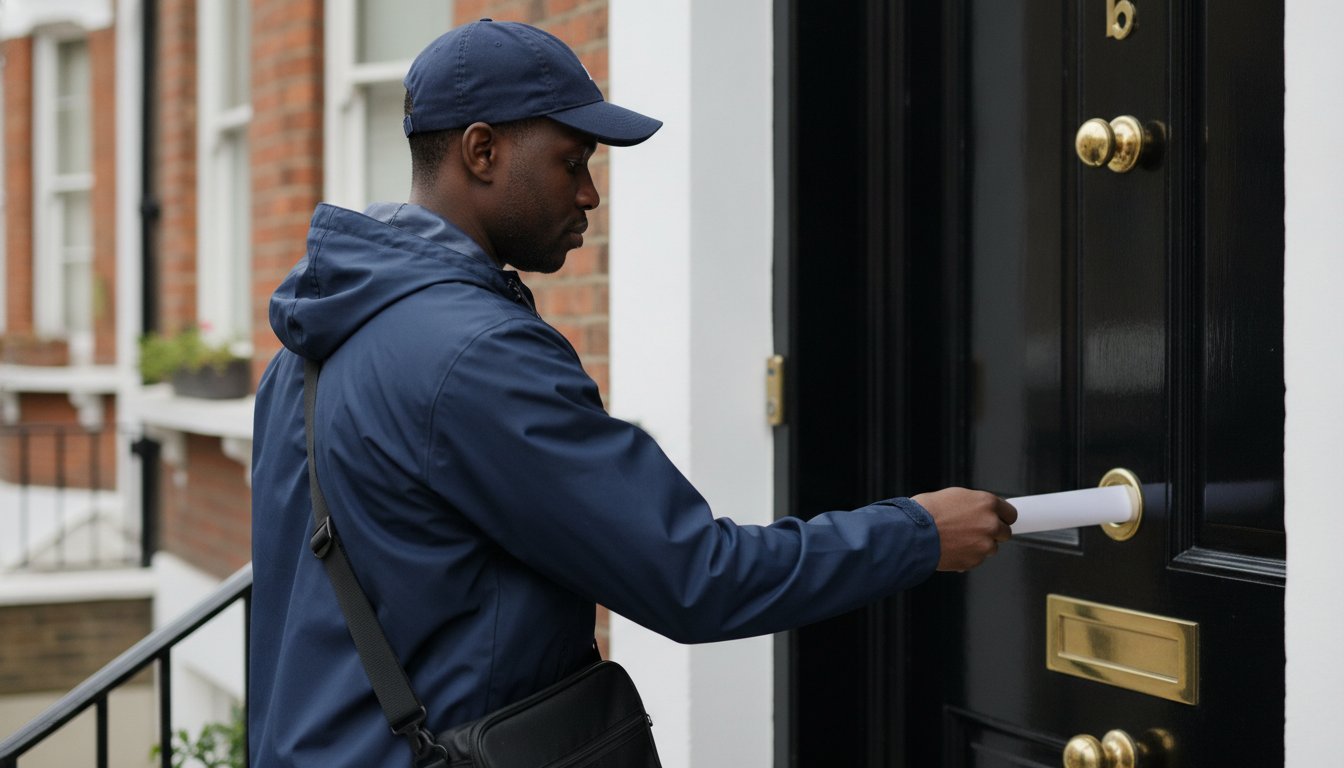
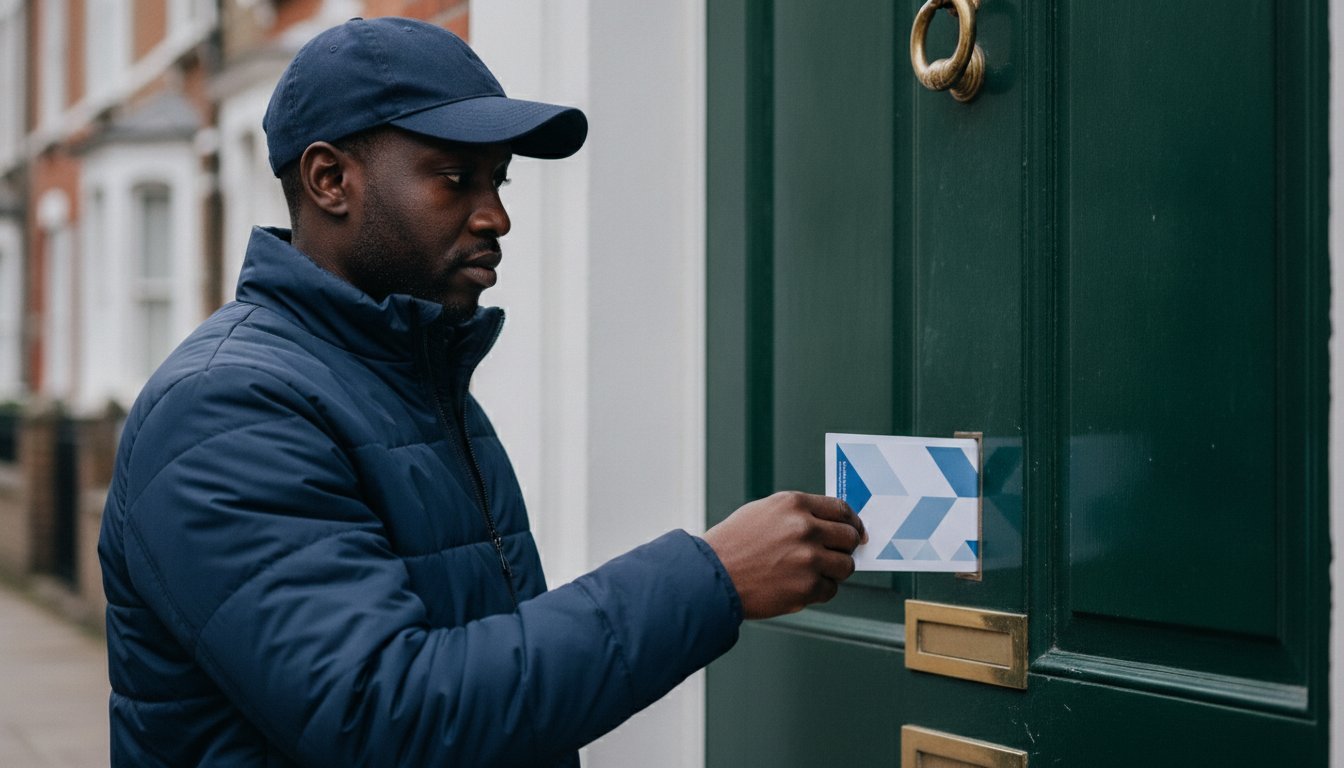
    Londoners are notoriously time-poor and sceptical. Most recipients categorise their post within the first three seconds of picking it up from the doormat. If your flyer arrives scrunched, damp, or buried amongst low-quality mail, it’s headed straight for the recycling bin. A professional, clean delivery is essential for establishing immediate trust in a high-competition environment. By ensuring your leaflets are handled with precision by a specialist like LeafletPro UK, you avoid the common leaflet marketing mistakes London businesses typically encounter. This professional image on the doorstep is the foundation of a high-ROI campaign, turning a simple piece of paper into a credible invitation to engage with your brand.

    Design and Messaging: Where Most Flyers Lose the Doorstep Battle

    One of the most common leaflet marketing mistakes London businesses make is overcomplicating the visual layout. When a recipient picks up a stack of mail, they scan for relevance using a predictable “F-pattern.” They start at the top left, move across, and then scan down the left side. If your primary headline isn’t positioned within this natural eye path, your message is discarded before it’s even processed. Your visual hierarchy must be ruthless; the main benefit should be the largest element on the page, followed by a supporting image and a clear instruction on what to do next.

    Consider the backdrop of a typical London doormat. Most official correspondence, such as council tax statements or utility bills, arrives in white or pale blue envelopes. If your flyer uses a similar muted palette, it risks blending into the “admin pile” that residents often ignore. Using bold, contrasting colours ensures your brand captures attention immediately. However, this visual impact must lead directly to a time-sensitive Call to Action. Failing to include a deadline or a specific reason to act now is a fatal error that results in your flyer being kept for later but eventually forgotten.

    Copywriting for the Busy Londoner

    Effective copywriting for the capital’s busy residents focuses entirely on the recipient’s needs. Instead of leaden introductions about your company’s history, lead with the immediate problem you solve. Mentioning specific London neighbourhoods, such as “Serving residents in Clapham” or “Trusted by homeowners in Islington,” provides instant local social proof that resonates far more than generic claims. To succeed, you must adhere to the One-Second Rule: a leaflet headline must communicate its primary value proposition and brand identity within one second of visual contact to avoid being discarded.

    Print Quality and Physicality

    The physical feel of your flyer speaks volumes about your professional standards. Flimsy, low-grade paper stock often suggests a flimsy service to a discerning audience. Choosing a premium finish or a heavier weight helps your message survive the letterbox without being scrunched and feels substantial in the hand. Avoiding the common leaflet marketing mistakes London firms encounter means treating every design choice as a tool for building credibility. Investing in professional leaflet design ensures that every element, from the paper weight to the visual layout, works together to prevent your campaign from being ignored. If you’re looking to elevate your brand’s presence, our team can help you organise a high-impact design that stands out on any London doormat.

    Targeting Blunders: Why Postcode Precision Trumps Volume

    One of the most common leaflet marketing mistakes London businesses commit is the “Spray and Pray” approach. They prioritise sheer volume, believing that distributing 50,000 leaflets randomly is more effective than a targeted drop of 5,000. This is rarely true. In a city as diverse as London, a mass-market strategy often leads to your message landing on the wrong doormat. It’s far more productive to reach a smaller, high-intent audience than to waste your budget on households that have no use for your service.

    London’s demographics change house by house. The messaging required to resonate with a homeowner in the leafy streets of SW19 is fundamentally different from what works for a young professional in an E17 creative hub. Failing to account for these nuances is a significant oversight. You must also use data to exclude irrelevant areas, such as industrial zones or large-scale social housing developments if you’re promoting a luxury brand. Precise targeting ensures your brand image remains professional and your ROI stays high.

    Postcode vs. Radius Marketing

    A common error is using a simple 1-mile radius for targeting. In London, a single mile can span several different council tax bands and demographic profiles. Relying on a radius often means crossing boundaries into areas where your service isn’t a fit. Instead, the most successful campaigns utilise household targeted leaflet distribution in London by focusing on specific postcode sectors. By mapping your “goldmine” areas based on where your current customers live, you can replicate that success in similar neighbourhoods with surgical precision.

    Seasonal and Timing Errors

    Timing is as critical as targeting. Dropping leaflets during holiday “blackout” periods, such as the peak of the summer holidays or the chaotic week before Christmas, often leads to lower engagement. People are either away or overwhelmed by high volumes of post. You should also consider the synergy between your drops and local events. Hitting a postcode near a local festival or during London Fashion Week can provide a relevant hook for your message. Finally, remember the “Rule of Three.” It’s often better to hit the same postcode three times to build brand recognition than to spread your resources too thin across the capital once. Avoiding these common leaflet marketing mistakes London businesses often make will ensure your campaign is both memorable and effective.

    Common Leaflet Marketing Mistakes in London: A 2026 Strategy Guide

    The Accountability Gap: Avoiding the “Dumping” Disaster

    The industry’s most uncomfortable secret is the reality of “dumping,” where unverified leaflets are discarded in recycling bins rather than delivered to doormats. This usually happens when businesses prioritise the lowest possible price over service integrity. Choosing a distributor based solely on a rock-bottom price per thousand is one of the most common leaflet marketing mistakes London entrepreneurs make. When the cost of distribution seems too good to be true, it’s often because the distributor isn’t paying their walkers a fair wage or investing in the technology required to verify their work.

    Spotting a “cowboy” distributor requires looking for specific red flags before they waste your marketing budget. Reliable partners will always be transparent about their processes and won’t shy away from difficult questions regarding their workforce. A professional agency operates with the understanding that their reputation is tied to your success. By insisting on evidence-based delivery, you transition from a hopeful “drop” to a reliable, long-term marketing programme that builds genuine brand equity across the capital.
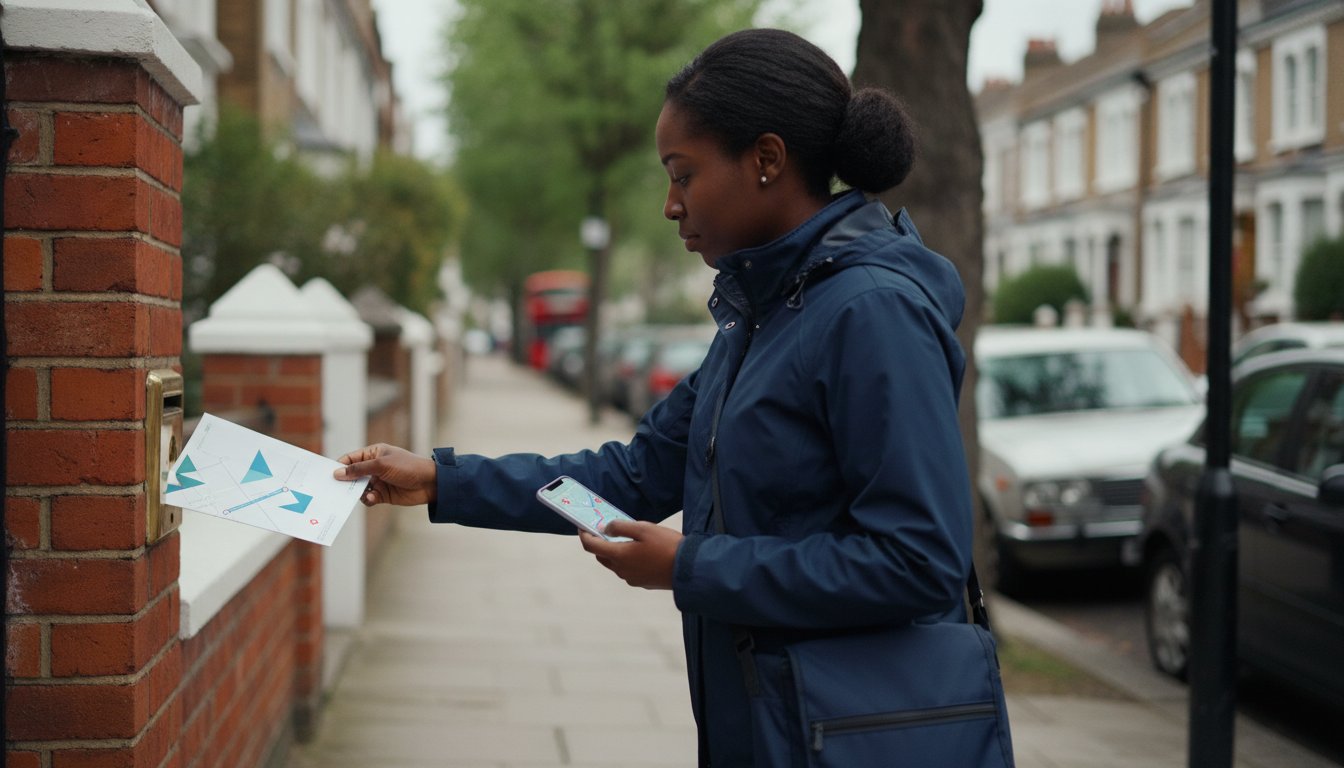
    How to Audit Your Distribution

    A professional GPS tracking report should provide a granular view of the walker’s path, showing exactly which streets were covered and when. It isn’t enough to see a general area highlighted; you need to see the precise movement data that confirms every letterbox was reached. Beyond digital logs, the “back-checking” process remains a vital tool for verification. This involves conducting spot-checks with householders to confirm they received the material. You can learn how to track flyer distribution to ensure 100% coverage and protect your investment from being part of another “dumping” statistic.

    The Peace of Mind Factor

    Transparency acts as the foundation of a successful partnership between you and your London flyer agency. When you have access to verifiable data, you can move beyond the anxiety of missing leaflets and focus on strategy. GPS data provides more than just proof; it allows you to identify “dead zones” where response rates are low, helping you optimise future campaigns for better performance. This level of accountability is directly linked to your final ROI calculations. Without verified delivery, you’re unable to determine if a low response rate was due to your message or simply because the leaflets never reached the doorstep. Avoiding these common leaflet marketing mistakes London businesses often face ensures every pound spent is an active contribution to your growth.

    Scaling Success: Organising a Flawless London Campaign

    Organising a successful marketing drive in the capital requires more than just high-quality flyers; it demands a synchronised approach to the entire campaign lifecycle. One of the common leaflet marketing mistakes London businesses make is treating design, print, and distribution as three disconnected tasks. When these elements are handled by different providers, the risk of logistical friction increases. A design that looks perfect on a screen might use a paper weight that causes issues during high-speed sorting, or a printer might fail to understand the specific bundling requirements needed for a targeted postcode drop. By integrating these stages into a single, cohesive workflow, you ensure that your professional brand image is maintained from the initial concept to the final delivery on the doormat.

    Building long-term momentum is equally vital. Many companies fall into the trap of the “one and done” campaign, where they expect a single drop to generate a permanent shift in sales. In reality, physical marketing thrives on consistency. According to JICMAIL data from 2025, 13.9% of door drops generate a commercial action, but this figure often increases when a brand establishes a recurring local presence. Hitting the same postcode sector three times over a set period builds much higher brand recall than a solitary, unfocused effort. Before your materials leave the warehouse, ensure you’ve verified these five critical points:

    • Postcode Accuracy: Confirm the distribution map aligns exactly with your high-value target sectors.
    • Print Consistency: Verify the physical stock matches the weight and finish of your approved proof.
    • Tracking Readiness: Ensure GPS logging devices are synchronised with the specific walkers assigned to your route.
    • CTA Functionality: Test all QR codes or unique landing page URLs to confirm they track conversions correctly.
    • Quantity Audit: Cross-reference the total print volume against the household counts in your chosen London boroughs.

    The End-to-End Solution

    Using a single partner for both design and delivery significantly reduces the margin for error. At LeafletPro UK, we streamline this process by providing an integrated service that considers the logistical realities of London’s streetscape from the very first sketch. We ensure that your print finishes are durable enough to survive the letterbox whilst maintaining a premium feel that appeals to discerning residents. This systematic approach eliminates the “missing link” between a creative idea and a successfully delivered leaflet.

    Measuring Your ROI

    In 2026, a “good” response rate is defined by its contribution to your bottom line, not just the number of flyers delivered. Utilising unique “London-only” discount codes or postcode-specific QR codes allows you to track exactly where your leads are coming from. This data is essential for calculating the Lifetime Value (LTV) of customers acquired through physical mail. When you understand which streets yield the highest conversion, you can refine your strategy and scale your success with total confidence. Ready to launch? Get a GPS-tracked London distribution quote today.

    Securing Your Brand’s Future in the Capital

    Mastering the nuances of the London market requires a transition from guesswork to verified execution. By prioritising GPS accountability and hyper-local postcode targeting, you eliminate the anxieties of unverified delivery and wasted budget. Avoiding the common leaflet marketing mistakes London businesses often face allows you to focus on what truly matters; building a credible, professional presence on the doorsteps of your ideal customers. Success in 2026 isn’t built on a single drop but on a methodical, data-driven approach that integrates professional design with specialist local knowledge.

    Our end-to-end service combines professional in-house design and print with 100% GPS tracked delivery proof. This systematic approach, backed by specialist London postcode knowledge, ensures your investment is handled with the scrutiny it deserves. We provide the transparency you need to scale your local campaigns with total peace of mind.

    Your next campaign is an opportunity to outpace the competition through precision and reliability. We’re here to ensure every flyer works as hard as you do to grow your business and establish a lasting local reputation.

    Frequently Asked Questions

    How do I know if my leaflets were actually delivered in London?

    GPS tracking reports are the industry standard for verification. These reports provide a digital map showing the exact route taken by the distributor, confirming that every street and letterbox in your target area was reached. We also recommend back-checking, which involves contacting residents in the drop zone to confirm receipt. This dual-layer approach provides the transparency needed to avoid common leaflet marketing mistakes London businesses often encounter with unverified or poorly managed distribution services.

    What is the most common design mistake on London flyers?

    Overcrowding the layout with too much text is the most frequent error. Londoners are typically time-poor and will only engage with a flyer for a few seconds. If your primary value proposition and call to action aren’t immediately obvious, the material is likely to be discarded. Successful designs use high-contrast colours to stand out against white utility envelopes and follow a clear visual hierarchy that guides the eye towards the most important information.

    Which London postcodes have the highest response rates?

    Response rates vary significantly based on your specific industry and the relevance of your offer to local demographics. For instance, home improvement services often see higher engagement in leafy residential areas like SW19 or N6, whilst tech startups might find more success in creative hubs like E1 or N1. High response rates are achieved by matching your message to the specific postcode profile rather than relying on a generic, city-wide drop that ignores local nuances.

    Is GPS tracking really necessary for a small local drop?

    Yes, GPS tracking is essential regardless of the campaign size because it provides accountability and peace of mind. Even for a small drop of 5,000 leaflets, you need proof that your marketing budget wasn’t wasted on materials that ended up in a recycling bin. Tracking data allows you to verify that the distribution was completed as planned, ensuring that every pound spent has a genuine chance of generating a meaningful return for your business.

    How many leaflets should I print for a first-time London campaign?

    A first-time campaign typically requires between 5,000 and 10,000 leaflets to gather meaningful data. This volume allows you to test specific postcode sectors and measure response rates accurately without overextending your initial budget. Printing fewer than 5,000 often results in a sample size too small to determine if your messaging is effective. We suggest focusing this volume on a tightly defined area to build local brand recognition and establish a professional presence.

    Can I target specific types of houses, like terraced or detached, in London?

    You can target specific property types by utilising postcode-targeted flyer distribution. London’s diverse architecture means that certain sectors are dominated by Victorian terraces, whilst others feature modern apartment blocks or detached suburban homes. By selecting postcodes that align with your ideal customer’s housing profile, you ensure your message reaches the right environment. This precision helps you avoid the common leaflet marketing mistakes London firms make when using unfocused radius targeting that crosses demographic boundaries.

    What happens if a distributor is caught dumping leaflets?

    Dumping leaflets is a breach of contract and damages your brand’s reputation. Professional agencies have strict disciplinary procedures for such behaviour and use GPS monitoring to prevent it from occurring. If a distributor is caught, they are typically removed from the workforce immediately. Your agency should then offer a full re-delivery or a refund for the affected area. This is why choosing a transparent partner with a proven track record is vital for your peace of mind.

    How long does a typical London leaflet distribution campaign take to complete?

    A standard campaign of 10,000 leaflets usually takes between five and seven working days to complete. This timeline allows for a methodical and accurate delivery process that ensures every letterbox is reached without rushing the walkers. Larger campaigns or those involving complex multi-occupancy buildings may require additional time. We provide a clear schedule at the start of every project so you can coordinate your internal sales team or local events with the physical drop.

  • Residential Leaflet Drops London: The 2026 Professional Buying Guide

    Residential Leaflet Drops London: The 2026 Professional Buying Guide

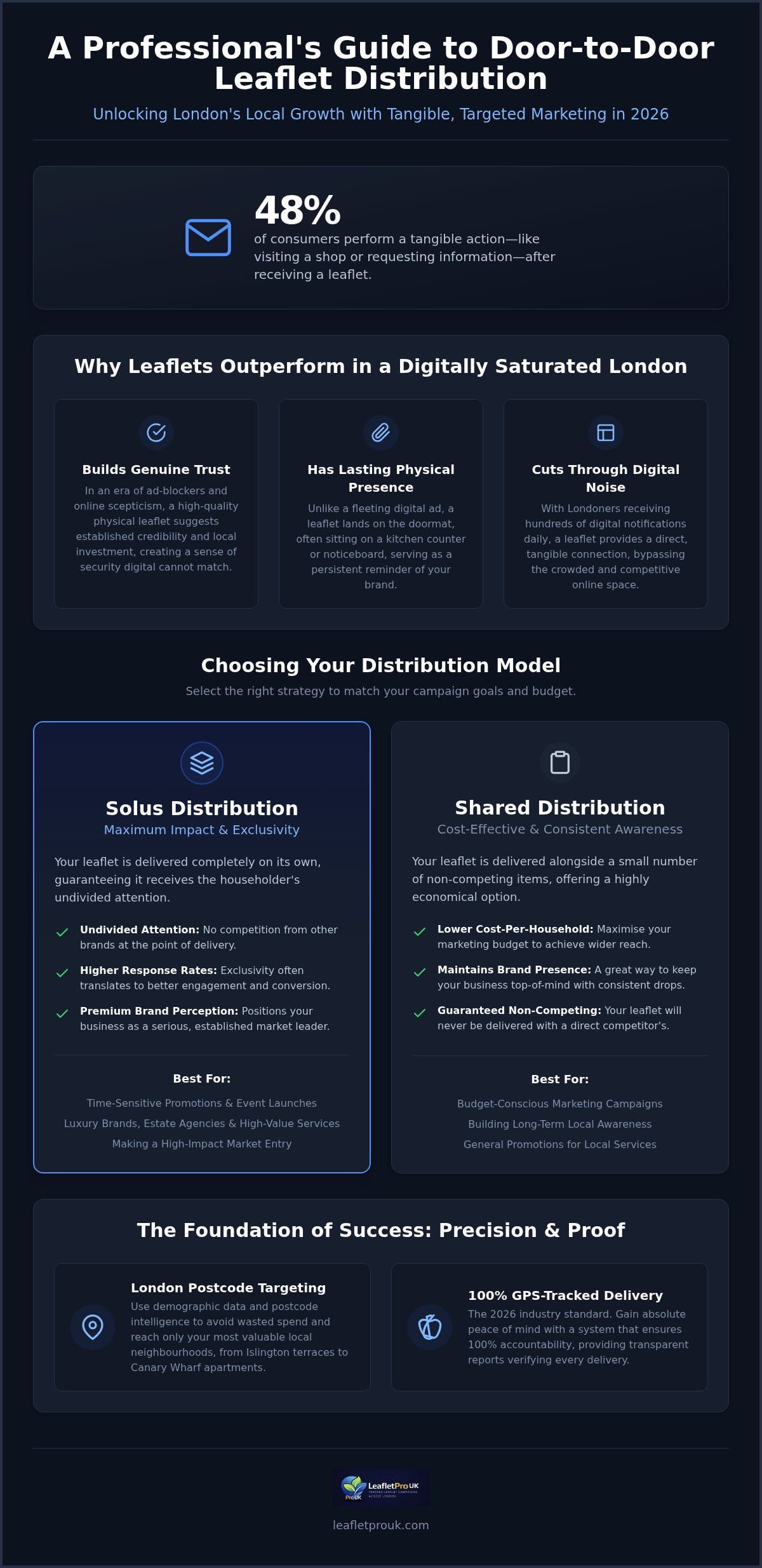
    Did you know that 48% of consumers take a tangible action, such as visiting a shop or requesting information, after receiving a leaflet through their door? Despite this significant potential for growth, many London business owners remain rightfully cautious about the integrity of their physical marketing campaigns. You likely share the common fear that your carefully designed flyers might end up in a recycling bin rather than reaching the letterboxes of your target audience. It is frustrating to invest in a marketing channel where the results often feel invisible or unverified.

    This 2026 guide is designed to replace that uncertainty with professional, data-led confidence. By mastering door-to-door leaflet distribution London, you can secure a reliable stream of local enquiries through precise postcode targeting and absolute transparency. We will show you how to plan a campaign that reaches the right doorsteps every time, backed by the rigorous proof of GPS tracking. You will learn how to navigate London’s unique housing landscape, choose between solus and shared delivery models, and implement a verification system that protects your budget whilst guaranteeing results.

    Key Takeaways

    • Learn why physical mail is outperforming digital channels in London’s 2026 landscape and how to capitalise on this trend for your business.
    • Master the nuances of door-to-door leaflet distribution London by selecting the right solus or shared model to suit your specific growth objectives.
    • Identify how to use demographic data and postcode intelligence to avoid wasted spend and reach only your most lucrative local neighbourhoods.
    • Discover the systematic process of GPS-tracked delivery that ensures 100% accountability and provides absolute peace of mind for your investment.
    • Gain a professional framework for planning your campaign, from high-quality design standards to end-to-end managed distribution.

    Why Residential Leaflet Drops Remain London’s Most Trusted Marketing Channel

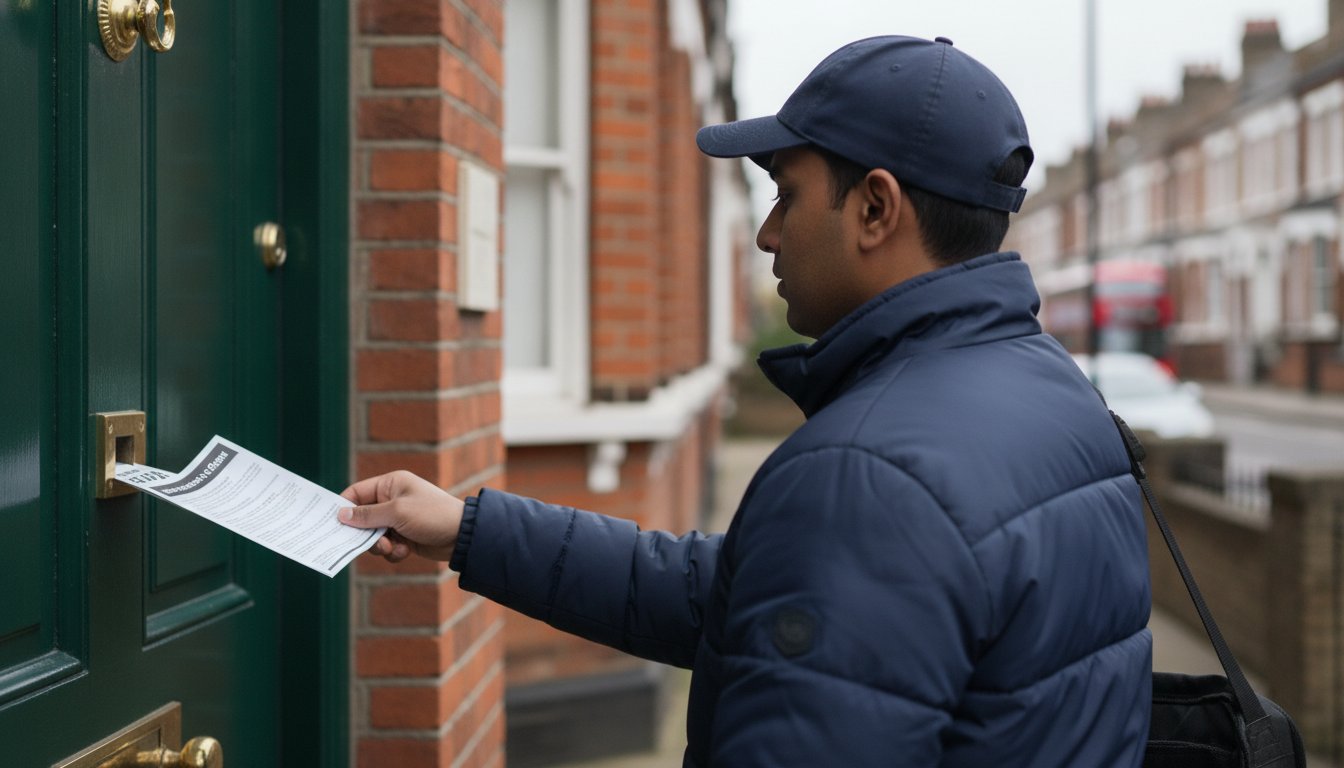
    In 2026, the average Londoner is bombarded by hundreds of digital notifications daily. This digital saturation has led to a significant shift in consumer behaviour; whilst social media ads are swiped away in milliseconds, a physical leaflet held in the hand commands attention. Defining residential leaflet drops is simple: it is the process of door-to-door leaflet distribution London businesses use to reach private households directly, bypassing the noise of the digital inbox. This method ensures your message is the first thing a resident sees when they return home, providing a level of engagement that digital channels cannot replicate.

    London’s unique urban density creates a high-volume opportunity for brands. In postcodes such as SW or N, thousands of affluent households are clustered within walking distance, allowing for rapid, high-impact campaigns. Because these leaflets land on a doormat, they possess a staying power that digital ads lack. A well-designed flyer often sits on a kitchen counter or is pinned to a noticeboard, serving as a persistent physical reminder of your local authority. To better understand how this physical presence translates into brand awareness, watch this helpful video:

    The Trust Crisis in Digital Marketing

    With the rise of sophisticated ad-blockers and stringent privacy updates, reaching a London audience online has become increasingly difficult. Consumers have developed a natural scepticism towards digital content, whereas a high-quality, tangible leaflet suggests a level of established credibility and local investment. The psychological impact of receiving a professionally printed item in a domestic setting creates a sense of security that a digital scroll cannot match. Accountable Distribution is the 2026 industry standard for London brands, representing a commitment to 100% verified delivery through GPS tracking and transparent reporting.

    London’s Residential Landscape: A High-Density Opportunity

    London is a patchwork of architectural styles, from narrow Victorian terraces in Islington to sprawling modern apartment complexes in Canary Wharf and suburban semi-detached homes in Bromley. Successfully executing door-to-door leaflet distribution London requires a specialist who understands these geographical nuances. A local expert knows which blocks require specific access codes and which streets yield the highest response rates for specific sectors. For a deeper look at how to navigate these complexities, read our Household Targeted Leaflet Distribution in London: The 2026 Strategic Guide.

    Choosing Your Distribution Model: Solus vs Shared Residential Drops

    Selecting the delivery model for your door-to-door leaflet distribution London campaign is a strategic decision that directly impacts your response rates and overall return on investment. In the diverse London market, your choice usually depends on whether you require immediate, high-impact exclusivity or a cost-effective method to maintain consistent local awareness. Both models have their place in a 2026 marketing budget, provided they are executed with a commitment to transparency and verified delivery. If you’re unsure which model fits your current objectives, you can explore our tailored options for leaflet distribution London to find the perfect balance.

    When to Invest in Solus Distribution

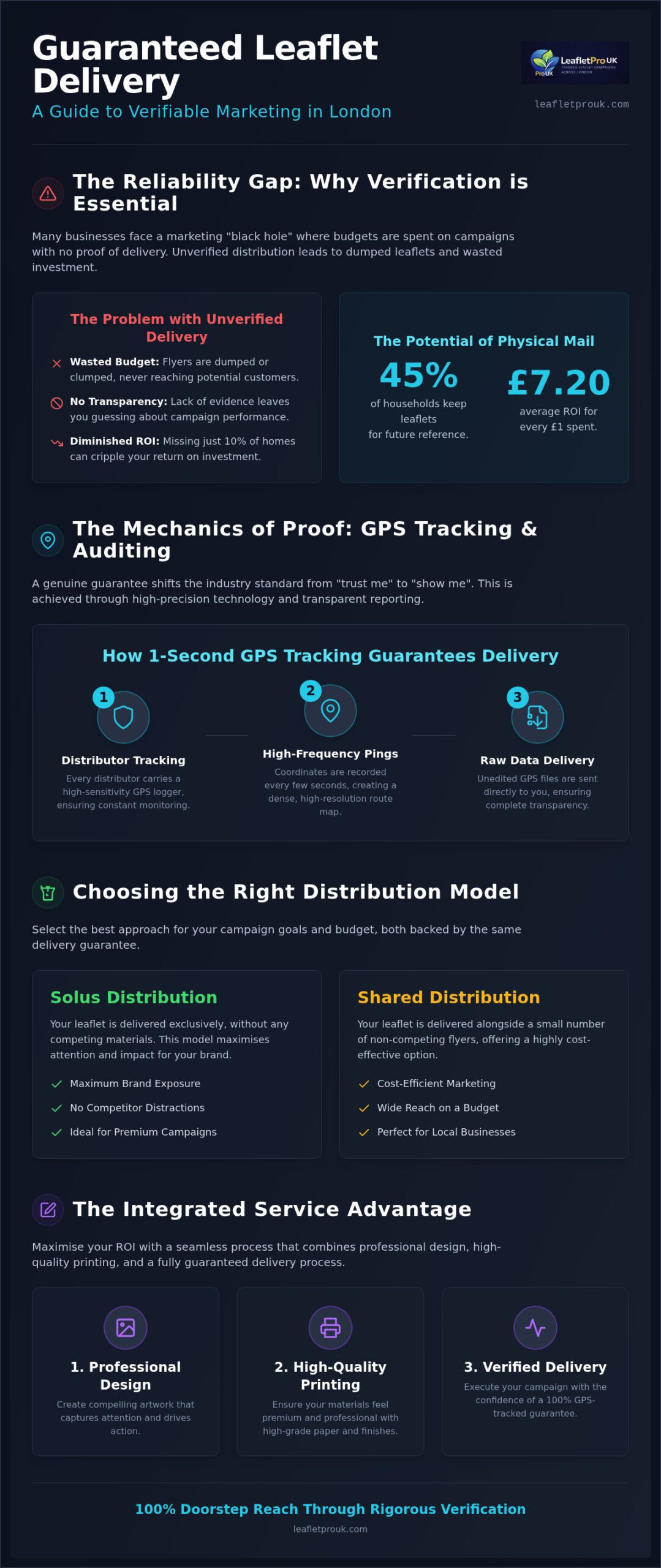
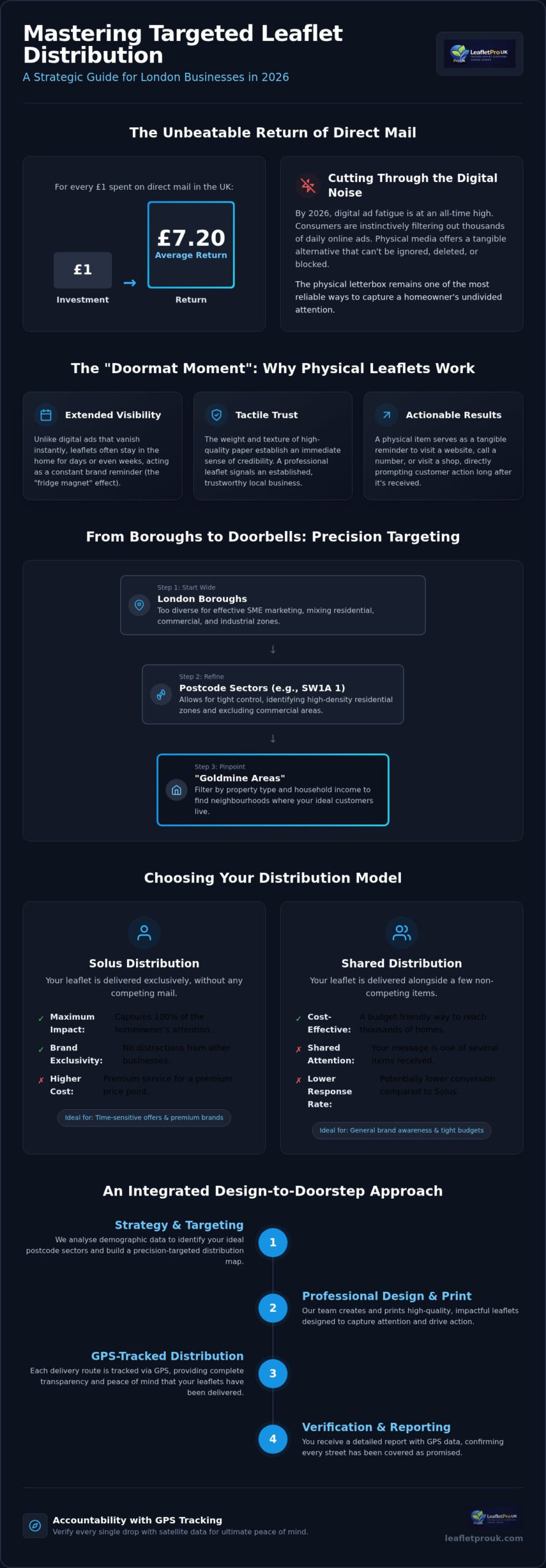
    Solus distribution represents the gold standard of residential marketing. In this model, your leaflet is the only item delivered to the household, ensuring it receives the recipient’s undivided attention the moment they pick it up from the doormat. Exclusivity drives results. This approach is particularly effective for estate agency launches, luxury home services, or time-sensitive promotional offers where you cannot afford to be overshadowed by other brands. You gain absolute control over the timing of your drop, allowing you to align your physical marketing with specific events or seasonal peaks in the London property market.

    Maximising ROI with Shared Distribution

    Shared distribution offers a sophisticated, budget-friendly alternative for businesses looking to reach a high volume of households. This method involves pairing your leaflet with two or three other non-competing items, such as a local restaurant menu or a gym promotion. At LeafletPro UK, we adhere to a strict cleanliness rule. This ensures your flyer is never buried amongst a thick stack of junk mail; instead, it remains part of a curated, professional bundle. Shared drops are ideal for sectors like home improvements or local hospitality, where building long-term brand recognition across specific postcodes is more important than immediate exclusivity. It allows you to stretch your 2026 marketing budget further whilst maintaining a regular presence in your target neighbourhoods.

    Regardless of the path you choose, GPS tracking remains a non-negotiable standard. In a city as complex as London, you need more than just a promise of delivery; you require systematic proof. Every distributor should provide a digital audit trail showing exactly which streets were covered and when. This level of accountability eliminates the traditional anxieties of the industry, transforming a simple flyer drop into a reliable, evidence-based growth engine for your business. Whether you opt for the premium impact of solus or the strategic value of shared drops, the focus must always be on precision and verified reach.

    The London Postcode Goldmine: Precision Targeting for Better Results

    London’s marketing landscape is too varied for blanket drops to be effective. If you’re a high-end landscaper, delivering to a high-rise block in Canary Wharf is a waste of your budget. Precision is the key to ROI. By focusing on specific postcode sectors, you ensure your message reaches the doormats of residents who actually need your services. This strategic approach transforms door-to-door leaflet distribution London from a volume game into a targeted surgical strike. To understand the latest shifts in local populations, consult our London Postcode Demographics: 2026 Marketing Guide.

    Identifying Your Ideal London Demographic

    Success begins with matching your offering to the local population’s lifestyle. For luxury brands or high-end estate agents, targeting affluent ABC1 households in areas like Chelsea (SW3) or Hampstead (NW3) provides the highest probability of conversion. Conversely, if you’re promoting a new fitness app or a trendy coffee shop, the young professional hubs of Hackney (E8) or Clapham (SW4) are far more lucrative. We use deep local knowledge to filter out dead zones. This means we skip industrial estates, commercial-only streets, and non-residential blocks where your leaflets would simply be discarded.

    The Power of Postcode-Level Precision

    London’s geography is famously granular. A single postcode sector, such as W1U 1 in Marylebone, can have a completely different demographic profile than the street just two minutes away. This is why we don’t just target broad boroughs. We look at housing types to refine our delivery routes. If your business sells premium garden furniture, we’ll prioritise the leafy suburbs of Richmond or Dulwich over high-density apartment zones. Targeting garden owners directly is far more efficient than hoping a flat-dweller might one day move house.

    LeafletPro UK uses advanced mapping data to refine every residential delivery route. This ensures your campaign avoids the blind distribution that plagues less organised competitors. By focusing on letterboxes with the highest potential, you maximise your response rate whilst minimising waste. For a step-by-step guide on setting up your own targeted campaign, see our How to Target Postcodes for Leaflet Distribution London: The 2026 Checklist. Our methodical approach ensures that every flyer is delivered with purpose, providing the systematic reliability your business deserves.

    Residential Leaflet Drops London: The 2026 Professional Buying Guide

    Planning Your Campaign: From Design to GPS-Tracked Delivery

    A successful door-to-door leaflet distribution London campaign relies on a methodical, five-step planning process. Initially, you must define a clear objective for your drop. Whether your goal is to generate immediate enquiries, increase local footfall, or establish long-term brand awareness, every subsequent decision should support this aim. Once the objective is set, you can move through the logistical stages of design, print, and distribution with precision.

    • Step 1: Define your objective. Align your message with a singular goal to ensure clarity for the recipient.
    • Step 2: Professional design. Avoid a ‘DIY’ appearance; in London’s discerning market, visual credibility is non-negotiable.
    • Step 3: High-quality printing. Select paper weights that feel premium to the touch, reinforcing the perceived value of your brand.
    • Step 4: GPS-tracked distribution. Demand systematic verification to ensure every flyer reaches the correct letterbox.
    • Step 5: Reporting and analysis. Use the delivery data to identify high-performing postcodes and refine your future strategy.

    Design and Print: The Silent Salesmen

    Your leaflet acts as a silent representative for your business. To be effective, it requires a bold headline that addresses a specific local need, professional imagery, and a singular, compelling call-to-action. The physical quality of the paper is equally important. A higher GSM (Grams per Square Metre) ensures your leaflet doesn’t feel flimsy or insubstantial when picked up from a doormat. We offer dedicated design support and high-quality printing to ensure your marketing materials reflect the professional standards of your business.

    Verification: Understanding GPS Tracking Reports

    Accountability is built into every campaign through our 1-second GPS tracking technology. This system creates a detailed audit trail, providing a digital record of every street and household covered by our distributors. We don’t just provide a service; we provide a verifiable audit trail that offers total visibility over how your budget is being utilised. These reports are delivered as standard, allowing you to cross-reference delivery areas with the resulting enquiries or sales.

    GPS-verified data effectively eliminates the ‘dumping’ anxiety that often concerns business owners when investing in physical distribution. By providing a transparent and evidence-based reporting system, we ensure your investment is handled with the highest level of professional integrity. This systematic approach transforms residential drops into a reliable, verifiable channel for growth across London’s most lucrative neighbourhoods.

    Why LeafletPro UK is London’s Premier Residential Distribution Partner

    Choosing a partner for door-to-door leaflet distribution London requires more than just logistical capacity; it demands a deep, street-level understanding of the city’s unique geography. Unlike national providers who often rely on fragmented data or external contractors, we focus exclusively on the London market. This specialisation allows us to provide a level of precision and accountability that broader agencies simply cannot match. We act as your diligent partner, ensuring every campaign is executed with the systematic care your brand deserves.

    London-Only Expertise

    Managing London’s residential landscape involves overcoming complex access requirements, from high-security gated communities to concierge desks in modern apartment blocks. Our teams are intimately familiar with these local nuances, which ensures your leaflets actually reach the letterbox rather than being left in communal areas. This local accuracy is vital for service providers who need to build trust within specific neighbourhoods. For example, tradesmen looking to expand their local footprint can find tailored strategies in our London Tradesmen Leaflet Distribution: 2026 Growth Guide.

    Our commitment to transparency is reflected in our end-to-end service model. We manage the entire process, including design support, high-quality printing, and GPS-verified delivery, so you don’t have to coordinate multiple suppliers. This integrated approach ensures that the professional standard established during the design phase is maintained right through to the final doormat. We’ve successfully partnered with estate agents, local retailers, and tradesmen across every London borough, providing the tangible evidence of delivery that builds long-term confidence.

    Launching Your 2026 Campaign

    Starting your next campaign is a straightforward, methodical process designed to respect your time and budget. We begin by understanding your specific objectives and target postcodes, then provide a bespoke quote that reflects your requirements. There aren’t any hidden costs or vague promises; every step of the integrated customer journey is documented and verified. By combining local expertise with 1-second GPS tracking data, we provide the peace of mind that your investment is being handled with absolute professional integrity.

    Securing Your Local Growth in 2026

    Success in the capital’s competitive landscape requires a shift from speculative marketing to accountable precision. By combining hyper-local postcode intelligence with high-quality design, you ensure your message resonates with the right households. We’ve explored how systematic GPS tracking and a specialist focus on London’s unique geography eliminate the traditional risks associated with physical drops. Establishing a consistent presence through door-to-door leaflet distribution London allows your business to build genuine local authority directly on the doormat.

    As London postcode specialists, we provide an end-to-end solution where design and print are included as standard. Every delivery is GPS tracked to provide you with absolute transparency and peace of mind. You can now plan your residential campaigns with the confidence that every flyer is being handled with professional integrity and care.

    You don’t have to navigate the city’s complex logistics alone. With a diligent partner and verified delivery data, your next campaign can be the catalyst for sustainable and measurable business growth.

    Frequently Asked Questions

    How much does a residential leaflet drop in London cost in 2026?

    Campaign investment depends on your chosen distribution model and the total volume of households targeted. Solus distribution, where your flyer is delivered alone, carries a higher premium due to exclusivity and timing control. Shared distribution offers a more economical alternative by pairing your message with non-competing brands. We provide bespoke quotes based on your specific 2026 marketing objectives; this ensures you only pay for the precision targeting your business requires.

    How do I know my leaflets were actually delivered to the houses?

    Verification is handled through our 1-second GPS tracking system, which creates a precise digital audit trail of every delivery route. This data is provided to you in a comprehensive report, offering tangible proof of delivery to every doorstep in your target area. By using this systematic approach, we eliminate the anxiety of leaflets being discarded. You can cross-reference these reports with your own enquiry data to measure the success of your campaign accurately.

    What is the difference between solus and shared leaflet distribution?

    Solus distribution ensures your leaflet is the only item posted through the letterbox, providing maximum visibility and zero competition on the doormat. Shared distribution involves delivering your flyer alongside two or three non-competing items, which significantly reduces the cost per thousand. While solus is ideal for time-sensitive or high-end promotions, shared drops are an excellent way to maintain a consistent presence across door-to-door leaflet distribution London routes whilst managing a strict budget.

    Which London postcodes have the highest response rates for residential drops?

    There is no single “best” postcode; success is determined by how well your offering matches the local demographic profile. Affluent sectors in SW (South West) or W (West) London typically yield high response rates for premium home improvements and estate agency services. Conversely, high-density areas in East London often respond better to local hospitality or fitness promotions. We use demographic data to help you identify the specific neighbourhoods where your message will resonate most effectively.

    Can you help with the design and printing of my leaflets?

    We provide a complete end-to-end service that includes professional design support and high-quality printing alongside our distribution expertise. Our design team ensures your leaflet features a compelling headline and clear call-to-action that appeals to a London audience. We also offer various paper weights to ensure your marketing material feels premium when handled. This integrated approach saves you the logistical stress of managing multiple suppliers whilst guaranteeing a professional standard for your brand.

    How long does it take to complete a residential leaflet drop across a London postcode?

    The duration of a drop depends on the scale of your target area and whether you’ve chosen a solus or shared model. A typical campaign targeting a specific postcode sector can be completed within five to ten working days. Solus drops offer more flexibility for precise timing, whereas shared drops are scheduled to align with other non-competing items. We provide clear timelines at the start of your project so you can prepare for the resulting enquiries.

    Is GPS tracking included as standard with all LeafletPro UK campaigns?

    Yes, GPS tracking is an essential standard for every campaign we execute across the capital. Transparency is a core value of our service; we don’t believe in “blind” distribution that leaves business owners guessing. By including GPS tracking as standard, we provide the systematic proof required to verify that your door-to-door leaflet distribution London investment has reached every intended household. This level of accountability is what distinguishes our professional service from less organised competitors.

    Do you deliver to apartment blocks and gated communities in London?

    Our teams are specifically trained to handle London’s complex residential landscape, including gated communities and modern apartment blocks with concierge desks. Navigating these high-density developments requires local expertise and a professional approach to gain access to internal letterboxes. Because we focus exclusively on the London market, we have the experience necessary to ensure your leaflets are delivered correctly in areas that national providers might find difficult to access or navigate effectively.

  • London Postcode Demographics: 2026 Marketing Guide

    London Postcode Demographics: 2026 Marketing Guide

    Could your current marketing strategy be obsolete by 2026 because you’re targeting the London of yesterday? The city’s demographic map is shifting rapidly; relying on outdated assumptions often leads to wasted budgets and missed opportunities. You likely find that interpreting raw ONS data is a frustrating task, especially whilst trying to predict which boroughs are growing or shrinking. It is difficult to know exactly where your ideal customers live amongst the complex layers of the capital’s postcodes.

    We understand that precision is the only way to ensure your message lands on the right doormat. This guide will help you master london postcode demographics for marketing so you can identify high-value areas and execute high-ROI leaflet campaigns with confidence. We’ll examine the critical differences between inner and outer London density and provide a clear list of target postcodes for your next campaign. You will gain a reliable framework to turn complex data into a systematic distribution plan that prioritises accountability and delivers tangible results.

    Key Takeaways

    • Learn why postcode sectors are the essential unit for precise targeting, allowing you to reach specific households rather than wasting budget on broad districts.
    • Master the use of london postcode demographics for marketing to align your messaging with local social grades and household tenure across diverse boroughs.
    • Understand the 2026 population shift from the centre to the outer ring and how to balance high-density drops with suburban growth areas.
    • Identify sector-specific strategies for industries like estate agency and leisure to capture high-churn or young professional audiences in key postcodes.
    • Gain full visibility over your investment by using GPS-tracked delivery reports to verify that every targeted postcode is reached with precision.

    Understanding the London Postcode Map for Marketing

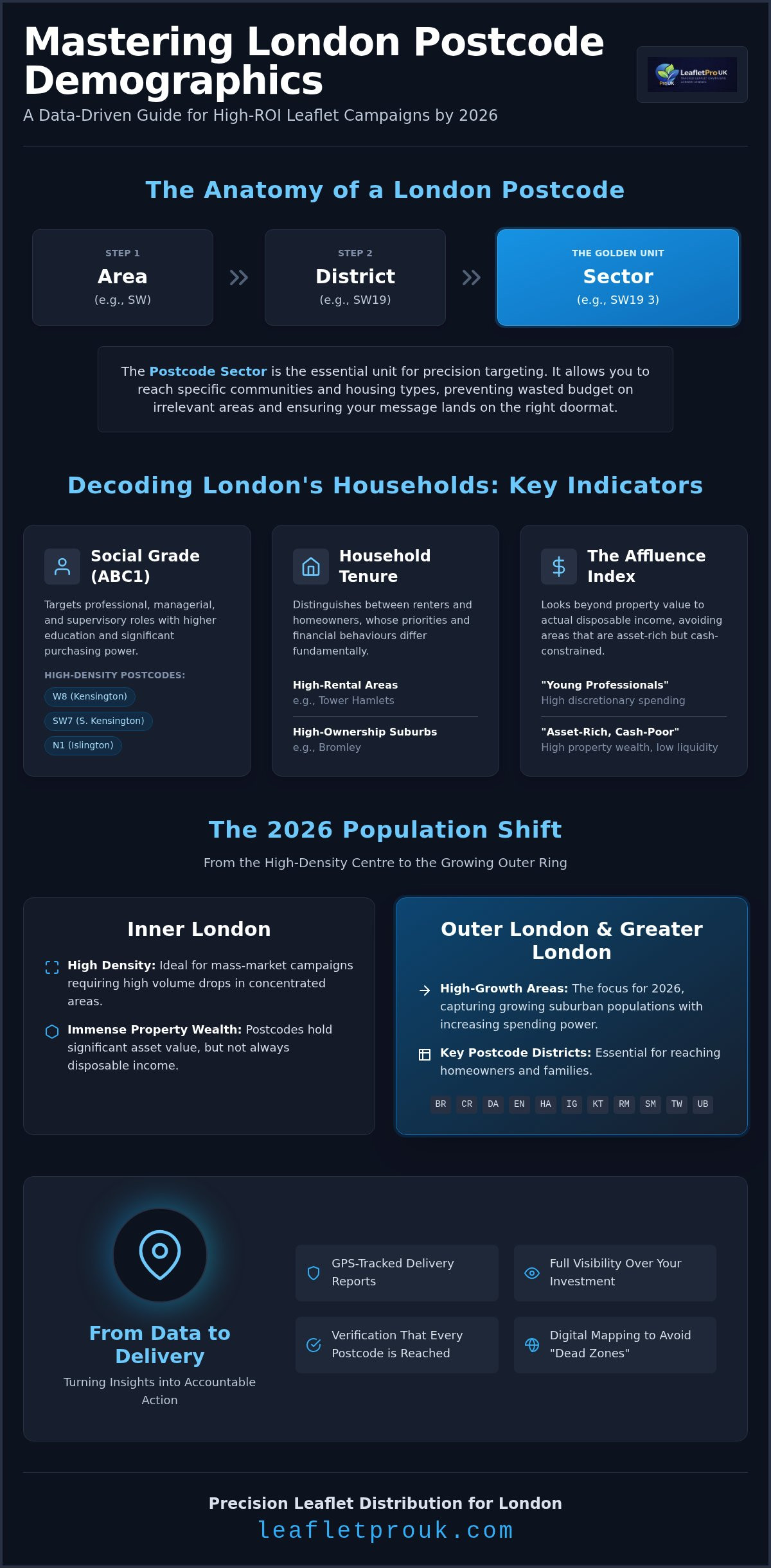
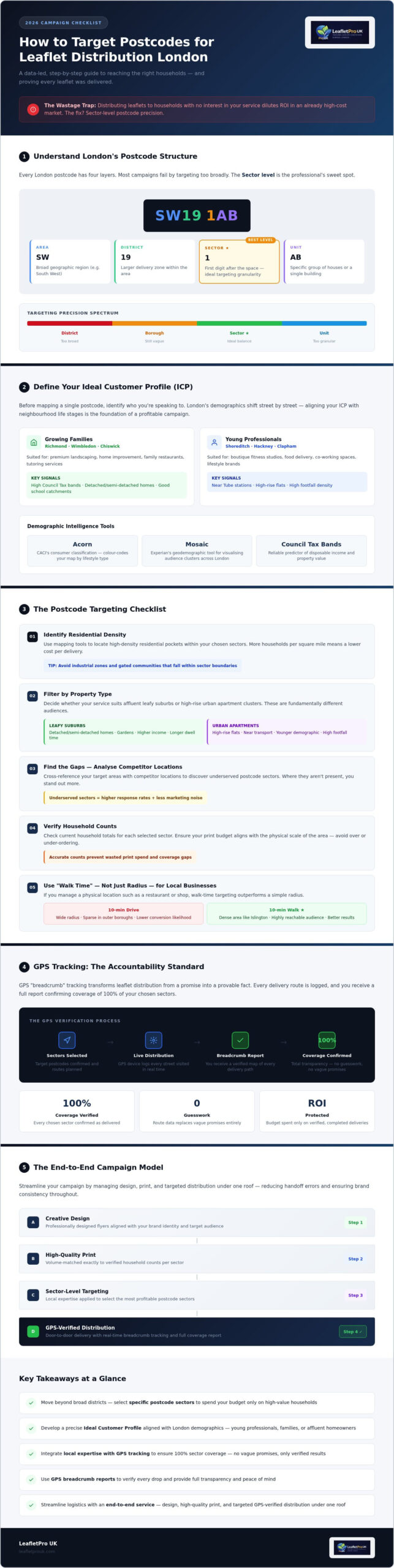
    To master london postcode demographics for marketing, you must first understand the structural hierarchy of the capital’s mailing system. It is a system built for logistics, yet it provides the most reliable framework for targeting specific household types. London is divided into eight primary compass-based areas: N, E, SE, SW, W, NW, WC, and EC. Within these areas, the hierarchy drills down from the Area (e.g., SW) to the District (e.g., SW19), and finally to the Sector (e.g., SW19 3).

    We consider postcode sectors the “golden unit” for distribution. Whilst a district might cover a broad range of residents, a sector often represents a specific community or housing type. This level of granularity prevents you from sending luxury brochures to industrial zones or student housing. It is also a common mistake to assume postcode boundaries align with local authority boroughs. In reality, they often overlap. This makes raw ONS data difficult to use for marketing without expert interpretation, as a single borough’s statistics might be split across several different postcode districts.

    Postcode Areas vs. Postcode Districts

    A Postcode Area like SE (South East) is far too broad for a targeted campaign. It covers everything from high-density urban flats to quiet suburban streets. Most successful marketing budgets are allocated at the District level, where you can begin to see clear demographic patterns. However, you must also account for the “out-of-London” postcodes that are technically within Greater London. These include BR (Bromley), CR (Croydon), DA (Dartford), EN (Enfield), HA (Harrow), IG (Ilford), KT (Kingston), RM (Romford), SM (Sutton), TW (Twickenham), and UB (Uxbridge). These areas are essential for brands looking to reach growing suburban populations in 2026.

    Visualising Your Target: Maps and Boundaries

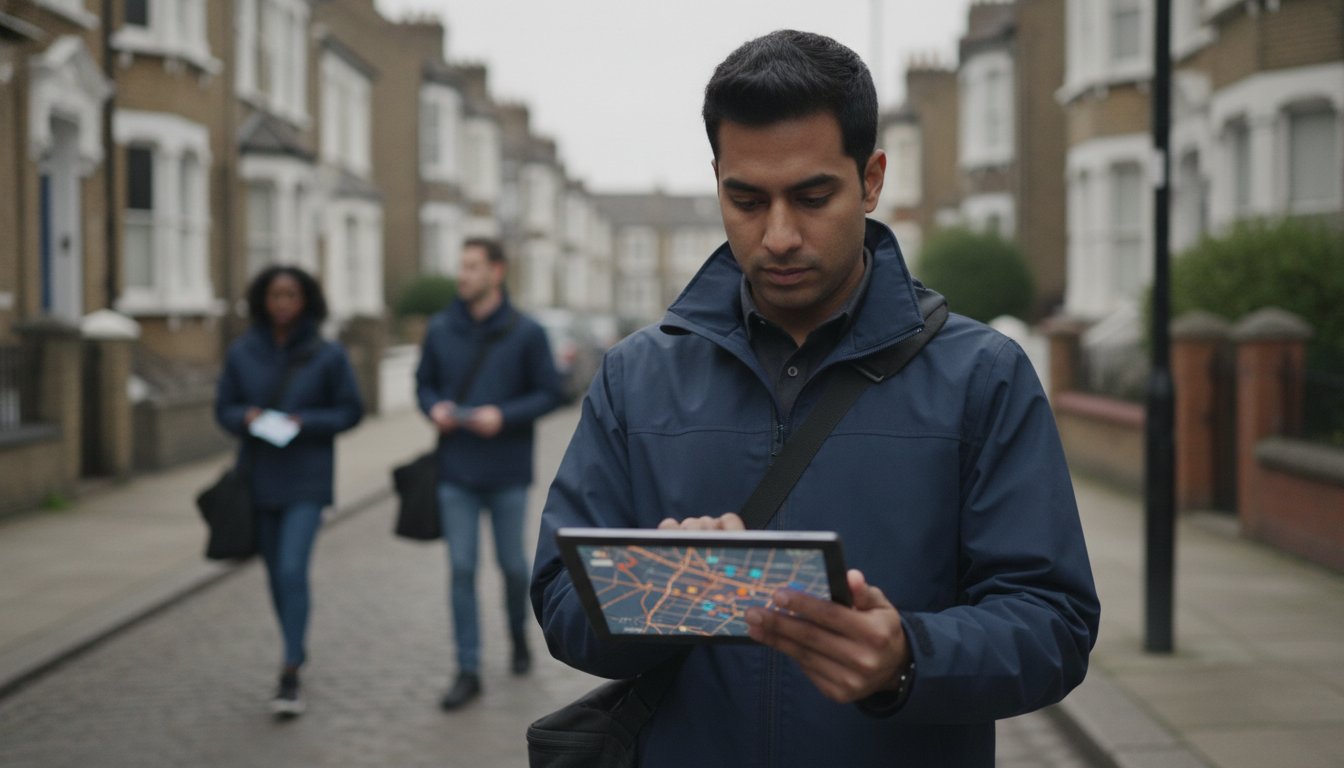
    Effective distribution requires more than just a list of codes. You need to visualise the physical layout of your target area to ensure maximum efficiency. Using digital mapping tools allows us to overlay london postcode demographics for marketing onto delivery routes, ensuring we avoid “dead zones” such as large parks or industrial estates where no letterboxes exist. This level of precision ensures your budget is spent only on residential properties with the highest potential for conversion.

    Our approach relies on GPS tracked leaflet distribution to ensure these boundaries are strictly enforced during the delivery process. This systematic verification provides the peace of mind that your campaign has reached the exact households you intended to target. By mapping the terrain before the first flyer is delivered, we eliminate the uncertainty often associated with large-scale London campaigns.

    Key Demographic Indicators: Affluence, Tenure, and Social Grade

    Successful campaigns rely on more than just location; they require a deep understanding of the people behind the letterboxes. When analysing london postcode demographics for marketing, we categorise households based on social grade, tenure, and disposable income. These indicators dictate not only where you should distribute but also the tone and offer of your marketing material. A message that resonates in a high-rental area like Tower Hamlets will likely fail in a high-ownership suburb like Bromley because the residents’ priorities and financial behaviours differ fundamentally.

    In 2026, the “Affluence Index” is a critical tool for distinguishing between high property values and actual disposable income. Some central districts possess immense property wealth but house residents who are asset-rich yet cash-constrained. Conversely, emerging “Young Professional” belts often feature high levels of discretionary spending despite lower equity. Identifying these nuances ensures you don’t waste your budget on areas that look wealthy on paper but lack the liquidity to engage with your brand.

    The ABC1 Household Volumes in London

    The ABC1 social grade remains the benchmark for luxury brands and professional services. This category includes residents in professional, managerial, and supervisory roles who typically possess higher education levels and greater purchasing power. Postcodes such as W8 (Kensington), SW7 (South Kensington), and N1 (Islington) maintain the highest density of these households. To engage this audience, your leaflet design must reflect their status through minimalist aesthetics, high-gsm paper stock, and sophisticated typography that avoids aggressive sales language.

    Tenure Profile: Renters vs. Homeowners

    Household tenure is perhaps the most overlooked factor in London distribution. Projections for 2026 indicate a continued rise in private renting within outer boroughs, creating a transient but high-spending demographic. If you’re a tradesman offering roofing, extensions, or solar panel installations, your efforts must be focused exclusively on homeowners. These residents have the authority and motivation to invest in property maintenance, whereas renters will ignore such offers entirely.

    You can refine your approach by using household targeted leaflet distribution London to filter your campaign by property type and tenure. This systematic approach ensures that your flyers reach only the individuals with the power to make a purchase. If you’re unsure which tenure profile fits your business, we can help you organise a consultation to align your distribution with the most profitable household data available.

    Age demographics also play a vital role in tenure. The “Young Professional” belt, stretching through E8 and SW11, is dominated by high-churn rental sectors. In contrast, “Established Family” suburbs like Richmond or Dulwich are characterised by long-term ownership and stable household compositions. Aligning your product’s life-cycle with these geographic age brackets is essential for maintaining a high ROI.

    Inner vs. Outer London: Where High Density Meets Growth

    The demographic landscape of the capital is undergoing a significant transformation. By 2026, we expect a continued migration of marketing spend from the traditional central hubs to the expanding outer ring. Whilst central districts once held the monopoly on high-value targets, the “hollowing out” of the centre means that resident numbers in areas like Westminster are declining relative to the suburbs. However, you must account for the “Westminster Effect”; although resident volumes are lower, the value per doormat remains exceptionally high, making it a niche rather than a volume play.

    Effective london postcode demographics for marketing now require a balance between density and reach. Central drops in SE1 or EC postcodes offer high density but come with higher logistical costs due to access restrictions. Conversely, the outer boroughs offer the volume needed for broad brand awareness. We are seeing rapid population growth in boroughs like Tower Hamlets and Barking & Dagenham, where new residential developments are creating thousands of fresh opportunities for local businesses to engage with households.

    The Growth Postcodes of 2026

    East London continues to lead the way in residential expansion. Infrastructure projects like the Elizabeth Line have fundamentally shifted the demographic maps, making postcodes like E14, E16, and E20 more accessible and attractive to high-earning professionals. This growth directly impacts distribution availability. In these high-demand sectors, “Solus” distribution is often the preferred choice to ensure your brand stands out amongst the influx of new residents, rather than being lost in a “Shared” delivery round.

    Accessing High-Density Urban Environments

    Reaching households in high-density areas like SE1 or E14 presents unique logistical challenges. Apartment blocks and gated communities often require specific access codes or concierge permissions. Without a systematic approach, these “vertical streets” can become missed opportunities. This is why GPS tracking is a non-negotiable requirement for modern campaigns; it provides the verification that your distributors have successfully reached every floor.

    Our verified flyer distribution London service is designed to overcome these urban hurdles. We use precision mapping to ensure that high-density drops are executed with the same level of accountability as suburban rounds. By prioritising transparency and logistical excellence, we ensure your message reaches the right households, regardless of the architectural complexity of the postcode.

    London Postcode Demographics: 2026 Marketing Guide

    Sector-Specific Postcode Targeting Strategies

    Applying london postcode demographics for marketing requires a tailored approach that aligns with your specific industry goals. Data alone doesn’t guarantee success; it’s the strategic application of that data that drives ROI. We’ve observed that the most successful campaigns don’t just target wealthy areas, they target the right mindset and lifestyle within those areas. Whether you’re an estate agent looking for high-churn sectors or a local restaurant building a loyal neighbourhood following, your postcode selection must be methodical.

    Estate agents often find the highest returns by targeting postcodes with high transaction volumes and “Recently Sold” activity. Similarly, gyms and leisure providers should focus on “Young Professional” density. Areas like N1 (Islington), E8 (Hackney), and SW11 (Battersea) are prime examples where high-disposable-income renters seek local lifestyle services. For high-end home improvement brands, the focus shifts to established “Wealthy Suburbs” such as Richmond (TW9) or Dulwich (SE21), where property owners possess both the equity and the desire for long-term renovations. Local restaurants, meanwhile, should adhere to the 2-mile radius rule. Slighting your budget across a broad area is less effective than achieving total saturation within the immediate postcode sectors surrounding your venue.

    Leaflet Distribution for Tradesmen

    For tradesmen, identifying postcodes with older housing stock is the most reliable way to find households requiring ongoing maintenance. Victorian and Edwardian terraces in the SW and N districts often have higher demands for roofing, plumbing, and electrical upgrades than newer developments in the East. These “affluent but busy” households value reliability and professional standards above all else. You can find more specific growth tactics in our guide to leaflet distribution for tradesmen London, which focuses on aligning your service with these high-demand residential pockets.

    Retail and Hospitality Targeting

    Driving footfall to new London openings requires a clear distinction between the “Daytime Population” and the “Resident Population.” The City (EC postcodes) is a classic example of this trap. Whilst thousands of professionals occupy these streets during work hours, the actual resident count is relatively low. If your business relies on evening or weekend trade, you’ll find much better results targeting the residential belts of Hackney or Lambeth. You can use a how to target postcodes for leaflet distribution London checklist to ensure your campaign remains focused on the highest-potential households at the right time.

    Turning Data into Deliveries with GPS Tracking

    Identifying the most profitable london postcode demographics for marketing is a vital first step, but data alone doesn’t guarantee your flyers reach the right doormats. The most sophisticated demographic map is only as effective as the physical distribution that follows it. Without rigorous accountability, the precision of your targeting can be lost during the final mile of delivery. We bridge this gap by turning abstract data into a systematic, verified process that ensures your investment is protected through every stage of the campaign.

    Our approach moves beyond simple delivery by integrating demographic insights with logistical proof. We don’t just tell you which postcodes are growing; we provide the evidence that those specific areas have been thoroughly covered. This transition from planning to execution is where many campaigns fail, often due to a lack of visibility over the distribution staff. By prioritising transparency, we allow you to launch your campaign with the confidence that your message is being handled with the same level of care you put into your brand’s strategy.

    The Role of GPS Accountability

    In 2026, GPS tracking has become the non-negotiable security standard for London marketing. A GPS report isn’t just a map; it’s a verification tool that shows the exact path taken by a distributor, right down to the individual street and household level. When you review these reports, you can see the precise coverage of your chosen postcode sectors, ensuring no “dead zones” were left untouched. This level of scrutiny allows us to identify and correct any potential gaps in real-time, providing a layer of accountability that traditional, unmonitored distribution simply cannot match. It’s the difference between hoping your flyers were delivered and knowing they were.

    Launching Your Demographic-Led Campaign

    Launching a high-ROI campaign requires a seamless transition from postcode selection to final reporting. The process begins with our demographic analysis, where we help you isolate the sectors that match your ideal customer profile. Once the targets are set, the focus shifts to high-quality printing. It’s essential that the physical leaflet matches the expectations of the chosen demographic; an affluent household in Richmond expects a different tactile experience than a young professional in Hackney. We manage this end-to-end journey to ensure your brand’s credibility remains intact from the first design proof to the final letterbox drop.

    Once your flyers are in the field, you’ll receive a comprehensive delivery report that closes the loop on your campaign. This systematic workflow ensures that your marketing efforts are grounded in evidence rather than guesswork. By combining precise london postcode demographics for marketing with GPS-verified execution, you create a reliable engine for local growth that delivers tangible, traceable results.

    Future-Proof Your London Marketing Strategy

    Success in the capital’s evolving landscape depends on moving away from broad generalisations and towards sector-level precision. By mastering london postcode demographics for marketing, you can navigate the shifts between central hollowing and suburban growth with absolute confidence. This ensures your budget is spent only on households that align with your specific social grade and tenure targets. Precision is paramount in a city where every street tells a different story.

    We provide the specialist London knowledge and professional design integration needed to turn these insights into high-ROI campaigns. Every distribution includes GPS-tracked proof of delivery; this gives you the visibility and peace of mind that your investment is being handled with systematic care. You don’t have to guess where your message lands when you have verified data as your foundation. Our end-to-end service ensures your brand’s integrity remains intact from the initial print run to the final letterbox drop.

    You’re now equipped to transform complex demographic data into a tangible growth engine for your business. We look forward to helping you reach the right doormats across the capital with precision and reliability.

    Frequently Asked Questions

    What is the most affluent postcode in London for marketing?

    W8 (Kensington) and SW7 (South Kensington) remain the most affluent postcodes when measured by property value and social grade density. However, for a high ROI, you should also consider districts like SW19 (Wimbledon) where disposable income is exceptionally high amongst established families. We use london postcode demographics for marketing to identify these pockets of wealth, ensuring your campaign reaches residents with the liquidity to engage with premium services rather than just asset-rich homeowners.

    How many households are in an average London postcode sector?

    An average London postcode sector contains approximately 2,000 to 3,000 households. This specific unit is ideal for distribution because it is small enough to maintain demographic homogeneity whilst being large enough to provide cost-effective volume. When we help you select sectors, we look for clusters that share similar housing types and social grades. This methodical approach allows for a more predictable response rate compared to targeting entire districts or broad council boroughs.

    Where can I find the most recent London demographic data for 2026?

    The most reliable sources for 2026 projections are the Office for National Statistics (ONS) and the Greater London Authority (GLA). These organisations provide raw data on population shifts and housing tenure. We take this complex information and translate it into actionable london postcode demographics for marketing. By overlaying current growth trends onto mailing maps, we help you identify which residential sectors are expanding and which are becoming less relevant for your specific business goals.

    Which London boroughs are currently seeing the highest population growth?

    Tower Hamlets and Barking & Dagenham are currently experiencing the highest population growth in the capital. These areas are benefiting from massive regeneration projects and new residential developments that attract young professionals and families. In contrast, central areas like Westminster are seeing a slight decline in permanent resident numbers. Understanding these growth patterns is essential for brands that want to establish a presence in emerging markets before they become saturated by competitors.

    Is postcode targeting more effective than borough targeting for leaflets?

    Postcode sector targeting is significantly more effective than borough targeting because it offers far greater precision. A single borough like Barnet or Lambeth contains a vast range of social grades and housing tenures. If you target the whole borough, you risk wasting a large portion of your budget on irrelevant households. By drilling down to the sector level, we ensure your message only reaches the specific demographics that match your ideal customer profile.

    What is the difference between ABC1 and social grade demographics?

    The ABC1 category is a specific group within the wider social grade system that represents the most affluent and professional households. It includes Grade A (Higher professional), Grade B (Intermediate professional), and Grade C1 (Supervisory or junior management). In London marketing, this group is often the primary target for luxury retail and professional services. We use these grades to filter postcode sectors, ensuring your flyers reach individuals with the highest purchasing power and discretionary income.

    How do I verify that my leaflets were delivered to the correct postcodes?

    You can verify your delivery through detailed GPS-tracked reports that show the exact route taken by every distributor. At LeafletPro UK, we provide these reports for every campaign to offer total transparency and peace of mind. These maps prove that your leaflets reached the intended postcode sectors and that no streets were missed. This level of accountability is the only way to ensure that your demographic targeting strategy is actually executed in the field.

    Can I target specific property types within a postcode?

    Yes, it is possible to target specific property types by filtering postcode sectors based on housing density and tenure data. If your business provides garden maintenance or roofing, you can focus exclusively on sectors dominated by houses rather than high-rise apartment blocks. This “Precision over Volume” approach ensures that your marketing material is only seen by residents who have the authority and the need to purchase your specific services, significantly increasing your ROI.

  • London Tradesmen Leaflet Distribution: 2026 Growth Guide

    London Tradesmen Leaflet Distribution: 2026 Growth Guide

    Did you know that the average physical leaflet receives 56 seconds of engagement, whilst a social media ad is lucky to get just 0.7 seconds? For a London tradesman, that extra minute of focused attention is often the difference between securing a high-value contract and being scrolled past in a crowded digital feed. You’ve likely felt the frustration of digital platforms where the cost-per-lead keeps climbing, often delivering enquiries from postcodes that are simply too far to travel to. It’s also common to feel sceptical about traditional flyer drops after hearing stories of unreliable distributors who provide no proof of work. This guide explains how to reclaim your local market through professional leaflet distribution for tradesmen London.

    We’ll show you how to secure a steady stream of local enquiries using GPS-verified residential drops that offer total transparency and accountability. You’ll learn how to dominate high-value neighbourhoods and ensure your marketing materials actually reach the letterbox, giving you the peace of mind to focus on your tools whilst we handle the logistics of your 2026 growth strategy. By shifting your focus to verified physical outreach, you can establish a dominant presence in your most profitable local postcodes.

    Key Takeaways

    • Learn why London tradesmen are pivoting back to physical marketing to bypass high digital lead costs and reach homeowners directly in their own living rooms.
    • Master the “5-second rule” for design to ensure your trade services and contact details are immediately recognisable to busy residents.
    • Use postcode intelligence to identify “goldmine” streets, ensuring your leaflet distribution for tradesmen London targets properties with the highest renovation potential.
    • Gain peace of mind with GPS-verified delivery data that eliminates the risk of “cowboy” distribution and proves every flyer reached a doormat.
    • Implement a strategic “Rule of Three” schedule to move beyond one-off enquiries and build a dominant, trusted presence in your local patch.

    Why London Tradesmen are Returning to Leaflet Marketing in 2026

    In 2026, the marketing landscape for London tradesmen has shifted back to the physical doormat. After years of escalating digital costs, savvy professionals are rediscovering the power of a targeted strike on local streets. Many are finding that leaflet distribution for tradesmen London is the most reliable way to cut through the noise. This approach isn’t about mass-mailing the entire city; it’s about building “neighbourhood fame” so your van is recognised on every corner of your primary patch. By focusing on a tight 3-mile radius, you significantly reduce fuel costs and travel time, turning your business into a hyper-local authority.

    Digital fatigue is a real hurdle for modern homeowners. Whilst social media feeds are cluttered with ads that are ignored in less than a second, physical mail demands attention. For those seeking a neutral overview of advertising mail, its longevity in the home remains its greatest asset. It’s a strategic move that helps you dominate a specific borough rather than being a small fish in a massive digital pond.

    To better understand this concept, watch this helpful video:

    The Problem with Digital Lead Generation for Trades

    Platforms like Google Ads and Checkatrade have become increasingly expensive, often leading to a “tyranny of distance.” It’s frustrating to pay for a lead in North London when your base is in Wandsworth. This geographic waste eats into your margins and wastes your day in traffic. Utilising household targeted leaflet distribution London solves this by ensuring your message only reaches homes you actually want to service. It’s a precise method of leaflet distribution for tradesmen London that prioritises profitable proximity over broad, useless reach. The ROI for businesses using physical marketing has seen an average annual increase of 24% since 2021, proving that traditional methods are thriving when applied with local intelligence.

    The Psychology of the Doormat for Homeowners

    A physical flyer offers a tactile advantage that a screen cannot replicate. Research indicates that the average leaflet receives 56 seconds of engagement. This is a massive leap compared to the fleeting 0.7 seconds typical of social media ads. 45% of UK households keep leaflets for future reference, often pinning them to the fridge for “emergency” plumbing or electrical needs. The weight and quality of the paper directly influence a homeowner’s perception of your craft. A flimsy flyer suggests a budget service, whereas a high-quality print establishes immediate credibility and trust. This physical presence creates a sense of reliability that digital pixels simply cannot match. When a boiler breaks or a fuse blows, your details are already within reach, ensuring you are the first professional they call.

    Designing Trade Leaflets that Convert: A 2026 Blueprint

    Your flyer has roughly five seconds to convince a homeowner it isn’t junk. If they can’t identify your trade and contact details in that window, it’s headed for the recycling bin. Successful leaflet distribution for tradesmen London relies on this “5-Second Rule.” Use bold headings and high-quality photography of your actual work rather than generic stock images. For builders and landscapers, high-resolution “Before and After” imagery acts as a visual testimonial that words cannot match. In 2026, integrating a QR code is essential. It allows residents to scan and immediately view your portfolio or Google reviews, bridging the gap between physical mail and digital proof. When planning your campaign, it’s vital to stay compliant with UK direct marketing laws to protect your brand’s reputation.

    Designing a flyer that converts requires a methodical approach. It isn’t just about aesthetics; it’s about clarity and credibility. Your primary trade should be the largest text on the page. If you’re a gas engineer, the word “HEATING” or “BOILERS” should be unmistakable from across the room. Combine this with trust symbols like trade association logos and clear contact information. This structured layout ensures your leaflet distribution for tradesmen London delivers a professional first impression every time.

    Professional Design and Print Standards

    A flimsy, poorly designed flyer undermines your professionalism. To avoid the “junk mail” look, professional design support is non-negotiable. For affluent London neighbourhoods, a silk finish often feels more sophisticated and credible than a high-gloss coat. Even small details matter; an established landline number often projects more stability than a mobile number alone. These trust signals reassure homeowners that you’re a legitimate business, not a fly-by-night operation. If you want your materials to reflect the quality of your craft, investing in professional leaflet design London is a sensible first step.

    Direct Response Strategies for Trades

    Give people a reason to call now. A limited-time local offer, such as a “Free Boiler Health Check in SW19” for the first ten callers, creates genuine urgency. This doesn’t need to look desperate; it should feel like an exclusive neighbourhood benefit. Creating urgency without looking “salesy” is a fine balance that professional designers understand well. By using leaflet design support, you can ensure your offer stands out amongst generic flyers whilst maintaining a premium feel. If you’re looking for a partner to handle your next campaign, our team offers professional printing and design services to ensure your brand looks its best.

    Postcode Intelligence: Targeting the Most Profitable London Streets

    Effective leaflet distribution for tradesmen London isn’t about covering the most ground; it’s about covering the right ground. Success in a city as diverse as London requires surgical precision to ensure your flyers reach homeowners who actually need your specific skills. Identifying “Goldmine” postcodes involves looking at property age and renovation potential rather than just population density. For maintenance and restoration trades, targeting Victorian and Edwardian terraces in areas like Islington or Clapham is far more productive than a blanket drop across modern apartment complexes. By filtering out social housing or large council blocks where residents aren’t responsible for repairs, you ensure every penny of your marketing budget is spent on reachable prospects.

    To achieve this level of accuracy, you need a methodical approach to selection. Following a structured guide on how to target postcodes for leaflet distribution London allows you to map your services to the streets most likely to convert. This data-driven strategy prevents the waste associated with traditional “spray and pray” methods, ensuring your materials land in the hands of private homeowners with the capital and the need for trade services.

    Mapping London Demographics to Your Trade

    Different trades require different territories. Landscapers should look toward outer London boroughs like Bromley or Richmond, where larger private gardens provide ample opportunity for major projects. Roofers, however, find more value in areas with ageing housing stock where original slate roofs are reaching the end of their lifespan. Electricians can see high returns by focusing on affluent residential zones like Wandsworth or Dulwich, where residents are increasingly investing in smart home technology and EV charger installations. Matching your expertise to the specific needs of a neighbourhood’s property profile is the most efficient way to scale your enquiry levels.

    The Power of Postcode Sectors

    Broad postcode districts are often too varied for a precise campaign. Targeting SW19 is far too vague because it covers a massive range of property types and wealth brackets. Instead, a precision strike on SW19 4 allows you to focus on the specific streets that match your ideal client profile. Using local market data helps you identify where home improvements are currently trending, allowing you to adjust your message for “Prime Central London” vs emerging residential zones. This granular level of detail ensures your leaflet distribution for tradesmen London remains relevant to the person opening the door, significantly increasing your chances of securing a local contract.

    London Tradesmen Leaflet Distribution: 2026 Growth Guide

    GPS Tracking: Ensuring Your Investment Reaches the Doormat

    The “dumped in the bin” era is finally over. GPS tracking has revolutionised the industry by replacing vague promises with hard data. For anyone investing in leaflet distribution for tradesmen London, this technology is the ultimate safeguard against marketing waste. Each distributor carries a tracking device that transmits “pings” to a central system at set intervals. These pings create a precise digital breadcrumb trail, or “pathing,” that shows exactly which streets were covered and when. To understand the full scope of this technology, you can read our GPS tracked leaflet distribution guide. By reviewing these time-stamped delivery confirmations, you can correlate incoming enquiries with the specific timing of a drop, allowing you to measure the direct impact of leaflet distribution for tradesmen London on your daily call volume.

    The Technology of Accountability

    Reading a GPS report is straightforward when you know what to look for. A professional report displays street-level coverage, making it easy to identify any missed houses or skipped blocks. Live supervision further enhances this process, as managers can monitor delivery teams across London in real-time to ensure they adhere to the planned route. This level of scrutiny maintains high standards and provides you with audited proof of delivery. This documentation is essential for your marketing tax records; it provides clear evidence of business expenditure that HMRC can verify if necessary.

    Peace of Mind for Busy Tradesmen

    Most tradesmen spend their days on-site, focused on their clients’ projects. Receiving digital proof of delivery via email or a portal means you can stay informed whilst you are working. You don’t have to wonder if your flyers are being delivered; you can see the progress on your phone during a tea break. This data is also invaluable for planning your next “follow-up” drop. If a specific street generates three new boiler installs, you’ll know exactly where to target your next campaign for maximum effect. Working with a partner that values transparency as much as you value your reputation builds a foundation of trust that is rare in the marketing world.

    Scaling Your Trade Business with Managed Leaflet Drops

    Building a sustainable business requires more than just a single burst of marketing. Whilst a one-off drop might generate immediate calls, long-term growth is achieved through a consistent monthly marketing programme. This is where the “Rule of Three” becomes essential. In the competitive London market, the first leaflet is often viewed as an introduction, the second builds familiarity, and the third is what usually secures the contract. By maintaining a regular presence on the doormats of your target postcodes, you transition from being another flyer in the pile to being the recognised local expert for your trade.

    For premium trades, solus distribution is the gold standard. This service ensures your flyer is delivered alone, without any competing materials, giving your brand the undivided attention of the homeowner. It’s a high-impact method of leaflet distribution for tradesmen London that projects authority and professional standards. Managing this process becomes significantly simpler when you utilise a “one-stop-shop” service. Having a single partner handle design, high-quality printing, and GPS-verified delivery ensures consistency across your campaign and saves you the logistical headache of coordinating multiple suppliers.

    From Sole Trader to Local Authority

    As your team of apprentices or subcontractors grows, your marketing needs to scale in tandem. Managed campaigns allow you to expand into multi-borough outreach without losing the granular focus that makes local marketing effective. You can organise campaigns that target specific streets in Wandsworth whilst simultaneously testing new territories in Richmond. Professional account management plays a vital role here, as it helps you refine your targeting over time based on the delivery data and enquiry patterns you’ve observed. This methodical approach ensures that as your business gets larger, your marketing becomes more efficient rather than more complicated.

    Getting Started with LeafletPro UK

    Launching your first campaign is a structured and transparent process. The first step is to request a postcode-specific quote tailored to your primary London trade patch. This allows you to plan your budget with precision and understand the exact reach of your investment. Before the design phase begins, it’s helpful to prepare a portfolio of your best work, as high-quality imagery is a key driver of conversion. Once you have your materials ready, you can visit LeafletPro UK to launch your first GPS-tracked campaign. This partnership provides the accountability and visibility you need to grow your trade business with confidence, ensuring every flyer is a purposeful step toward your next high-value contract.

    Securing Your Local Trade Dominance in 2026

    Dominating your local London patch in 2026 requires a strategic shift from broad digital reach to a targeted physical presence. You’ve seen how precision postcode targeting and professional design can turn a simple flyer into a powerful lead-generation tool. By focusing on renovation-heavy neighbourhoods and period properties, you ensure your message reaches homeowners who actually need your expertise. Peace of mind comes from knowing your investment is working exactly as planned, with every flyer reaching a verified doormat.

    With GPS-verified tracking, the era of discarded flyers is over. You can now correlate every enquiry with specific route data, allowing you to scale your business with total transparency. Choosing a partner that provides specialist demographic targeting and high-quality print ensures your brand remains the first choice for local residents. Implementing a consistent strategy for leaflet distribution for tradesmen London is the most reliable way to build long-term neighbourhood fame and secure high-value contracts. It’s time to stop chasing distant leads and start owning your local streets with confidence.

    Frequently Asked Questions

    What is the best type of leaflet for a London tradesman?

    High-quality A5 leaflets on 170gsm silk paper are the most effective choice for tradesmen. This size is easy to handle and fits through every standard London letterbox without folding. It offers sufficient space for your professional photography, trade certifications, and a bold call to action. Using a heavier paper weight signals that you’re an established professional who takes pride in every aspect of your work.

    How much does leaflet distribution for tradesmen cost in London?

    The cost of leaflet distribution for tradesmen London depends on your choice between shared or solus delivery and the total quantity required. Shared drops, where your flyer is delivered alongside other non-competing brands, offer a cost-effective entry point. Solus drops provide a premium service where your material is delivered alone. You should also factor in design and printing costs to ensure your campaign looks professional from the start.

    How do I know my flyers aren’t being thrown away by the distributor?

    We use GPS tracking to provide absolute transparency and eliminate any concerns about discarded materials. Every distributor carries a device that records their exact route, providing you with a time-stamped report of their progress. This data allows you to see every street covered and every “ping” at a property. It’s a systematic approach to verification that ensures your marketing investment actually reaches the homeowner’s doormat.

    Which London postcodes have the highest demand for trades right now?

    Postcodes with older housing stock, such as Victorian terraces in Islington or Edwardian homes in Clapham, currently show high demand for maintenance and restoration. Wealthier residential zones like Richmond or Wandsworth are excellent for high-value renovations and smart home installations. Identifying these “goldmine” areas based on property age and demographic data ensures your trade services are offered to residents who actually need them.

    Should I choose solus or shared distribution for my plumbing business?

    Solus distribution is the ideal choice for a plumbing business seeking high-value emergency or installation contracts. By delivering your flyer alone, you ensure that your message isn’t diluted by competing services. This “premium strike” approach increases the likelihood of your leaflet being kept in a drawer for future boiler repairs. Shared distribution is a budget-friendly alternative if you’re looking for broader brand awareness across a wider area.

    How many leaflets do I need to see a return on my investment?

    For most trades, a campaign of at least 5,000 to 10,000 leaflets is necessary to generate a consistent stream of enquiries. Research shows that 9.2% of delivered leaflets lead to some form of action, so higher volumes naturally produce more leads. Repeating the drop every few months within the same postcode sector helps build “neighbourhood fame,” making you the first professional residents think of when a problem arises.

    Can I target specific streets in London rather than whole postcodes?

    You can certainly target specific sectors to achieve surgical precision in your leaflet distribution for tradesmen London. Rather than dropping across an entire postcode district, you can focus on specific sectors that match your target property type. This allows you to bypass large apartment blocks or social housing that might not fit your trade profile, ensuring your flyers only land in the hands of private homeowners.

    How long does a typical London residential drop take to complete?

    A standard residential drop in London usually takes between three and five working days to complete. The exact duration depends on the density of the houses in your chosen postcode sector. High-density urban streets are finished more quickly, whilst leafier outer London boroughs take longer due to the distance between doormats. We provide regular updates so you know exactly when your materials are landing in your target area.

  • Leaflet Distribution Campaign Reports London: The Definitive Guide to Proof of Delivery

    Leaflet Distribution Campaign Reports London: The Definitive Guide to Proof of Delivery

    What if you could see exactly which letterboxes in Wandsworth or Westminster received your marketing materials without ever leaving your office? For many business owners, the “trust gap” in physical marketing feels like an unavoidable risk. You’ve likely heard stories of flyers ending up in recycling bins instead of hallway carpets, making it difficult to justify the spend. However, professional leaflet distribution campaign reports London have transformed this traditional medium into a transparent, data-driven channel. By utilising precise GPS tracking, you can move away from vague promises and towards a system where every delivery is backed by verifiable evidence.

    We understand that London’s complex geography can make tracking feel like an impossible task. This guide is designed to give you total peace of mind by explaining how to interpret GPS data and map visualisations. You’ll learn how a clear, easy-to-read PDF report ensures your investment is protected whilst providing the insights needed to plan your next campaign with even greater precision. We will explore the mechanics of 100% verified delivery and how to turn logistical data into a strategic asset for your business.

    Key Takeaways

    • Transition from “word of mouth” promises to data-backed evidence by understanding the importance of 1-second GPS ping intervals in verifying every delivery.
    • Discover how to audit your leaflet distribution campaign reports London by cross-referencing GPS maps with postcode lists to identify and prevent fraudulent “straight-line” data jumps.
    • Learn to interpret interactive path-tracking maps and time-stamped street audits to ensure your marketing materials reach every letterbox in your target London postcodes.
    • Identify how to use distribution data to correlate delivery times with spikes in customer enquiries, allowing you to measure the true ROI of your physical media.
    • Find out how a London-focused reporting standard provides the granular detail needed to protect your investment and optimise future campaigns for better results.

    Why Campaign Accountability is the Foundation of London Leaflet Marketing

    Traditional marketing methods often feel like throwing money into a black hole. You pay for high-quality printing, you pay for the delivery, and then you wait for the phone to ring. Without evidence, there’s no way to know if your leaflets actually reached their destination or were dumped in a communal bin. Modern leaflet distribution campaign reports London provide the necessary bridge between investment and outcome. They replace vague “word of mouth” assurances with hard, verifiable data that gives you total confidence in your spend.

    London presents unique logistical challenges compared to other UK cities. The street density varies wildly; a distributor might encounter tight Victorian terraces in Clapham or secure, multi-storey apartment complexes in the Docklands. Understanding different flyer distribution methods helps, but only granular reporting confirms that every letterbox was actually reached. Precise tracking is essential in a city where one missed postcode can mean thousands of pounds in lost potential revenue.

    The Risks of Unverified Distribution

    Unverified campaigns are vulnerable to “cowboy” tactics that damage your brand. These include dumping leaflets in recycling areas, batch-dropping multiple flyers at a single address, or simply skipping entire streets to save time. The hidden cost isn’t just the lost printing budget; it’s the missed leads that could have sustained your business growth. Relying on random “spot checks” is no longer sufficient for professional London brands. It’s a reactive approach that doesn’t provide the comprehensive visibility required to protect your marketing spend. When a campaign lacks accountability, you’re not just losing money, you’re losing the ability to learn from your marketing efforts.

    Verification as a Strategic Advantage

    Accountability transforms a physical task into a digital data set for your marketing team to analyse. When you use GPS Tracked Leaflet Distribution, you gain an analytical tool that allows you to audit every step of the process. This transparency builds a long-term partnership based on integrity rather than guesswork. Beyond the logistics, proof of delivery protects your brand reputation amongst London residents. People notice when leaflets are handled with care and delivered professionally. Most importantly, detailed leaflet distribution campaign reports London are the first step toward calculating your true marketing ROI. You can’t optimise what you can’t measure. By seeing exactly where your flyers landed, you can correlate delivery times with spikes in website traffic or phone enquiries.

    Decoding the Data: What a Professional GPS Tracked Flyer Distribution Report Includes

    Interpreting leaflet distribution campaign reports London requires an understanding of the technical infrastructure behind the data. A professional report isn’t just a map; it’s a verification tool. It must provide granular evidence of every movement. One of the most critical technical aspects is the ping frequency. Whilst some providers use 1-minute intervals, which can create misleading gaps, a 1-second ping interval provides a continuous line of travel. This high-resolution data ensures that every street in postcodes like E1 or SW19 is accounted for, leaving no room for “black holes” in your coverage.

    The Anatomy of a GPS Track Map

    The map visualisation is the core of your proof of delivery. You should look for “bread-crumb” trails that follow the precise path of the distributor. These trails allow you to verify that the team actually entered every cul-de-sac and side street. However, you might notice “dead zones” on the map. In London, these often represent inaccessible blocks of flats or secure gated communities rather than missed deliveries. Professional reports will distinguish between these areas and actual skips. Heat maps add another layer of security by showing distribution density, helping you confirm that the volume of leaflets matches the household count in your target London borough.

    Post-Campaign Summaries and Metrics

    Beyond the map, a comprehensive summary provides the metrics needed to audit the campaign. Time-stamping is essential. Seeing the “start” and “finish” times for every street allows you to verify that the work was done during appropriate hours. Speed is also a quality indicator. A distributor moving at a steady walking pace suggests careful delivery. Jogging speeds might indicate rushed work or batch-dropping. Detailed leaflet distribution campaign reports London also help you stay aligned with UK direct marketing laws by ensuring your campaign is executed professionally and accountably. LeafletPro UK provides clean, business-ready PDF summaries that compare the total household count against the volume delivered. This “hit rate” is the ultimate measure of your campaign’s reach. If you want to see how this level of detail can protect your brand, you can explore our distribution reports to understand the depth of data available.

    Auditing Your Delivery: How to Verify 100% Coverage Across London Postcodes

    Receiving your report is only the first step; the real value lies in your ability to audit the data effectively. A systematic review of leaflet distribution campaign reports London ensures that your marketing budget is working as hard as possible. We recommend a four-step verification process to confirm that every household in your target area was reached. First, cross-reference the GPS map directly against your initial postcode list. It’s easy to overlook small pockets of a borough, but a side-by-side comparison reveals whether any specific streets were bypassed during the round.

    Second, look closely for “straight-line” jumps on the map. Authentic GPS data follows the natural curves of London’s streets and footpaths. If you see a track that cuts directly through a block of buildings or across a park in a perfectly straight line, it’s often a sign that the GPS was switched off and reactivated elsewhere. Third, verify the “dwell time” for each street. By checking the timestamps, you can determine if the distributor stayed in a particular area long enough to actually deliver to every door. Finally, if a PDF summary looks suspiciously perfect, don’t hesitate to request the raw .GPX or .KML data files. A transparent partner will always provide these for independent verification.

    Spotting Red Flags in Campaign Reports

    You should learn to distinguish between “GPS drifting” and intentional skipping. Drifting occurs when signal interference causes the tracking dot to bounce slightly, which is common amongst tall buildings in the City or Canary Wharf. This is very different from a distributor skipping a difficult-to-access estate. In London, 100% coverage rarely looks like a series of straight lines because of our abundance of cul-de-sacs and complex mews. If you identify a genuine discrepancy, a professional provider should offer a no-quibble redelivery policy. This accountability aligns with the UK advertising codes of practice, ensuring that your campaign remains both honest and effective.

    Postcode Precision in London

    Navigating the reporting challenges of inner versus outer London requires local expertise. Inner London boroughs demand high-density tracking due to the sheer volume of letterboxes in small geographic areas. Conversely, outer London rounds often involve longer walking distances between properties. Household-level data is far more valuable than broad borough-level summaries because it allows you to see exactly which demographics were reached. When you use Postcode-Targeted Flyer Distribution, the report should prove that your flyers reached the specific streets where your ideal customers live, rather than just a general vicinity. This level of precision is what transforms a simple flyer drop into a sophisticated, auditable marketing channel.

    Leaflet Distribution Campaign Reports London: The Definitive Guide to Proof of Delivery

    Strategic Optimisation: Using Distribution Reports to Maximise ROI

    A distribution report shouldn’t be filed away once the delivery is complete. Instead, it serves as a blueprint for future growth. By carefully analysing leaflet distribution campaign reports London, you can move beyond simple verification and start treating your physical marketing like a digital performance channel. This data allows you to correlate specific “pings” on the map with “rings” on your telephone, providing a clear picture of which streets are generating the most enquiries.

    Strategic optimisation relies on matching delivery timestamps with your internal sales data. If you notice a spike in website traffic from a specific London sector shortly after a verified drop, you’ve identified a high-intent audience. This evidence allows you to plan your next frequency schedule without over-saturating a street or wasting budget on unresponsive areas. You can also use these reports to conduct scientific A/B testing across different postcodes, comparing how a “10% off” offer performs in Richmond versus a “free consultation” offer in Fulham.

    Mapping Response Rates to Delivery Data

    To get the most out of your reporting, we recommend using unique QR codes or dedicated landing pages for each postcode sector. This setup allows you to map response rates directly back to the GPS data provided in your leaflet distribution campaign reports London. You’ll quickly identify “Goldmine” postcodes where delivery was verified and customer engagement was exceptionally high. These insights are essential for refining your household targeted leaflet distribution London strategy, ensuring that your future spend is concentrated on the most cost-effective streets.

    Longevity and Multi-Drop Strategies

    In a busy market like London, the “Rule of Seven” suggests that residents often need multiple touchpoints before they take action. Historical reports allow you to build a heat map of your brand’s local dominance over time. By reviewing past data, you can see exactly when a neighbourhood was last reached and decide when it’s time for a follow-up. Organising your next GPS tracked leaflet distribution with this level of historical context ensures that your brand remains top-of-mind without becoming a nuisance to residents.

    The LeafletPro UK Reporting Standard: Total Transparency for London Brands

    We believe that accountability shouldn’t be an optional extra. Our commitment to 1-second GPS ping intervals sets the benchmark for maximum granularity in every round we undertake. Whilst industry standard tracking often leaves significant gaps between data points, our high-frequency pings provide a continuous, unedited trail of your distributor’s path. This level of detail ensures that every letterbox in your target area is accounted for, providing the business-like confidence you need to protect your marketing investment.

    Our focus is exclusively on the capital, which means our leaflet distribution campaign reports London are built on a foundation of local expertise. We understand the nuances of every postcode, from the high-density apartment blocks in Canary Wharf to the quiet mews of Kensington. By integrating design, print, and distribution into a single workflow, we offer a unified reporting structure that covers the entire campaign lifecycle. This “open-book” policy for GPS data means you never have to guess about the integrity of your delivery; the evidence is always clear, accessible, and professional.

    What You Receive After Every LeafletPro UK Campaign

    Transparency is delivered through clarity. After every campaign, you’ll receive a comprehensive PDF report featuring high-resolution, street-level maps that visualise the exact route taken. These reports include a meticulous breakdown of households reached versus your initial target, organised by specific London postcode sectors. To add further depth, our supervisors provide professional commentary on local delivery conditions, such as building access issues or weather-related delays. This qualitative data complements the GPS tracking, giving you a full picture of the campaign’s execution.

    Getting Started with Verified Distribution

    Booking your first campaign is a straightforward process focused on your specific KPIs. Our team works with you to define the target postcodes and household counts that align with your business goals. A key part of our service is the role of our design team, who ensure your flyers are “report-worthy” by focusing on high-conversion layouts and clear calls to action. Once the design is finalised and the leaflets are printed, we move to the distribution phase where our reporting standard takes over. This end-to-end approach ensures that every leaflet distribution campaign reports London we produce is a tool for your future success.

    Securing Your Brand’s Success with Data-Driven Distribution

    Accountability transforms physical marketing from a gamble into a measurable business channel. By insisting on high-resolution tracking and detailed London postcode breakdowns, you ensure every penny of your budget is accounted for. These insights don’t just prove delivery; they provide the historical data needed to refine your targeting and maximise your response rates in a competitive city. You no longer have to wonder if your flyers reached their destination; you’ll have the evidence on your desk.

    Professional leaflet distribution campaign reports London offer more than just peace of mind. They represent a partnership built on integrity and systematic proof. When you combine GPS-verified path tracking on every round with integrated design and print services, you create a seamless workflow that protects your brand’s reputation whilst driving tangible results. Moving away from the uncertainty of unverified drops is the first step toward achieving a sustainable and scalable marketing strategy.

    We look forward to helping you reach every letterbox with absolute precision and transparency. Your next successful campaign starts with data you can trust.

    Frequently Asked Questions

    What exactly is included in a leaflet distribution campaign report?

    A professional report provides a comprehensive overview of your campaign’s physical reach. It includes high-resolution GPS maps showing the exact path taken by the distributor, along with a detailed breakdown of households reached within specific London postcode sectors. You will also find precise timestamps for start and finish times on every street. These metrics are accompanied by supervisor commentary on local conditions, ensuring you have a complete picture of the delivery integrity.

    How can I be sure the GPS tracking data hasn’t been faked?

    Authentic GPS data follows the natural curves and pedestrian paths of London’s streets and mews. You can verify the data’s credibility by looking for “straight-line” jumps, which often indicate faked or manually edited logs. We provide raw data files upon request for independent auditing. Because our system records pings every second, it creates a high-resolution trail that is nearly impossible to replicate, offering you total security for your investment.

    Why is 1-second GPS tracking better than 5 or 10-second intervals?

    Higher frequency pings provide the granularity needed to verify entry into every London cul-de-sac and apartment block. A 10-second interval might miss the short walk to a front door, creating gaps that look like skipped properties on the map. By recording a location every second, we produce a continuous line of travel. This level of detail is essential for 100% verified delivery in high-density urban environments where precision is required.

    Do you provide reports for both shared and solus distribution in London?

    Yes, we provide the same high-resolution leaflet distribution campaign reports London for both shared and solus distribution models. Regardless of the service level you choose, your investment is protected by full GPS verification and postcode-level data. We believe that transparency shouldn’t be a premium feature. Every client deserves the same “open-book” access to delivery data, ensuring that shared drops are handled with the same professional diligence as solus campaigns.

    Can I see the delivery progress of my leaflets in real-time?

    We focus on providing a comprehensive, audited report once the round is complete to ensure the data is fully verified and accurate. Whilst some systems offer live views, these can often be misleading and lack the final supervisor checks required for a professional audit. Our post-campaign summaries provide a methodical sequence of events, allowing you to review the entire journey with timestamps and density maps once the delivery is finalised.

    What should I do if the report shows a street was missed?

    If your report indicates that a specific street or pocket was bypassed, you should contact us immediately. We operate a transparent “no-quibble” policy where we will investigate the discrepancy and organise a redelivery to the missed area at no extra cost. London’s complex street layouts occasionally present access challenges, but our goal is always 100% verified coverage. Accountability means taking responsibility for every letterbox in your target postcode area.

    How long after the campaign finishes will I receive my report?

    You will typically receive your finalised PDF report within 48 hours of the campaign’s completion. This short delay allows our supervisors to audit the GPS data, cross-reference it with the household targets, and add professional commentary on local delivery conditions. We prioritise accuracy over speed, ensuring that the document you receive is a clean, business-ready summary that you can use for your internal marketing analysis and future planning.

    Can these reports help me calculate my marketing ROI?

    These reports are the foundation for calculating your true marketing ROI. By matching delivery timestamps from your leaflet distribution campaign reports London with spikes in website traffic or phone enquiries, you can identify which postcodes are your most profitable. This data allows you to move away from guesswork and towards a strategic model where you invest more in specific areas that show high engagement and verified delivery success.

  • How to Target Postcodes for Leaflet Distribution London: The 2026 Checklist

    How to Target Postcodes for Leaflet Distribution London: The 2026 Checklist

    What if the reason your last marketing campaign failed wasn’t the creative design of your flyer, but the specific street it landed on? In a city as diverse as London, a single postcode can contain vastly different household profiles, meaning a generic approach often leads to wasted resources. Understanding how to target postcodes for leaflet distribution London is the essential first step in ensuring your message reaches the residents most likely to engage with your brand.

    It’s frustrating to invest in high-quality print only to feel uncertain about whether those leaflets are actually being delivered or if they’re simply being ignored. We recognise that you need more than just vague promises; you require a clear, data-led strategy that guarantees visibility and accountability. This 2026 checklist will guide you through a professional process for selecting profitable sectors, aligning them with your target demographics, and using GPS tracking to confirm every drop. By the end of this guide, you’ll have a dependable plan to increase your local conversion rates and secure the peace of mind that comes with a transparent distribution model.

    Key Takeaways

    • Move beyond broad districts by selecting specific postcode sectors to ensure your marketing budget is spent only on high-value households.
    • Develop a precise Ideal Customer Profile to align your campaign with specific London demographics, such as young professionals or growing families.
    • Discover the most effective way to target postcodes for leaflet distribution London by integrating local expertise with systematic GPS tracking for every delivery.
    • Use GPS “breadcrumb” reports to verify that your flyers have reached 100% of your chosen sectors, providing total transparency and peace of mind.
    • Streamline your campaign logistics by utilising an end-to-end service that manages design, high-quality printing, and targeted distribution under one roof.

    The Fundamentals of Postcode Targeted Flyer Delivery in London

    Postcode targeting is the strategic process of selecting specific London sectors, such as SW19 1, rather than distributing flyers across broad districts like Wimbledon. In a city as complex as London, socioeconomic profiles shift dramatically between two adjacent streets. This makes a granular approach essential for any business looking to maximise their return on investment. If you don’t understand how to target postcodes for leaflet distribution London effectively, you risk falling into the wastage trap. This happens when your marketing materials are delivered to households that have no interest in your service, diluting your ROI in a high-cost market. Professional marketers move beyond the Postcode District and focus on the Postcode Sector to find the perfect balance between reach and relevance.

    Why Postcodes are the Gold Standard for London Marketing

    London’s residential layout is uniquely varied. Postcodes serve as a reliable proxy for household income, property type, and consumer behaviour. Whilst a shotgun approach might reach more letterboxes, the sniper precision of sector targeting ensures you only speak to your ideal audience. You achieve higher response rates by aligning your message with the specific lifestyle of a neighbourhood. This level of focus builds immediate local relevance. Residents often feel a higher level of trust toward businesses that appear to be operating just around the corner from them. By targeting specific sectors, you transform a generic flyer into a purposeful local invitation that residents are less likely to ignore.

    London Postcode Structure 101

    To master your campaign, you must first understand the anatomy of a London postcode. It breaks down into four distinct parts that help us organise your delivery with professional accuracy:

    • Area: The broad geographic region, such as SW for South West or E for East.
    • District: The larger delivery zone within that area, denoted by numbers like 19.
    • Sector: The most important level for targeting, represented by the first digit after the space (e.g., SW19 1).
    • Unit: A specific group of houses or a single building, defined by the final two letters.

    Most successful campaigns focus on the sector level. This provides enough scale to make the logistics efficient whilst remaining precise enough to target specific street types. These sectors also help in organising distribution routes around London’s complex road networks. By selecting sectors instead of districts, you ensure your team can navigate the capital with a clear plan, avoiding industrial areas or gated communities that don’t match your customer profile.

    Your Comprehensive Postcode Targeting Checklist

    Executing a successful campaign requires a methodical approach to area selection. To master how to target postcodes for leaflet distribution London, you must first define your Ideal Customer Profile (ICP) through the lens of London life stages. A premium landscaping company might focus on families in Richmond, whilst a boutique fitness studio might find more success with young professionals in Shoreditch. Once your ICP is established, follow this essential checklist to refine your delivery plan:

    • Identify density: Use mapping tools to find high-density residential pockets within your chosen sectors to maximise reach.
    • Filter by property type: Decide if your service suits affluent “leafy” suburbs or high-rise urban apartment clusters.
    • Find the gaps: Cross-reference your target areas with competitor locations to identify underserved postcode sectors.
    • Verify counts: Check current household totals to ensure your printing budget aligns with the physical scale of the area.

    Identifying Your Ideal London Demographic

    Refining your map requires looking at specific local indicators. Council Tax bands and average house prices are excellent predictors of disposable income. Proximity to Tube stations also dictates the lifestyle and daily habits of residents in a particular sector. Many expert marketers use “Acorn” or “Mosaic” data to colour-code their London maps, allowing them to visualise exactly where their target audience clusters. If you manage a physical location like a restaurant or shop, consider “Walk Time” rather than just a radius. A 10-minute walk in a dense area like Islington often yields better results than a wider 10-minute drive in a more spread-out borough.

    Mapping and Household Counts

    Accurate household counts are vital for preventing waste. In central zones like EC or WC, you must distinguish between residential addresses and business-only postcodes. Delivering residential flyers to office blocks is a common logistical error that drains resources. You should also account for “dead drops.” These are postcodes with high proportions of luxury flats that have restricted concierge access or strict “No Junk Mail” policies. Adjusting your volume based on the specific density of a London borough ensures your distribution remains efficient and cost-effective. If you need assistance in validating these numbers, seeking targeted distribution expertise can help you navigate these complex local variables with confidence.

    Analysing London’s Unique Postcode Demographics

    Success in the capital depends on your ability to decode the city’s complex social fabric. London isn’t a single market; it’s a collection of distinct neighbourhoods, each requiring a tailored approach. For instance, West London (W/WC) remains the primary destination for brands targeting high-net-worth individuals and premium retail catchments. Conversely, the South West (SW) often experiences the “Nappy Valley” effect. This makes it an ideal territory for family-oriented services and home improvement sectors. Understanding these nuances is a core part of learning how to target postcodes for leaflet distribution London effectively.

    Moving towards the North and North West (N/NW), you’ll find a balance between gentrified pockets and deeply established residential communities. Meanwhile, the East and South East (E/SE) continue to capitalise on “New London” growth. These areas attract tech-savvy, younger audiences who respond well to modern, bold designs. Learning how to target postcodes for leaflet distribution London means matching your specific service to these regional personalities to ensure your message resonates with the person opening the letterbox.

    The Gentrification Factor: Why 2026 Data Matters

    You can’t rely on decade-old maps in a city that evolves as fast as London. Areas like Peckham (SE15) or Hackney (E8) have undergone significant shifts, transitioning from budget-friendly zones to affluent creative hubs. Our 2026 data helps you spot these “up-and-coming” postcodes before your competitors do. We focus on micro-targeting, which is the practice of selecting specific streets amongst broader postcodes to ensure your flyers reach the most relevant households. This level of scrutiny prevents you from wasting materials on streets that no longer match your target demographic.

    Postcode Density and Delivery Speed

    Physical geography dictates your campaign’s pace and efficiency. Whilst E14 (Canary Wharf) has extreme household density, it often takes longer to deliver due to complex security and lift access in high-rise buildings. In contrast, the classic terraced streets of Fulham (SW6) often provide the highest ROI because of their delivery efficiency. These areas allow for rapid, systematic coverage without the logistical hurdles of luxury towers. You must also account for Low Traffic Neighbourhoods (LTNs). These zones have become more prevalent in 2026, requiring distributors who understand how to navigate restricted road networks whilst maintaining a steady delivery schedule.

    How to Target Postcodes for Leaflet Distribution London: The 2026 Checklist

    Ensuring Precision: The Role of GPS Tracking in Targeting

    GPS-tracked distribution is the only definitive method to prove that your targeted postcode was covered 100%. Without this verification, even the most sophisticated demographic plan remains a theoretical exercise. A GPS report provides a “breadcrumb” trail. It shows the exact path taken by the distributor through your chosen London sectors. This level of visibility offers a significant psychological benefit; knowing your flyers reached the doormat reduces marketing anxiety and builds trust in the process. Over time, you can use this data to refine future campaigns by comparing which postcodes responded best against those that were fully delivered. Understanding how to target postcodes for leaflet distribution London requires this final layer of accountability to ensure your investment is protected.

    Accountability in Every Letterbox

    LeafletPro UK maintains a high standard of accountability by tracking every distributor in real-time across the target postcode. This systematic approach prevents “dumping” in communal bins, which is a common fear for London business owners navigating the city’s many apartment complexes. GPS proof is the bridge between a targeting plan and a successful result. It ensures that the logistical method matches the initial strategic intent, providing a transparent record of every letterbox reached. By removing the guesswork, you can focus on the performance of your creative message rather than wondering if it was ever seen.

    Refining Your Targeting with Delivery Data

    True precision comes from analysing the intersection of delivery data and customer response. By overlaying response rates, such as QR code scans or unique coupon codes, onto your GPS delivery maps, you can see which streets are most profitable. This allows you to identify “black holes” in your delivery area where access was restricted or where residents were less receptive. You can learn how to track flyer distribution with our GPS guide to better understand these metrics. When you master how to target postcodes for leaflet distribution London, you treat every campaign as a data point for the next. This iterative process ensures your marketing spend is always moving towards higher efficiency and better conversion rates.

    Launching Your Targeted Campaign with LeafletPro UK

    LeafletPro UK operates as a diligent partner for businesses that value precision over volume. Whilst many national providers offer broad alternatives that lack local nuance, our team focuses exclusively on the capital. We combine deep-rooted local expertise with rigorous GPS tracking to ensure every campaign is executed to professional standards. Mastering how to target postcodes for leaflet distribution London is a complex task, but our systematic approach simplifies the logistics for you. By choosing a London-only specialist, you gain the peace of mind that comes from working with a team that understands the specific access challenges and residential profiles of every borough.

    Our end-to-end service model is designed to remove the friction from your marketing journey. Instead of managing multiple vendors, you can rely on a single point of accountability for your design, print, and tracked delivery. This integrated approach ensures that the strategic intent of your campaign is maintained from the initial mapping stage to the final letterbox drop. We position ourselves as a sophisticated alternative to less organised competitors, providing the evidence and systematic proof required to justify your marketing spend.

    Integrated Design and Print for London Brands

    A targeted campaign is only as strong as the physical flyer that lands on the doormat. Your leaflet design must be tailored to the specific postcode you are targeting to achieve maximum resonance with residents. For instance, a campaign in Mayfair often requires luxury finishes and sophisticated typography, whilst a promotion in Shoreditch might benefit from a more modern, bold aesthetic. Our Leaflet Design Support helps you refine your message to suit these local expectations. We then provide high-quality printing as the final touch to your campaign, ensuring that the physical product reflects the credibility of your business. This end-to-end service keeps your design, print, and distribution under one roof, reducing the risk of logistical errors.

    Request Your London Postcode Map Today

    The first step toward a successful campaign is a clear visual plan. We encourage you to contact us for a no-obligation targeting consultation where we can build a bespoke postcode mapping proposal for your business. This plan identifies the most profitable sectors for your specific industry and aligns them with current 2026 household counts. Our service is built on transparency, offering GPS-backed guarantees and detailed reporting that proves every flyer was delivered as planned. When you understand how to target postcodes for leaflet distribution London with the help of a dedicated expert, your marketing becomes a predictable engine for growth rather than a series of vague promises.

    Executing Your 2026 London Distribution Strategy

    Success in the capital’s competitive market requires moving beyond broad guesswork and embracing a data-led approach. By focusing on specific postcode sectors and verifying every drop with GPS technology, you eliminate the uncertainty that often plagues physical marketing. You now have the essential framework for how to target postcodes for leaflet distribution London, from defining your ideal demographic to navigating the logistical complexities of ULEZ and Low Traffic Neighbourhoods.

    LeafletPro UK provides the expert mapping and demographic profiling needed to turn these insights into a high-performing reality. Our London-wide coverage ensures that your message reaches the right doormats with absolute transparency and full reporting. We act as your diligent partner, providing the accountability and precision your business deserves.

    It’s time to build a reliable local presence that delivers tangible results for your brand.

    Frequently Asked Questions

    How do I choose the best postcodes for my London business?

    You select the most profitable areas by aligning your Ideal Customer Profile with local demographic data such as average house prices and Council Tax bands. Professional mapping tools allow you to visualise these clusters across the city. When learning how to target postcodes for leaflet distribution London, it’s vital to focus on the sector level. This approach ensures your message reaches high-density residential pockets whilst avoiding industrial zones that don’t match your business goals.

    Is postcode targeted flyer delivery more effective than digital ads?

    Targeted flyers offer a physical presence that digital ads cannot match, especially in a saturated market. Whilst digital marketing faces ad-blockers and high competition for attention, a physical leaflet sits on a resident’s doormat. This tangibility often leads to higher local trust and better recall. For many London businesses, the combination of geographic precision and physical engagement provides a more reliable conversion rate than broad online campaigns that people often ignore.

    Can I target specific streets instead of a whole postcode?

    Yes, you can achieve street-level precision through micro-targeting techniques. Whilst campaigns usually focus on a postcode sector like SW19 1, we can refine the delivery to specific streets that match your property type requirements. This ensures you aren’t wasting materials on luxury high-rises if you’re looking for Victorian terraces. This granular level of control is essential for maintaining a high ROI in the capital’s diverse residential landscape, where demographics can shift within a few yards.

    What is the minimum number of leaflets for a targeted London drop?

    Minimum quantities are typically determined by the density of the chosen London sectors and your specific campaign goals. A targeted drop in a dense borough like Islington will require a different volume than a spread-out area in the outer suburbs. We recommend aligning your volume with the total household count of your priority sectors to ensure full coverage. This systematic approach guarantees that your message isn’t diluted across too wide an area, maintaining a strong local impact.

    How do you ensure leaflets aren’t delivered to businesses in residential postcodes?

    We use detailed residential mapping to distinguish between domestic addresses and commercial premises before the distribution begins. This sifting process is crucial in zones like EC or WC where offices and shops are prevalent. By focusing on residential sectors and providing clear instructions to our distributors, we ensure your flyers reach households. This methodical planning prevents wastage and ensures your marketing budget is spent on residents who can actually engage with your local service or product.

    What happens if a distributor cannot gain access to a targeted block of flats?

    If access is restricted due to security codes or concierge policies, the distributor logs the location as a “no access” point. This information is then reflected in your transparent delivery report. We don’t leave flyers in communal lobbies or outside gates where they might be discarded. Instead, we prioritise the integrity of the delivery, ensuring that every leaflet that is successfully dropped reaches a verified residential doormat within your target area for maximum visibility.

    How accurate is GPS tracking for leaflet distribution in London?

    GPS tracking is exceptionally accurate, providing a meter-level record of the distributor’s movements through the city’s streets. Our system generates a real-time breadcrumb trail that confirms 100% coverage of your chosen sectors. This technology is the ultimate tool for anyone wondering how to target postcodes for leaflet distribution London with total confidence. It provides the systematic proof you need to verify that your investment has been handled with professional care and that every sector was reached.

    How often should I repeat a drop in the same London postcode?

    Repetition is key to building brand recognition amongst local residents. We often suggest a “rule of three” approach, where you repeat a drop in the same postcode at intervals of four to six weeks. This frequency ensures your brand remains top-of-mind without becoming intrusive. Consistent visibility within a specific London neighbourhood builds the familiarity and trust required to turn a local resident into a long-term, loyal customer who recognises your professional standard.

  • Guaranteed Leaflet Delivery London: How to Ensure 100% Doorstep Reach

    Guaranteed Leaflet Delivery London: How to Ensure 100% Doorstep Reach

    What if your marketing budget isn’t actually buying you new customers, but is instead being left in a recycling bin at the end of a quiet mews? It’s a common anxiety for business owners across the capital, where navigating the maze of complex London postcodes often leads to a total lack of transparency from distribution agencies. You’ve likely felt the frustration of paying for a campaign and seeing no uptick in enquiries, wondering if your flyers ever actually crossed a single threshold. Finding a partner who provides guaranteed leaflet delivery London isn’t just about trust; it’s about having the physical evidence to back up every penny spent.

    We understand that accountability is the only way to build a reliable marketing engine. With research showing that 45% of UK households keep leaflets for future reference and direct mail delivering an average ROI of £7.20 for every £1 spent, the stakes for your business are high. This article explains how GPS tracking and postcode-targeted auditing provide the ultimate guarantee for your campaigns. You’ll discover how to secure 100% doorstep reach through rigorous verification, ensuring your investment is handled with the precision and care it deserves.

    Key Takeaways

    • Learn why 1-second GPS tracking is the industry gold standard for verifying that every flyer reaches its intended letterbox.
    • Discover how postcode-targeted precision allows you to navigate London’s complex estates and gated communities without wasting marketing spend.
    • Compare the benefits of Solus and Shared distribution models to determine which approach offers the most reliable results for your specific budget.
    • Understand the “security standard” for guaranteed leaflet delivery London and how transparent route maps eliminate the risk of undelivered materials.
    • Explore the advantages of an integrated service that combines professional design and high-quality printing with a verified delivery process.

    The Reliability Gap: Why Guaranteed Leaflet Delivery in London is Essential

    Many businesses in the capital find themselves trapped in a cycle of unverified marketing. They invest thousands into Advertising mail only to see their materials disappear into a logistical “black hole”. This isn’t just a minor oversight; it’s a systematic failure where flyers are dumped in skips or “clumped” together in a single letterbox to save time. When a distributor skips a difficult street or avoids a complex block of flats, your potential reach evaporates instantly, leaving your budget wasted and your message unheard.

    London presents a unique challenge for physical marketing. Its high density, gated communities, and intricate layouts mean that standard distribution methods often fall short. Achieving guaranteed leaflet delivery London requires more than just a promise; it requires a systematic approach to accountability that accounts for every terrace and mews. The emotional and financial cost of an unverified campaign is high, as business owners are left guessing why their enquiries haven’t increased despite a significant spend.

    To better understand how a professional guarantee functions in practice, watch this helpful video:

    The Problem with Unverified Distribution

    Choosing the cheapest distribution option is often a false economy that leads to poor behaviour amongst distributors. When pay is low, the incentive to “dump” materials increases significantly. If your campaign misses just 10% of a targeted postcode, the impact on your ROI is disproportionately large. Since 13.9% of door drops typically generate a commercial action, missing thousands of homes means losing hundreds of potential enquiries before the campaign even begins. In the current marketing landscape, “trust” is no longer a sufficient metric for success; you need verifiable evidence.

    Defining a True Delivery Guarantee

    A genuine guarantee must cover three specific areas: reach, timing, and evidence. It isn’t enough to claim a job is finished; a provider must show exactly how and when it was completed. LeafletPro UK focuses exclusively on London to ensure we maintain total quality control over these variables. This specialisation allows us to navigate the city’s unique geography with precision. We’ve shifted the industry standard from “trust me” to “show me”, ensuring that every campaign is backed by tangible proof of delivery and transparent route data.

    The Mechanics of Proof: GPS Tracking and Auditing Standards

    GPS tracking isn’t just a modern convenience; it’s a logistical necessity for guaranteed leaflet delivery London. The process begins with high-sensitivity GPS loggers carried by every distributor. These devices record precise coordinates at frequent intervals, often every few seconds, to create a high-resolution trail of the distributor’s movements. Once a shift concludes, this data is uploaded to our central system and transmitted directly to your inbox. This workflow ensures that you see the same granular data we use to manage our teams.

    The role of “pings”—the individual data points sent by the device—is to prove that every street and mews was covered. By reviewing these route maps, you can verify the distributor’s pace and path. We provide raw data files rather than curated summaries because transparency is the foundation of accountability. Curated reports can easily hide gaps or skipped streets, but raw data offers an unedited view of the campaign’s progress. This level of scrutiny is essential for maintaining compliance with UK direct marketing laws, ensuring your brand remains responsible and professional.

    Understanding Your GPS Tracking Report

    GPS tracking serves as the digital footprint of a physical drop, providing an immutable record of every letterbox visited. When you open your report, look for the “cleanliness” of the delivery path. A reliable map shows a dense, continuous line that weaves into every residential entrance without breaks. If you see straight lines cutting across buildings or large gaps in a postcode, it suggests a loss of signal or a skipped area. To ensure 100% coverage, cross-reference the GPS trail against your targeted postcode boundaries. If you find the technical data overwhelming, you can speak with our team to help interpret these logistics.

    Beyond the Map: The LeafletPro UK Auditing Process

    Digital data is powerful, but it’s only half of a true guarantee. We supplement our GPS tracking with physical spot checks and household verification calls to ensure leaflets were actually placed through letterboxes rather than just carried past the door. This dual-layer approach provides a level of security that digital-only systems cannot match.

    In London, gated communities and high-security blocks often present access challenges. We log these “no-access” points in real-time whilst the distributor is on-site. Instead of abandoning these addresses, we attempt redelivery at different times or coordinate with building management to maintain the integrity of our reach. For a deeper dive into these technicalities, read our GPS tracked leaflet distribution guide. This rigorous auditing ensures that your marketing materials don’t just enter a postcode but actually land on the right doormats.

    Choosing the Right Distribution Model for Guaranteed Results

    Selecting a distribution model requires balancing your budget against the level of transparency you require. In a market as competitive as the capital, guaranteed leaflet delivery London relies on a model that allows for precise verification. Businesses typically choose between shared distribution, where materials are delivered alongside other non-competing flyers, and solus distribution, which focuses exclusively on a single client’s campaign. Each approach offers different levels of visibility, but the choice should always be led by your need for accountability.

    Solus Leaflet Distribution: The Gold Standard

    In a solus drop, your flyer is the sole focus of the householder’s attention. It isn’t buried amongst a thick stack of competing advertisements or local newspapers. This exclusivity leads to higher engagement rates and ensures your message isn’t overlooked. From a logistical perspective, solus campaigns are the easiest to track and audit. Since the distributor is only carrying your specific material, the GPS data provides an undisputed record of your campaign’s reach. Premium brands often favour this model for high-value London postcodes, where the cost of a missed opportunity far outweighs the investment in a dedicated delivery.

    Royal Mail Door to Door Alternatives

    Whilst Royal Mail offers a national network, many local businesses find their “Door to Door” service lacks the flexibility needed for targeted London campaigns. Royal Mail delivery is often bundled with heavy daily post, which can reduce the visibility of your flyer. Their rigid schedules may not align with your specific campaign timelines, often requiring weeks of lead time. By choosing a specialist who offers guaranteed leaflet delivery London, you gain access to granular reporting and postcode-targeted precision that national carriers often lack.

    Adhering to UK direct marketing laws is a core component of a professional guarantee. Private specialists provide an agile alternative, synchronising design, high-quality printing, and delivery to ensure your campaign launches exactly when your market is most receptive. By focusing on specific streets rather than broad regions, you ensure that your marketing spend is directed toward the most relevant demographics. If you’re unsure which model suits your objectives, consulting with a specialist can help you define a strategy that maximises both reach and reliability.

    Guaranteed Leaflet Delivery London: How to Ensure 100% Doorstep Reach

    London’s unique urban layout presents a significant hurdle for generic distribution companies. Whilst a national provider might view a postcode as a simple number, an expert in guaranteed leaflet delivery London understands the street-level reality of mansion blocks, sprawling council estates, and high-security gated communities. Success isn’t found in high volume alone; it’s found in precision. Reaching the right 5,000 households that match your ideal customer profile is far more effective than dropping 50,000 flyers randomly across the city. We use bespoke mapping software to organise campaigns around these nuances, ensuring your message lands where it has the highest chance of conversion rather than being lost in a logistical mismatch.

    Targeting Your Ideal London Household

    Effective campaigns rely on matching your service to local demographics. Whether you’re looking for affluent families in Richmond or young professionals in Shoreditch, postcode data allows us to identify “goldmine” areas that align with your brand. Residential marketing drops help build local brand authority by ensuring you’re a familiar face in the specific neighbourhoods that matter most to your business growth. We help you segment the city into manageable, high-potential zones:

    • North London: High-value residential pockets perfect for family-oriented services.
    • South London: Diverse demographics and growing commercial hubs for local trades.
    • East London: Rapidly developing creative and tech districts for modern startups.
    • West London: Established luxury markets and high-end mansion blocks for premium brands.

    By focusing on these concentrated areas, you avoid the waste associated with untargeted, broad-reach tactics. This methodical approach ensures your marketing spend is working at its hardest amongst the residents most likely to enquire.

    Ensuring Access in High-Density Areas

    High-density apartment complexes and mansion blocks are often where unverified campaigns fail. We train our distributors to handle these “difficult” access points with professionalism, navigating entry systems and building management protocols without causing a nuisance. Physical barriers like “no-junk-mail” stickers are respected to maintain your brand’s reputation, but we don’t use them as an excuse to skip entire streets. Our commitment to guaranteed leaflet delivery London means we find the legitimate path to every letterbox, maintaining the integrity of the campaign even when facing the city’s most complex housing structures. It’s this street-level diligence that ensures your materials actually reach the doorstep, providing you with the reliable reach you’ve paid for.

    Maximising ROI: The End-to-End LeafletPro UK Solution

    A delivery guarantee ensures your marketing material reaches the doorstep, but the ultimate success of your campaign depends on what happens after the flyer lands. Even the most precise guaranteed leaflet delivery London service can’t compensate for a poorly conceived design that fails to capture attention. To achieve a high return on investment, your flyer must transition from the doormat to the kitchen table rather than the recycling bin. This is why a unified approach—integrating professional design, high-quality printing, and verified delivery—is the most effective way to secure tangible business growth.

    By managing the entire lifecycle of a campaign, we eliminate the logistical friction that often occurs when using multiple suppliers. When design, print, and distribution are handled by a single partner, the risk of delays or specification errors is significantly reduced. This integrated model allows for a cleaner workflow, ensuring that your campaign launches exactly when your target audience is most receptive. It’s a systematic method that prioritises both the physical reach of your message and its persuasive impact.

    Integrated Design and Printing

    Choosing “print and distribute” packages provides a safeguard against the common logistical hurdles that stall marketing efforts. We provide professional design support to ensure your flyer stands out amongst the daily post. In a competitive environment like London, the tactile quality of your leaflet matters. We help you select finishes and paper weights that convey credibility the moment they are picked up. Furthermore, we ensure your call-to-action is clear and trackable, often using QR codes or bespoke landing pages to bridge the gap between physical mail and digital conversion. This level of detail ensures that every flyer delivered has the best possible chance of prompting a commercial action.

    Launching Your Campaign with Confidence

    The process of starting a verified campaign is designed to be straightforward and transparent. It begins with an initial consultation to define your target postcodes and demographic goals. Once your design is finalised and printed to our high standards, our GPS-tracked teams begin the distribution process. You aren’t left wondering about the progress of your investment; instead, you receive a comprehensive GPS report that provides evidence of every street covered. This accountability is why LeafletPro UK remains the favourite choice for diligent London businesses that value evidence over empty promises. To start your next targeted campaign with a partner who values precision, visit our website and request a bespoke quote today.

    Securing Your Brand’s Future in the Capital

    Achieving 100% doorstep reach isn’t a matter of luck; it’s the result of systematic verification and specialist local knowledge. We’ve explored how GPS accountability reports and rigorous auditing eliminate the “black hole” of unverified distribution, ensuring your materials actually reach their destination. By choosing a partner with deep London postcode expertise and an integrated approach to design and print, you remove the logistical risks that often stall local growth.

    Investing in guaranteed leaflet delivery London provides the peace of mind that your budget is being handled with precision. When every drop is backed by transparent data, you can focus on managing the increased enquiries and footfall that a well-executed campaign generates. It’s time to move beyond vague promises and embrace a standard of marketing that values evidence as much as you do.

    We look forward to helping you build a reliable and highly visible presence across the city’s most vibrant neighbourhoods.

    Frequently Asked Questions

    What exactly does a “guaranteed” leaflet delivery mean in London?

    A “guaranteed” service in London provides verifiable proof of letterbox reach using GPS tracking and physical auditing. It shifts the focus from simple trust to tangible accountability. Every street in your targeted postcode is systematically covered, and we provide the physical route data to prove it. This prevents the common industry issue of “skip-dumping”, ensuring your investment is protected and your message actually reaches the doorstep of your target audience.

    Can I really see exactly where my leaflets were delivered using GPS?

    You can certainly see the exact path our distributors take through a detailed GPS route map. This report features “pings” recorded at frequent intervals, which creates an immutable digital footprint of the delivery shift. By reviewing these high-resolution maps, you can verify that every mews, terrace, and apartment entrance within your chosen London postcode was visited. We provide this raw data to ensure total transparency and professional peace of mind.

    How do you handle delivery to London flats and gated communities?

    We employ specialist local knowledge to navigate complex access points such as mansion blocks and gated estates. If a building is inaccessible, we log the event in real-time and arrange redelivery attempts at different times of the day. Our commitment to guaranteed leaflet delivery London means we don’t skip difficult addresses; we use methodical strategies to ensure your marketing materials reach as many letterboxes as possible, maintaining the integrity of your campaign.

    Is GPS-tracked distribution more expensive than standard delivery?

    GPS-tracked distribution is a superior investment because it eliminates the financial waste associated with unverified delivery. Whilst “cheap” standard services often lack accountability, leading to dumped or skipped materials, tracked campaigns ensure that every flyer you’ve paid for is actually delivered. This verifiable reach protects your ROI and ensures your marketing spend is working at its hardest, making it the most cost-effective choice for businesses that value evidence over empty promises.

    What happens if the GPS data shows a street was missed?

    Our internal auditing process identifies any gaps in coverage immediately after the shift concludes. If a street was missed due to logistical error or access issues, we organise a redelivery to those specific addresses to complete the campaign. This systematic correction is a core part of our guarantee, ensuring that you receive the full postcode coverage you paid for without having to chase for updates. We proactively ensure the full reach promised is achieved.

    Do you provide design and printing services as part of the guarantee?

    We provide integrated design support and high-quality printing as part of our end-to-end service model. A delivery guarantee is most effective when the leaflet itself is professionally designed to stand out on a crowded London doormat. By managing the entire process from concept to doorstep, we reduce the risk of logistical delays and ensure that your materials meet the professional standards required to drive enquiries and increase local footfall for your business.

    How long does a typical London leaflet drop campaign take to complete?

    A typical campaign is usually completed within 7 to 14 days, though this depends on the total volume and the specific geography of your postcodes. We establish a clear timeline during the planning phase and provide regular updates as the campaign progresses. Our exclusive focus on the London market allows us to mobilise our tracked teams efficiently, ensuring your message is delivered whilst your market is most receptive to your services and local offerings.

    Why should I choose a London specialist over a national provider like Royal Mail?

    Choosing a London specialist provides you with street-level precision and transparent evidence that national providers often cannot match. Whilst national carriers bundle flyers with heavy daily post, reducing your flyer’s visibility, our guaranteed leaflet delivery London service ensures your material is the centre of attention. We provide detailed GPS reports for every drop, offering a level of accountability and postcode-specific expertise that simplifies complex local logistics and ensures your investment is handled with care.

  • Household Targeted Leaflet Distribution in London: The 2026 Strategic Guide

    Household Targeted Leaflet Distribution in London: The 2026 Strategic Guide

    Did you know that for every £1 spent on direct mail in the UK, businesses see an average return of over £7.20? In an era where digital ad fatigue is at an all-time high, the physical letterbox remains one of the most reliable ways to capture a homeowner’s undivided attention. You’ve likely felt the frustration of pouring a marketing budget into household targeted leaflet distribution London whilst worrying that your flyers ended up in a recycling bin before they were even seen. It’s a common anxiety for business owners who want to ensure their investment reaches the right doorstep with absolute certainty.

    This guide shows you how to master your local marketing through precision postcode mapping and GPS-verified delivery. You’ll learn how to optimise your budget and eliminate wasted spend by identifying your ideal demographics, verifying every drop with satellite data, and streamlining your campaign from the initial design to the final letterbox. We’ve built this 2026 strategic guide to provide the transparency and accountability your business deserves, ensuring every leaflet is handled with the professional care and diligence required to drive tangible results.

    Key Takeaways

    • Learn why physical media is the most effective way to cut through digital noise. It’s a proven method to capture the attention of London residents in a tactile way.
    • Master the use of granular postcode data for household targeted leaflet distribution London so you don’t waste your budget on non-target areas.
    • Determine whether solus or shared distribution is the right choice for your campaign by comparing brand visibility against cost-effectiveness.
    • Discover how GPS tracking provides the accountability and peace of mind needed to verify that your marketing materials are delivered as promised.
    • Understand how an integrated design-to-doorstep approach creates a seamless experience whilst ensuring your brand’s message remains consistent and professional.

    Why Household Targeted Leaflet Distribution in London is Essential in 2026

    In a city as fast-paced as London, the average resident is bombarded by thousands of digital impressions every day. From social media feeds to intrusive pop-ups, the noise is constant. By 2026, digital fatigue has reached a tipping point, leading many consumers to instinctively filter out online advertisements. This shift has revitalised the history of leaflet distribution, as physical media offers a tangible alternative that simply can’t be ignored or deleted with a single click. For local businesses, household targeted leaflet distribution London provides a rare opportunity to bypass the digital clutter and place a brand directly into the hands of a potential customer.

    The “Doormat Moment”: Consumer Behaviour in London

    Londoners interact with their physical post in a way that is fundamentally different from how they engage with digital notifications. Whilst an email is often swiped away in seconds, a physical flyer requires a deliberate action. This “doormat moment” creates a psychological connection; the weight and texture of high-quality paper establish an immediate sense of credibility. Key benefits of this physical interaction include:

    • Extended Visibility: Leaflets often stay in the home for days or weeks, unlike digital ads that disappear instantly.
    • Tactile Trust: High-quality print finishes signal professionalism and established authority.
    • Actionable Results: A physical item serves as a tangible reminder to visit a shop or book a service.

    By using professional leaflet design support, businesses can transform a simple flyer into a trusted community resource that residents actually want to keep. This “fridge magnet” effect ensures your message remains visible long after a social media post has vanished into a saturated feed.

    Beating Digital Ad Costs with Targeted Drops

    Digital marketing costs in the capital continue to climb, yet engagement rates often struggle to keep pace. Relying on cookie-based tracking has become increasingly difficult due to privacy regulations and the widespread use of ad-blockers. In contrast, postcode-targeted distribution offers a fixed-cost model that reaches every household in a specific area, including those who use premium ad-free services. It’s a methodical approach that prioritises local authority over broad, untargeted digital reach. Physical presence matters. When a resident sees a high-quality leaflet from a local business, it signals that the company is invested in the community. This physical footprint builds a level of trust that digital-only brands often struggle to replicate, providing a reliable foundation for long-term marketing ROI.

    The Mechanics of Targeted Leaflet Drops in London Postcodes

    Effective household targeted leaflet distribution London relies on a granular understanding of the city’s unique geography. It isn’t enough to simply pick a general area and hope for the best. Instead, professional distribution uses demographic data to select specific London postcode sectors for delivery. This methodical approach ensures your message reaches “Goldmine Areas”, which are neighbourhoods where the consumer profile perfectly matches your ideal customer. By moving beyond basic postcodes, we can identify street-level demographics that maximise your marketing impact. Data drives results.

    Mapping London: From Boroughs to Postcode Sectors

    Targeting an entire borough is often inefficient for local SMEs. These areas are too diverse, mixing high-street shops and industrial estates with residential streets. Postcode sectors, such as SW1A 1, allow for much tighter control. By using detailed postcode maps, you can identify high-density residential zones whilst excluding commercial addresses that don’t fit your campaign. This level of scrutiny ensures that every flyer is placed through a domestic letterbox. It reduces waste and increases the likelihood of a response.

    Demographic Filtering for Maximum Impact

    Success in the capital requires filtering by specific property types and household income data. If you’re a luxury estate agent, targeting areas dominated by studio apartments won’t yield results. Conversely, a local cleaning service might find their best returns in streets with large terraced houses or semi-detached properties. Aligning your campaign timing with local London events or seasonal trends further enhances engagement. It’s also vital to remain compliant with UK direct marketing regulations to maintain professional standards and consumer trust. Following these guidelines ensures your brand is perceived as a diligent partner in the community.

    Identifying these nuances is a complex task, but it’s the foundation of a reliable campaign. If you need assistance in identifying your most profitable zones, LeafletPro UK provides the data-driven expertise to map your target households with precision. Our focus on accountability ensures your investment is handled with care.

    Evaluating Distribution Models: Solus vs. Shared Household Drops

    Choosing the right delivery method is a pivotal decision for any campaign strategy. Your choice between solus and shared models depends on your specific business goals, the nature of your offer, and your available budget. Whilst both methods utilise the same high standards of household targeted leaflet distribution London, they cater to different marketing needs. The fundamental difference lies in the “share of doormat” your brand receives at the moment of delivery. Accountability is key to this process.

    Regardless of the model you select, transparency remains the most critical factor. At LeafletPro UK, we provide GPS-tracked delivery as standard for every campaign. This visibility acts as the antidote to industry “cowboys” who may fail to complete their routes or skip houses. Whether your flyer is delivered alone or amongst others, you deserve proof that your investment reached the correct letterboxes. Evidence-based results are the foundation of a successful partnership.

    When to Choose Solus Distribution

    Solus distribution involves your leaflet being delivered entirely on its own. This model is the preferred choice for high-value services, such as estate agents or premium home renovation firms, where an exclusive brand feel is essential. When a resident picks up a single, high-quality flyer from their doormat, your message has their undivided attention. It is also the only viable option for time-sensitive offers that cannot wait for a scheduled shared slot. If your conversion relies on being the only voice heard at that moment, solus is the superior investment.

    The Advantages of Shared Postcode Marketing

    Shared distribution is a highly cost-effective alternative for businesses looking to build broader brand awareness across London postcode sectors. In this model, your flyer is delivered alongside a maximum of two or three other non-competing brands. We meticulously vet every campaign to ensure a local service provider is never paired with a direct rival. This approach offers significant cost savings, allowing you to reach a larger volume of households for the same total spend.

    Beyond the financial benefits, shared drops are often seen as a more sustainable choice. By delivering multiple items in a single journey, we reduce the total miles travelled by our teams, lowering the overall environmental footprint of your campaign whilst maintaining rigorous delivery standards. It is an ideal entry point for businesses testing new territories or running consistent brand-building campaigns over several months.

    Household Targeted Leaflet Distribution in London: The 2026 Strategic Guide

    Planning Your Residential Leaflet Drops in London: A Step-by-Step Guide

    Executing a successful campaign requires a methodical sequence of actions. It isn’t just about printing flyers; it’s about a systematic process that ensures your brand reaches the right letterbox at the right time. By following a structured guide for household targeted leaflet distribution London, you can eliminate guesswork and build a reliable marketing engine. This approach prioritises accountability and ensures every penny of your budget is working toward a tangible result.

    The planning process follows five essential stages:

    • Step 1: Precision Targeting. Align your ideal customer profile with specific London postcode sectors using demographic data.
    • Step 2: Volume Analysis. Use current household density data to determine how many units are required to achieve statistical significance.
    • Step 3: Strategic Timing. Select a delivery window that matches consumer behaviour. For example, home improvement services often see higher engagement during weekend drops when residents are at home.
    • Step 4: Creative Strategy. Design a direct response leaflet with a single, clear call-to-action that is easy for the resident to follow.
    • Step 5: Verification. Review GPS reports to confirm every street was covered and use that data to calculate your final ROI.

    Calculating Quantities and Coverage

    Determining the correct volume for an SW or NW postcode drop is a delicate balance. If your sample size is too small, you risk the “dilution effect”, where your message doesn’t reach enough people to generate a measurable response. Industry standards suggest a minimum of 5,000 leaflets to gather meaningful data from a campaign. For long-term growth, we recommend planning for multi-wave drops. Delivering to the same households three times over a three-month period builds the brand recognition necessary for higher conversion rates.

    Navigating London-Specific Delivery Challenges

    London’s unique architecture presents logistical hurdles that national providers often overlook. Accessing high-rise apartments and gated residential complexes requires local knowledge and established protocols. We also account for “No Junk Mail” stickers, which are prevalent in certain affluent London areas, to maintain professional standards and respect resident privacy. Our teams are trained to identify and avoid non-residential “dead zones”, such as industrial parks or commercial centres. This level of scrutiny ensures your household targeted leaflet distribution London campaign remains efficient, professional, and focused on domestic letterboxes.

    Maximising ROI with LeafletPro UK: Integrated Design, Print, and GPS Tracking

    Managing a marketing campaign across multiple vendors often leads to fragmentation and lost ROI. We provide a “Clean Campaign” approach, where every stage from initial concept to the final letterbox is handled under one roof. This integrated model ensures that your household targeted leaflet distribution London remains consistent, professional, and fully accountable. By consolidating design, high-quality printing, and logistics, you gain a diligent partner focused on the integrity of the entire process. It eliminates the friction of managing separate suppliers and ensures your brand standards are maintained from start to finish.

    The Power of Professional Leaflet Design

    Generic templates often fail to resonate in competitive London neighbourhoods. Capturing attention in the city’s busy households requires a strategic layout that guides the eye toward the call-to-action within the “doorstep reading” window, which is typically only two seconds. Our leaflet design support focuses on high-impact visuals and clear messaging that captures attention immediately. We use premium paper stocks that feel substantial and trustworthy to the touch. Additionally, we integrate QR codes to bridge the gap between physical and digital media, allowing residents to scan and book services whilst you track response data in real time.

    Accountability through GPS Tracking Data

    Peace of mind comes from evidence. Every campaign we manage includes GPS tracked delivery as standard, providing a clear map of exactly where your flyers were placed. You’ll receive detailed reports that allow you to interpret delivery patterns and verify coverage across your selected postcode sectors. This systematic verification is the ultimate antidote to industry uncertainty. It ensures no street is missed and allows you to calculate your marketing ROI with precision, knowing exactly which areas drove the highest engagement. Transparency isn’t just a promise; it’s a core component of our delivery workflow.

    Local businesses across the capital have seen transformative results through this methodical model. For example, a boutique fitness studio in South West London recently achieved a significant boost in trial memberships by targeting specific residential streets with high-quality, GPS-verified drops. By focusing on precision rather than volume, they reduced wasted spend and established a firm presence in their local community. This evidence-based approach turns a simple flyer drop into a sophisticated, data-driven marketing strategy.

    Securing Your Local Market Presence with Precision

    Success in the capital’s competitive landscape requires a shift from broad advertising to methodical engagement. By implementing a strategy for household targeted leaflet distribution London, you move from speculative marketing to a data-driven approach that respects your budget. You now understand how granular postcode mapping ensures your flyers reach the right doorsteps, whilst GPS tracking provides the absolute transparency needed to verify every delivery. This systematic model eliminates industry uncertainty and focuses entirely on driving tangible local results.

    A professional campaign is built on the pillars of expert London postcode mapping, integrated design support, and high-quality printing. We provide GPS tracked delivery as standard to ensure your investment is handled with the highest level of scrutiny and care. It’s time to stop worrying about wasted flyers and start building a reliable marketing engine that connects your business with the households that matter most.

    We look forward to helping you grow your local authority through a well-executed and transparent distribution campaign.

    Frequently Asked Questions

    How many households can I target in a specific London postcode?

    You can target anywhere from a few hundred to several thousand households depending on the specific postcode sector. A typical London postcode sector contains approximately 2,500 to 3,000 residential addresses. We use granular density data to provide an exact count for your chosen area. This precision ensures you only pay for the households you actually want to reach, preventing budget waste on non-residential or commercial properties during your household targeted leaflet distribution London campaign.

    Is GPS tracking really accurate for door-to-door delivery?

    Yes, GPS tracking is highly accurate and provides a reliable record of every letterbox reached. Our distributors carry data loggers that record their exact coordinates throughout the day. This technology creates a digital trail for your household targeted leaflet distribution London project, offering peace of mind that the campaign was executed with integrity. It’s a systematic way to verify coverage and hold the delivery team accountable for every single flyer placed in a residential letterbox.

    How do I know which London postcodes are best for my business?

    Selecting the best postcodes involves aligning your target customer profile with local demographic data. We analyse factors like average household income, property types, and resident behaviour to identify “Goldmine Areas” for your brand. If you’re a high-end service, we’ll focus on affluent sectors with larger residential footprints. This data-driven approach ensures your flyers land in the hands of those most likely to convert, maximising your local marketing ROI through strategic and methodical postcode mapping.

    What is the difference between solus and shared distribution?

    Solus distribution means your leaflet is the only item delivered to a household, ensuring 100% share of doormat and maximum attention. Shared distribution involves delivering your flyer alongside a maximum of two or three non-competing items. Shared drops are more cost-effective for broad awareness, whilst solus is ideal for high-value or time-sensitive offers. Both models utilise the same GPS-verified delivery standards to ensure your marketing materials reach their intended domestic destination with absolute professional certainty.

    Can you help with the design of my leaflet as well as the delivery?

    We provide comprehensive design support to ensure your leaflet is optimised for immediate engagement. Our team understands the “two-second rule” of doorstep reading and creates layouts that lead the eye to a clear call-to-action. By managing the entire lifecycle from design and high-quality printing to final distribution, we maintain your brand’s integrity. This integrated approach simplifies your logistics and ensures that the final physical product is of the highest professional standard before delivery.

    How long does a typical household targeted campaign in London take to complete?

    A typical campaign of 5,000 to 10,000 leaflets usually takes between five and ten working days to complete. The exact duration depends on the housing density of your chosen postcode sectors and the distribution model selected. Solus drops are often completed faster, whilst shared drops are scheduled within specific delivery windows. We provide a clear timeline at the start of your project so you can coordinate your internal sales or service teams with professional confidence.

    What happens if a building has restricted access or is a block of flats?

    Our teams use deep local knowledge to navigate London’s varied architecture, including gated complexes and high-rise apartments. When a building has restricted access, we follow established protocols to gain entry through communal post rooms or concierge desks where permitted. If access is completely prohibited, we record this in our GPS reports to maintain transparency. This level of detail ensures you have a realistic view of your actual coverage and avoids wasted efforts in inaccessible zones.

    How do I track the return on investment for my leaflet drop?

    Tracking ROI is best achieved by including a unique call-to-action on your leaflet, such as a QR code, a dedicated phone number, or a specific discount code. These methods allow you to link every enquiry back to the physical drop. When you compare these conversions against the GPS delivery data provided, you gain a clear picture of which postcode sectors performed best. This evidence-based feedback is vital for refining and improving your future marketing strategies with precision.

  • Guaranteed Flyer Delivery London: A Guide to Accountable Postcode Marketing

    Guaranteed Flyer Delivery London: A Guide to Accountable Postcode Marketing

    Did you know that the average physical leaflet receives 56 seconds of focused engagement, whilst a social media advert is often dismissed in less than a second? This data from 2025 highlights the enduring power of physical mail, yet many businesses remain wary of the risks involved. If you’ve ever felt that your marketing budget was being wasted on undelivered flyers, you aren’t alone. Finding a reliable menu distribution service London can feel like a gamble when there’s a perceived lack of transparency from distribution staff or difficulty targeting specific affluent postcodes.

    We understand that peace of mind is just as important as the delivery itself. You need to know that your materials are reaching households across specific London postcodes with absolute precision. This guide will show you how to eliminate the uncertainty of door-to-door marketing by using verifiable, GPS-tracked delivery. We’ll explain how to achieve 100% coverage of your targeted area and how transparent reporting provides the evidence you need to show stakeholders that your campaign is driving a tangible increase in local enquiries.

    Key Takeaways

    • Understand how GPS-tracked delivery provides a verifiable digital footprint for every street in your target postcode, eliminating the risk of undelivered materials.
    • Learn to distinguish between Solus and Shared distribution models to select the most effective menu distribution service London for your specific campaign goals.
    • Discover why a London-exclusive focus is essential for navigating the unique logistical challenges of the city’s high-density housing and gated complexes.
    • Gain insights into identifying high-value postcodes and designing leaflets that capture immediate attention before they’re even picked up from the mat.
    • Explore the benefits of an integrated design, print, and distribution model for maintaining total accountability and professional standards throughout the process.

    The Challenge of Reliable Flyer Delivery in London’s Competitive Market

    London presents a unique logistical landscape that can be incredibly difficult to navigate without specific local expertise. London isn’t like other cities. For any business investing in a menu distribution service London, the city’s architecture often creates significant barriers to entry. High-density housing, complex Victorian conversions, and modern gated complexes in areas like Chelsea or Southwark require distributors to have a deep understanding of local street layouts. Without this knowledge, marketing materials often end up in “the black hole”—a term used to describe flyers that are dumped in communal recycling bins or left in piles at security entrances rather than reaching the resident’s doormat.

    The emotional and financial cost of a failed campaign is high. Every discarded flyer represents more than just a few pence of wasted paper; it’s a missed opportunity for a local enquiry and a potential blow to your brand’s reputation amongst neighbours. Research from 2026 indicates that direct mail in the UK has an average return on investment of over £7.20 for every £1 spent, meaning the stakes for successful delivery are significant. Historically, flyer distribution methods have relied on trust alone, but modern marketers require more. True “guaranteed delivery” is no longer about a simple promise. It’s about the systematic verification of the process, ensuring every single item is accounted for through rigorous oversight.

    To better understand the logistical precision required for the capital, watch this helpful video:

    Navigating London Postcodes: Why Local Expertise Matters

    The difference between delivering in NW3 (Hampstead) and the high-rise developments of E14 (Canary Wharf) is vast. In Hampstead, distributors must navigate long residential drives and hidden garden flat entrances. Local knowledge prevents waste by accounting for specific obstacles:

    • Victorian conversions with hidden basement flat letterboxes.
    • Gated communities requiring specific security codes or concierge access.
    • High-rise developments where internal mail rooms are the only point of entry.

    Whilst Canary Wharf requires knowledge of which buildings allow access to internal letterboxes, other areas require specific timing for deliveries. By understanding London-specific letterbox behaviours, a professional team ensures your message actually lands where it belongs.

    The Problem with “Cheap” Distribution Services

    Unrealistic pricing often signals a lack of professional oversight. When a service is priced significantly below market rates, it typically means they’ve cut corners on staff wages or GPS tracking technology. This leads to the “hidden costs” of cheap flyers: the total loss of your printing investment and the missed revenue from potential customers. Choosing a reputable menu distribution service London means opting for transparency over low-cost gambles. Professional London brands are shifting toward audited, premium delivery models. They understand that paying for accountability is an investment in the campaign’s integrity, ensuring that every postcode targeted is actually covered with precision and care.

    How GPS Tracked Leaflet Distribution Creates a Verifiable Guarantee

    GPS tracked leaflet distribution isn’t just a modern convenience; it’s a technical safeguard for businesses that value transparency. By equipping distributors with sophisticated data loggers, we create a chronological record of their movement through specific London streets. This digital footprint provides the “ping” data required to prove that every letterbox was visited. For any brand investing in a menu distribution service London, this data replaces vague promises with empirical evidence. Data doesn’t lie.

    The mechanism of proof relies on recording the distributor’s location every few seconds. These points are then plotted onto a map to create a detailed route line that mirrors the distributor’s actual path. If a client ever suspects a street was overlooked, the GPS map provides immediate clarity. This eliminates the “he-said-she-said” conflict that has plagued the industry for decades. Supervisors monitor these data feeds whilst the distribution is in progress, allowing for real-time oversight and ensuring the work maintains our professional standards.

    Interpreting Your GPS Tracking Report

    A professional report should be easy to read but rich in specific detail. You should look for continuous route lines that follow the pavement, indicating the distributor actually walked the path rather than simply driving past. Time stamps are equally vital. They show the duration spent in each area, which prevents “speed-walking” where flyers might be delivered haphazardly. Seeing your campaign move through the capital in real-time provides a level of peace of mind that traditional, unmonitored methods cannot match. If you’re ready to see this level of detail for yourself, you can explore our tracked distribution options.

    Accountability Beyond the Tech

    Whilst technology is a powerful tool, it’s only one link in the integrity chain. GPS shows where a person walked, but back-checking and physical spot-checks confirm the actual quality of the drop. We ensure our staff are trained in the specific etiquette required for London residential properties, such as ensuring flyers are pushed fully through the letterbox. We also ensure our operations adhere to UK direct marketing regulations as a core part of our framework. We believe there’s a direct link between fair wages and reliability. By paying our distributors properly, we foster a culture of diligence that technology alone cannot replace. This combined approach ensures your menu distribution service London delivers the tangible results your business deserves.

    Comparing Distribution Models: Solus vs. Shared for Maximum Accountability

    Choosing the right delivery model is a strategic decision that directly affects your campaign’s visibility and conversion rate. Solus distribution ensures your flyer is the only item posted through the letterbox, granting your brand undivided attention from the resident. In contrast, shared distribution involves your message being delivered alongside two or three other non-competing brands. Whilst shared drops offer a lower entry cost, premium brands often prefer solus delivery to secure a “guaranteed” impact. When you select a menu distribution service London, understanding this trade-off between sheer volume and focused precision is essential for a high-performing campaign.

    Why Solus Delivery Wins in London

    The psychological effect on the recipient shouldn’t be underestimated. A single, high-quality flyer feels like a personal communication or a local service announcement. Conversely, a handful of mixed materials often triggers a “junk mail” response, leading to items being discarded before they’re even read. By choosing solus, you eliminate the clutter factor on the doormat, which significantly increases engagement. This model also provides superior flexibility. Since you aren’t waiting for other brands to fill a distribution slot, you can target specific London postcodes at the exact time your business needs the boost, whether that’s for a weekend launch or a seasonal promotion.

    When to Choose Shared Distribution

    Shared distribution remains a viable path for startups or local shops in high-traffic areas where budget efficiency is the primary concern. To maintain professional integrity and prevent brand dilution, it’s vital to ensure that your flyers are never paired with direct competitors. We adhere strictly to UK advertising codes to ensure all campaigns are handled responsibly, ethically, and in a way that respects the consumer. Adhering to these standards builds trust amongst your local audience and protects your long-term reputation.

    Even in a shared model, accountability shouldn’t be sacrificed for a lower price point. At LeafletPro UK, we maintain the same GPS tracking standards for shared drops as we do for solus. This ensures that every participant receives a transparent report of the delivery route, proving that the menu distribution service London was executed exactly as promised across the targeted postcodes. Precision matters, regardless of the delivery model you choose.

    Guaranteed Flyer Delivery London: A Guide to Accountable Postcode Marketing

    Planning Your London Campaign: From Postcode Selection to Final Report

    Successful physical marketing in the capital requires a strategic roadmap rather than a scattergun approach. For businesses seeking a menu distribution service London, the process begins long before the first flyer hits the mat. We follow a methodical five-step framework to ensure every campaign delivers a return on investment. First, we identify high-value London postcodes based on your specific target demographic. Second, we focus on a design that captures attention in the 2.5 seconds before it’s picked up. Third, we select a print finish that signals quality to London homeowners. Fourth, we execute the drop with GPS-tracked precision. Finally, we provide an audited report to help you calculate your tangible results.

    Targeting the Right London Doors

    Granular postcode data is essential to distinguish between residential houses and commercial-only zones. London’s street-level complexity means that broad-brush targeting often leads to significant waste. Using precise data prevents your stock from being lost in industrial estates or unoccupied developments. Avoiding “dead drops” in areas with high vacancy rates or restricted access ensures your budget is spent where it has the most impact. When you Organise your targeted leaflet drops in London, you’re investing in a strategy that respects your budget and your brand. Precision is key in a city this dense.

    The Importance of Design and Print Quality

    A “guaranteed” delivery is entirely wasted on a poorly designed flyer. If your design is cluttered or your message is unclear, the recipient won’t engage. Professional London brands often move toward premium materials because heavy-weight paper prevents flyers from crumpling in the letterbox. A crumpled flyer is junk. A crisp flyer is an invitation. Integrating QR codes is an excellent way to track digital conversions from physical drops, allowing you to see exactly how your menu distribution service London is performing online. This bridges the gap between your letterbox marketing and your digital presence seamlessly.

    Planning a campaign shouldn’t be a stressful endeavour. By focusing on the quality of the design and the precision of the targeting, you can turn a simple flyer into a powerful lead-generation tool that builds long-term trust with your local audience.

    Why LeafletPro UK is the Gold Standard for Guaranteed London Drops

    LeafletPro UK operates with a London-exclusive focus that national providers simply cannot replicate. We know the specific nuances of every street from the townhouse basements of Chelsea to the modern developments in Clapham. This local expertise allows us to navigate the “difficult” drops that others often skip, such as high-density flats with complex security access or gated communities. When you choose our menu distribution service London, you’re partnering with a team that views the city’s logistical hurdles as a routine part of a professional day’s work.

    Our integrated model sets us apart by keeping design support, high-quality printing, and distribution under one roof. This creates a single point of accountability. You won’t find yourself caught between a printer blaming a distributor or a designer who doesn’t understand letterbox dimensions. By managing the entire process, we ensure that the quality of the physical flyer matches the precision of the delivery. Our transparent GPS reporting provides pure data without the smoke and mirrors, giving you a clear view of exactly where your investment has gone. Precision is our standard.

    A Partner, Not Just a Provider

    We believe in a no-nonsense approach to local logistics. This means maintaining constant communication with our clients to provide true peace of mind. We don’t just drop flyers; we manage campaigns with the diligence of a partner who cares about your local reputation. To understand more about the technical side of our verification process, you can Read our guide to GPS tracked leaflet distribution. Our commitment to professional standards ensures that your brand is represented with the cleanliness and credibility it deserves amongst your target audience.

    Start Your Guaranteed Campaign Today

    Beginning your journey toward a more accountable marketing strategy is straightforward. Our onboarding process is designed to be methodical and thorough. It starts with your initial enquiry, followed by a consultation to identify your specific London postcode targets. We then provide a quote tailored to your volume and demographic needs. Once the strategy is agreed, we move swiftly from design and print to the first letterbox drop. If you’re ready to secure a reliable menu distribution service London, the next step is simple.

    Elevate Your Local Marketing with Verifiable Results

    Eliminating the uncertainty of door-to-door campaigns is the first step toward a higher return on investment. By prioritising transparency and systematic verification, you ensure that every flyer reaches its intended destination. We’ve explored how GPS tracking replaces vague promises with hard data and why choosing a specialist with exclusive London knowledge is vital for navigating the city’s complex street layouts. Whether you’re launching a new venture or scaling an established brand, a professional menu distribution service London provides the accountability you need to grow with confidence.

    LeafletPro UK remains committed to delivering peace of mind through our standard GPS reports and end-to-end design, print, and delivery solutions. We handle the logistical heavy lifting so you can focus on managing the increased enquiries your campaign generates. It’s time to move away from unverified drops and embrace a model built on integrity and visible proof.

    We look forward to helping you reach every doormat in your target postcode with absolute precision.

    Frequently Asked Questions

    How do I know my flyers were actually delivered?

    You receive a comprehensive GPS-tracked report as standard, which provides a digital footprint of every street covered. This data shows the chronological movement of the distributor through your target postcodes. By reviewing these route maps, you can verify that every letterbox was visited. We also conduct physical back-checking and spot-checks to ensure the quality of the drop meets our professional standards for transparency and accountability.

    What happens if a distributor skips a street in my target postcode?

    Any skipped streets identified through our real-time GPS monitoring are rectified immediately whilst the distribution is still in progress. Supervisors oversee the live data feeds to ensure 100% coverage of your designated area. If an omission is discovered after the fact, we investigate the cause and organise a remedial drop to ensure your campaign achieves the total visibility you’ve paid for. Integrity is central to our service model.

    Is GPS tracking 100% accurate in high-rise London areas?

    Modern GPS loggers are highly accurate, though signal drift can occasionally occur amongst high-rise buildings in areas like Canary Wharf. To maintain precision, we use high-sensitivity equipment that records pings every few seconds. Our supervisors are trained to interpret these reports, distinguishing between signal fluctuations and actual missed streets. This technical oversight ensures that even in dense urban environments, the integrity of your delivery remains verifiable and clear.

    How much does a guaranteed flyer distribution service cost in London?

    Costs for a professional menu distribution service London depend on whether you choose a solus or shared model and the specific postcodes you wish to target. Pricing is influenced by housing density and the weight of your materials. Whilst budget services might seem attractive, they often lack the GPS tracking and supervisory oversight required for a guaranteed result. We provide tailored quotes that reflect the systematic reliability of our network.

    Can you target specific demographics like “young professionals” or “families”?

    Yes, we use granular postcode data to help you target specific demographics across London. By selecting postcodes that align with your ideal customer profile, you can focus your marketing spend on the areas most likely to generate enquiries. This targeted approach prevents waste in non-residential zones and ensures your message reaches households that match your business goals, whether you are looking for affluent families or urban professionals.

    Do you provide a report at the end of the campaign?

    You will receive a detailed audited report upon the completion of your distribution campaign. This professional document includes the full GPS route maps, time stamps, and a summary of the postcodes covered. This report serves as your evidence of delivery, allowing you to present tangible proof to stakeholders. It is an essential tool for calculating your return on investment and planning future marketing strategies with confidence and peace of mind.

    How long does it take to distribute 5,000 leaflets across London?

    Distributing 5,000 leaflets typically takes between five and seven working days, depending on the density of the target postcodes and the delivery model selected. Solus campaigns often move faster as they aren’t dependent on other brands. We prioritise a methodical pace to ensure every flyer is pushed fully through the letterbox, maintaining the high standards expected of a premium menu distribution service London whilst ensuring 100% coverage.

    Can you handle the design and printing of my flyers as well?

    We provide an end-to-end solution that includes specialist design support and high-quality printing alongside our distribution services. By managing the entire process, we ensure your flyers are produced to the correct specifications for London letterboxes. This integrated model provides a single point of accountability, ensuring that the quality of the print finish and the effectiveness of the design align perfectly with your strategic door-to-door distribution goals.